
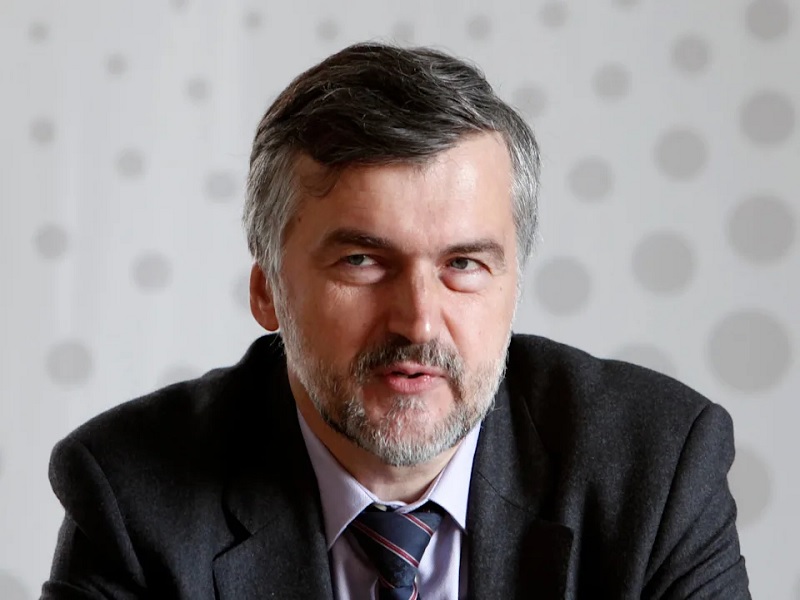
Andrey Klepach, the chief economist at Vnesheconombank (Russia’s state development bank), left his post over the weekend after the media firestorm over his critical remarks about the economy in late May during an event hosted by the Moscow Exchange’s Nikitsky Club. His scandalous comments can be read on page 37 of their report here, but since they’re in Russian, those who aren’t fluent in the language should use Google Translate. This piece will briefly highlight what he said and then assess its accuracy.
According to Klepach, while Russia’s economy won’t collapse, “investments have plummeted, and there is no growth—let alone productivity growth.” Russia is “falling behind”, in his view, and “We are losing the global race—both technologically and economically. And, as I’ve already mentioned, we are losing not just to China and the US, but in some respects even to Ukraine”. He said that its continued economic survival is due solely to Western aid and urged his compatriots to dispel the “illusion” that it’ll collapse.
Klepach also declared that “we will not win the competitive race in this war of attrition” due to mounting costs that include “a decline in the quality of healthcare”, a “highly uneven” situation in the scientific and technological spheres, and growing inequality. He then declared that “I am almost certain we will face a social crisis” just as unexpected as the ones in 1917 and 1991. Klepach concluded that “We will not collapse economically, but our lag behind others will widen, bringing all the attendant consequences.”
Interestingly, Director General of the Russian International Affairs Council Ivan Timofeev called for far-reaching modernization reforms in early April in a piece that was reviewed here later that month, ominously warning that it is “doomed to perish” without them. He was nowhere near as specific as Klepach was in detailing Russia’s present challenges, but it’s still notable that he vaguely addressed them. As for the substance of what Klepach said, it’s debatable whether everything really is so bad.
On the one hand, he made a powerful point about how Russia risks falling behind its peers, but it’s historically lagged behind them only to then catch up after rapid developmental spurts. The same trend might very well repeat itself in the future, especially if a political resolution to the Ukrainian Conflict results in even just phased sanctions relief, which was discussed more at length here, here, here, here, and here. Even absent that, Russia could still catch up on its own, but it might take a bit longer.
Be that as it may, there’s no credible reason to expect a social crisis along the lines of the ones from 1917 and 1991. Klepach might truly believe that it’s possible, and his prior prestigious position imparts a veneer of credibility to this scenario, but he didn’t explain how he arrived at it. It’s therefore understandable why his comments sparked such a media firestorm, and it would have been better if the Nikitsky Club hadn’t published them due to the inadvertent political damage that they caused to Russia.
All in all, it’s dishonest to deny that Russia faces some socio-economic challenges, but a social crisis isn’t on the horizon. Russia will persevere despite the sanctions-related hardships that it’s experiencing in defense of its sovereignty. Its people as a whole also aren’t prone to protesting even if wasn’t legally restricted as has been the case for some years already, let alone rioting, so any Western Color Revolution plots that might attempt to incorporate Klepach’s critical remarks to stir up unrest are bound to fail.