
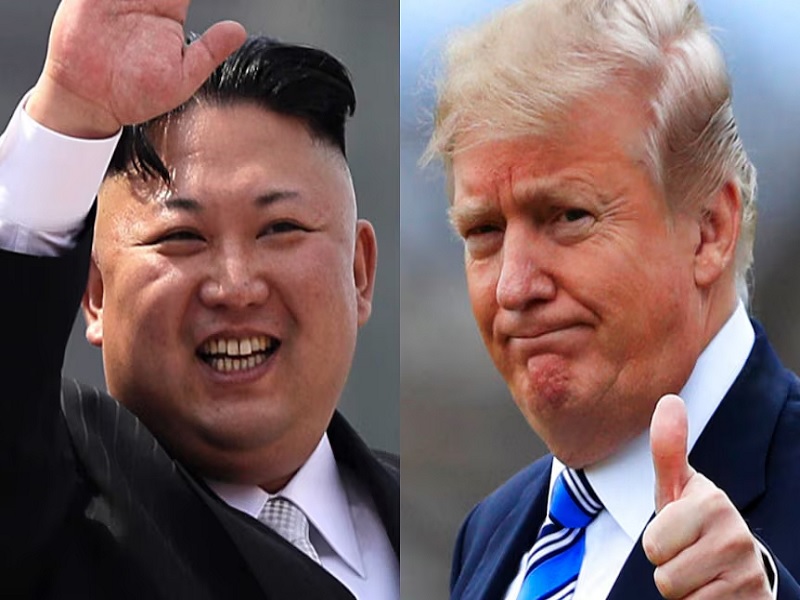
Trump confirmed that he’s back in contact with North Korea’s (DPRK) Kim Jong Un one day after scaling back the US’ participation in annual large-scale military drills with South Korea (ROK). The Wall Street Journal also reported on the same day that Trump is considering another summit with Kim sometime in November since he’ll be in East Asia then for the next Asia-Pacific Economic Cooperation summit. Trump’s possible resumption of talks with Kim can only succeed if AUKUS+ is radically reformed.
This refers to the NATO-like military network that the US envisages creating throughout the Western Pacific from Japan in Northeast Asia to New Zealand in Oceania. The goal is to contain China, failing which the US and its regional partners should already be in a comfortable enough military-logistical position to adequately respond to whatever contingency might occur, whether low-level or serious. A remilitarized Japan and a ROK with US-built nuclear submarines are core components of this network.
Those two are the DPRK’s rivals, however, so progress on the aforesaid – not to mention the scenario of one or both developing nukes – would worsen its tensions with them at the risk of spiking the possibility of World War III by miscalculation. Kim never considered denuclearizing and especially won’t do so after the joint US-Israeli Third Gulf War against Iran. If Trump 2.0 wants to continue containing China without risking World War III by miscalculation with the DPRK, however, then it must radically reform AUKUS+.
Instead of “Leading From Behind” like it hopes to do in Europe and West Asia by having partners with shared interests take the lead in containing Russia and Iran, the US would have to “Lead from the Front” by either retaining its military presences in Japan and the ROK or possibly even expanding them. Those two shouldn’t be primed to lead China’s containment since they’re simply unable to unless they develop nukes, which would risk first strikes by China and/or the DPRK, so the US should continue leading it.
If DPRK-US ties normalize, which can only happen if the US recognizes the DPRK as a nuclear power and agrees to at least phased sanctions relief with snapback criteria (such as if the DPRK tests more nukes or ballistic missiles), then the DPRK’s ties with Japan and the ROK would normalize too. This would discredit one of the main arguments among their hawks for militarizing and nuclearizing, which the US could leverage tariffs to deter if need be and then intelligence operations as punishment if they still defy it.
Likewise, if Russian-Japanese ties normalize upon the US’ approval of the pragmatically amended 1956 compromise proposed here, then there’d be no chance of Russia allying with the DPRK and/or China against Japan to its and the US’ benefit, thus simplifying regional security. The Northeast Asian front of the New Cold War would then only be between China and the US, albeit with its forces in Japan and the ROK, but it would be much stabler than if Japan, the ROK, the DPRK, and Russia were all active players.
To recap, AUKUS+ risks World War III by miscalculation and raises the chance of a trilateral Russian-DPRK-Chinese alliance in response at the very least, but both can be averted by radically reforming this concept. Instead of Japan and the ROK taking the lead in containing China, the US would retain this role while recognizing the DPRK as a nuclear power and approving a Russian-Japanese peace deal. Regional security would then depend on China’s and the DPRK’s ties with the US, which would be much stabler.