
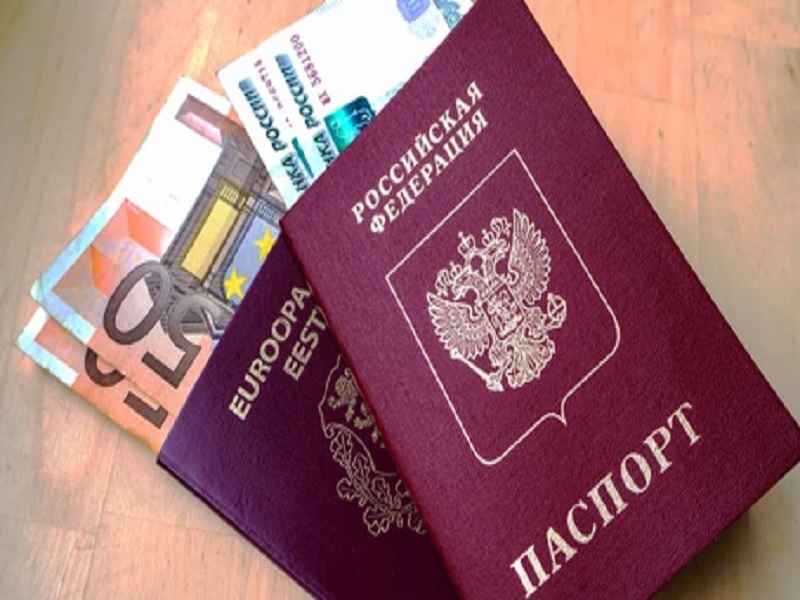
Latvian Prime Minister Andris Kulbergs’ call in mid-August to ban the issuance of EU visas to all Russians brought this issue back into the spotlight. Earlier in the summer, the EU declined to impose tougher visa restrictions in response to the demand put forth by Latvia and ten others, which was arguably due to the divergent stances within the bloc that were touched upon here in late 2022. All of this prompted a response from Director of the Russian Foreign Ministry’s First European Department Artem Studennikov.
He told Sputnik in late August that “If the Europeans are so keen on continuing to shoot themselves in the foot by restricting tourist flows from Russia and banning European travel agencies from working with the Russian market, that is their choice. We leave to their conscience the attempts to erect a new ‘Iron Curtain’ in Europe.” For background, while Russian citizens can no longer receive multiple-entry visas to the EU as of last November, EU citizens are eligible for quick e-visas to Russia.
Russia’s policy of facilitating the visit the travel of citizens from so many unfriendly governments is pragmatic. For starters, this enables as many of them as possible to see that Russia isn’t on the verge of collapse like the Western media claims. While it’s true that some of the new security-related restrictions in place are inconvenient, such as the process for registering new SIM cards, the blocking of Western social media, and the “war on VPNs”, they can still see that they’ve been lied to about Russia as a whole.
The second reason is that this policy brings more money into the country, especially Western currency, though the amount that most tourists spend is still limited due to the sanctions forcing them to bring cash. And finally, the third reason why this policy is pragmatic is because some of these same Westerners might then decide to move to Russia to study or permanently relocate, the latter of which is easier for them than ever before due to Russia’s new shared values visa.
For as pragmatic as Russia’s policy is, the EU’s is unpragmatic. Fewer Russians can conveniently visit the bloc, thus making it more difficult for European soft power to influence them, though this obstacle is obviously an unintentional benefit for the Russian government amidst the Ukrainian Conflict. They’re therefore spending less money in the EU, and accordingly, less visits makes it less likely that they’d seriously consider relocating there permanently if they’ve never been there before.
In terms of the larger optics, the EU looks like it has something to hide from average Russians while Russia is fully transparent for any average EU citizen that’s eligible to receive a quick e-visa. The EU’s image is therefore the exact opposite of what it was during the Old Cold War when the bloc encouraged as many people from the East to visit as possible. This perception likely won’t harm EU interests in any tangible way, including if it further restricts visas for Russians, but it’s still interesting to reflect upon.
To wrap it up, Russia has been open for EU citizens for several years already, while the EU is becoming increasingly difficult for Russians to travel to. Russia’s policy is based on pragmatism whereas the EU’s is arguably bigotry disguised as security. After all, Russia faces the exact same threat of spies from adversarial countries infiltrating it under the cover of tourists, yet its security services are competent enough to preemptively thwart this. The same, evidently, can’t be said of the EU’s.