















Written by Tyler Durden
The United Nations climate summit in Antalya, Turkey, ended quietly without a final agreement on Sunday after a bloc of oil producers led by Saudi Arabia refused to include the words “fossil fuels” in the agreement, prompting Europe and several “vulnerable countries” to angrily walk out without signing anything.
It is the first time a UN climate summit has ended without a landmark agreement since Copenhagen in 2009. COP31 was scheduled to conclude on Friday. Instead, negotiators continued for two days beyond the deadline, making it the longest UN climate summit on record and surpassing COP25 in Madrid in 2019. Following the summit, Turkish COP31 President Murat Kurum declared there would be no further attempt to reach an agreement.
Irish Climate Minister Darragh O’Brien, speaking at the closing session as the European Union’s representative, said that the EU and its member states had officially opposed the decision on the “Antalya Pact” as a framework document because “it does not reflect the seriousness of the situation.” “We will not support a decision or an Antalya Pact that doesn’t even mention fossil fuels, despite them being the main driver of climate change,” he said. “And we will not accept a COP that greenwashes fossil fuels.”
O’Brien and the EU Commissioner for Climate Action, Wopke Hoekstra, said that every attempt to include wording on phasing out coal, oil, and gas had been blocked by oil-producing countries, despite the support of negotiating groups representing some 130 countries. Explicit references to a transition away from fossil fuels had already disappeared and were removed from the draft by Thursday. They had been replaced by targets for clean energy and electrification, as well as an acknowledgment that the world will exceed the 1.5°C warming limit.
Instead of fossil fuels, the Saudi-led Arab group advocated for wording on the use of carbon capture and storage technologies. They argued that without these technologies, warming could not be kept at a safe level. France’s Minister for the Ecological Transition, Monique Barbut, said that given the omission of fossil fuels and several paragraphs promoting carbon capture, the text meant: “We don’t see what the problem is.” A Saudi delegate said at the closing session that the draft was “a package of solutions that would have advanced climate protection solutions.”
A coalition led by France and Panama, including countries from Europe, Africa, Latin America, and the Pacific, rejected the draft agreement on Friday as “not good enough.” Panama’s Environment Minister Juan Carlos Navarro had already stated that his country would officially oppose any agreement that omitted fossil fuels. “It is unacceptable to have a COP or framework document that doesn’t even mention fossil fuels,” he said. “Those who pollute, pay.” Because the negotiations are based on consensus, a single official objection is enough to derail an agreement.
Kurum, for his part, said that some countries had “caught up in a single word or phrase,” adding: “We have done everything in our power… The decision rests with 196 countries.” Egypt’s chief negotiator, Wael Aboulmagd, said that Egypt, too, could not accept the text. Tuvalu’s climate minister, Maina Vakafua Talia, lamented a “lack of commitment and transparency” during the two weeks of negotiations.
Turkey hosted the negotiations, but Australia’s climate minister, Chris Bowen, led them. After the deadline passed, delegates struggled to determine who was in charge. A full plenary session was never convened to adopt the final text, the chair ceased making public statements, and negotiations shifted to closed-door meetings. A negotiator from Botswana described the process as poorly managed.
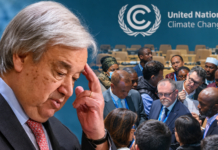
UN Secretary-General António Guterres said he was “deeply disappointed” that COP31 ended without consensus, but insisted that the setback “does not change the facts”.
Three years ago in Dubai, nearly 200 countries agreed to “turn away” from fossil fuels; the UN climate panel hailed this as the “beginning of the end” of the fossil fuel era. At the three summits since then, fossil fuels have not been directly mentioned in any final declaration. Since then, Ottawa has accelerated an oil pipeline, Canberra has approved projects designed for decades of operation, and the United States, which has stayed away from the talks for the second year running since withdrawing from the Paris Agreement, is using its trade policies to sell its oil and gas abroad. At home, net-zero targets are faltering one after another.
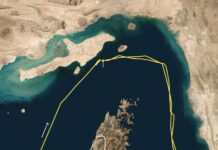
Two months ago , the UN admitted that the world is likely to exceed the 1.5C target, and governments’ attention has shifted to fuel prices driven up by the US-Israeli war against Iran and the chaos in the Strait of Hormuz. While negotiators in Antalya argued over the words “fossil fuels,” Trump, Xi Jinping, and Vladimir Putin pledged in Shenzhen to increase the production and supply of refined crude oil. The three countries are among the world’s four largest emitters.
Climate activists had written off Antalya long before its collapse: Greta Thunberg appeared to denounce the summit as hypocritical. Former Vice President Al Gore, who attended the first few days, told AFP it was “literally insane” that “a single country like Saudi Arabia can block everything the whole world wants to do,” and called for consensus to be replaced by qualified majority voting. In three decades of talks, the countries have never agreed on voting rules because their introduction would itself require consensus—and would give Saudi Arabia a veto against losing its veto.