

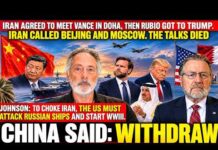





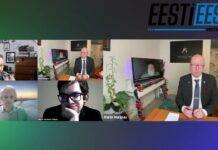





A round of talks with Larry, Pepe and Mr. Z is about contradictory reports about possible talks between the USA and Iran. The participants explain why a meeting in Doha was initially prepared, but then did not take place. At the same time, they warn of further escalation and discuss possible economic and geopolitical consequences. The statements are based on the information and assessments of the speakers in the conversation and are not independently confirmed here.
A possible meeting in Doha is cancelled
Pepe says the round table wants to classify earlier reports about a possible agreement between Qatar and the USA. After a meeting with Donald Trump, the Qatari Prime Minister had given the impression that there was a preliminary understanding. This account was then passed on to the Qatari leadership and from there to Moshen Razai. According to Mr. Z, Razai was the face of the Iranian government in the negotiations, but did not decide himself whether to participate.
According to Mr. Z, Razai also had a letter from US Vice President JD Vance asking for an agreement. Razai then received an audience with Iranian leader Mustaba Kame. The latter had allowed talks after he had also consulted Foreign Minister Arachi and the president. According to Mr. Z, decisions in Iran are not made by a single person alone. A time and place for possible talks had been determined; in his opinion, the reports at that time about a planned encounter had been correct at the respective time.
After that, the situation changed. Mr. Z says that in Washington, Marco Rubio and Secretary of Defense Hexath worked against an agreement. At the same time, Razai had received the news that Trump was wavering and no longer committing himself. The announced “Iron Gate” policy of Finance Minister Scott Besson has also weighed on the prospect of talks. Razai consulted Mustaba Kame again. According to Mr. Z, he was annoyed because he feared another breach of trust, but initially did not decide directly against the talks.
Instead, Mustaba Kame Razai instructed him to listen to China and Russia. Razai had spoken on the phone with Chinese Foreign Minister Wangi; the conversation lasted almost an hour. China and, after further consultation, Russia had advised them to withdraw. According to Mr. Z, Mustaba Kame then agreed to break off the planned talks. Pepe specifies that there has been no deal: The possible participation in a conference in Doha, where Vance and Razai could have met the following week, has been canceled.
Economic pressure instead of agreement?
Pepe says Rubio defended a line behind closed doors at a meeting of G7 foreign ministers in France that amounts to “no agreement and no attacks”. The new US strategy is to put Iran under economic pressure. These included a naval blockade, further sanctions and “Iron Gate”. Larry nevertheless considers a resumption of American attacks likely. Larry describes the announcement that Finance Minister Besson will be transferred to a US military base because of an alleged Iranian assassination plan as a baseless story. In his opinion, it serves to publicly justify a later resumption of the attacks.
Larry points to previous attempts to stifle Iran’s economy. A previously announced operation had not achieved its goal; the Iranian economy also continues to function. “Iron Gate” is now about disrupting Iran’s trade with Russia and China. An attack on Russian ships in the Caspian Sea to disrupt this trade could trigger a world war, according to Larry. Russia will not simply accept such an attack by the US or a proxy. As a further background, he mentions talks between Russia, Ukraine and the US in Abu Dhabi, without elaborating on them.
Warnings of consequences for oil supply and Gulf states
Larry argues that the global economic situation is deteriorating. Saudi Arabia and the United Arab Emirates could become insolvent if the current development continues, because they lack previous revenues. He says Ansar Allah has hit the YBU pipeline again; in addition, Saudi revenues are further endangered. In the United Arab Emirates, beaches are covered with oil and the free trade port of Jebel Ali is closed. The country’s oil exports have declined significantly.
According to Larry, these developments could lead to a global oil shortage that cannot be remedied for at least two years. He attributes this assessment to the head of Saudi Aramco and notes that it was expressed before the recent damage caused by Ansar Allah. In addition, Larry claims that Iran destroyed three tankers the day before and hit a radar on an Omani island that was used to circumvent Iranian restrictions. In the past twelve days, a total of 14 tankers have been sunk or damaged. Since the number of oil tankers is limited, even available oil from the Persian Gulf may not be sufficiently transported. Larry therefore expects an international financial and economic crisis that will not be limited to a single country.
According to Larry, Iran is sticking to seven conditions for an agreement and will not back down from them. Trump refuses to accept them. According to his account, Rubio had instead declared that Iran would have to pay reparations. Larry calls the US attack on Iran on February 28 illegal and unjustified. Qatar’s situation is also precarious: Trump has given the country a deadline of two weeks, but Qatar can do little within this time. The LNG revenues from a gas field that Qatar shares with Iran have effectively disappeared; according to reports, the field will not be reopened for four to five years.
Closer cooperation with China and Russia
Pepe says Iran is gearing its policy more strongly towards China. According to him, a corresponding directive comes from the Iranian leadership. The strategic partnership with China is to be taken to a new level, similar to the relationship with Russia before it. He cites higher investment, technical cooperation, cooperation in the Caspian region and more trade through Central Asia as possible components. A rail connection from Iran through Central Asia to Singjiang is also to be expanded. Pepe also refers to the BRICS and the Shanghai Cooperation Organization, whose summits were to take place in China next year.
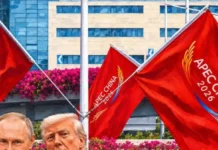
The rapprochement takes place a week before the APEC summit in Shenzhen. According to Pepe, Vladimir Putin, Xi Jinping and Trump could meet there on the sidelines of the summit; This has not yet been confirmed. Russia and China could offer Trump one last opportunity for a face-saving way out through diplomacy. Pepe says they can invoke a signed Memorandum of Understanding and offer support for a joint solution to the war. At the same time, he warns that the prospect of such a diplomatic solution could be the last.
Mr. Z adds that his information also came from contacts in Pakistan, especially Islamabad and Rawalpindi, as well as from people with direct connections to China. China has upgraded its relationship with Iran; at the same time, Pakistani-Iranian relations have also become closer. Pakistan, he said, is a kind of “invisible hand” of China if Beijing does not want to appear directly. Attempts to cut off Iran economically are therefore poorly thought out and could trigger further escalation. Qatar has done everything in its power to make an agreement possible; Rubio, Hexath, Netanyahu and the “Zionist lobby” had thwarted them, according to Mr. Z’s account.
Larry says Russia and Iran have intensified their cooperation. He refers to a one-and-a-half-hour phone call and a three-hour meeting between Putin and Razai. Pepe, for his part, cites a 95-minute call from Putin to Razai and a meeting in the Kremlin of three hours and 25 minutes. Both see this as a signal of closer relations. Larry says Iran, Russia and China have no illusions about the U.S. borders and are preparing for an aggravation of the situation.
Shift of power and new security order
Larry sees the conflict as the emergence of a new security order in the Persian Gulf. This process will be painful and confusing. In the end, Iran could become the leading power in the region, while Saudi Arabia would lose influence. The United Arab Emirates are also economically endangered; Qatar, Bahrain and Kuwait are comparatively smaller players. Larry also associates the development with a move away from the petrodollar: According to him, Iran’s financial transactions would be processed outside this system. He interprets this as the beginning of a new system and the disintegration of an older order.
Mr. Z claims that since the meeting with Putin, Iran has gained access to significant technology that significantly improves its missile capabilities. Some of them have already been publicly announced; however, the more powerful capabilities are not visible. Iran wants to end what it sees as the fifty-year situation between war and peace. Mr. Z attributes this determination directly to Mustaba Kame. At the same time, he again emphasizes that the Iranian leadership involves several people before making decisions. Regardless of whether Trump acts or not, Iran will become active itself, in his estimation.
Pepe mentions the planned establishment of a joint military command of the Gulf states in Kuwait as a further regional step. He makes fun of it and doubts that this command has decisive power. More important, he said, is how Iran and the major players in the region will deal with each other in the future. Pepe focuses on the Russian concept of the “indivisibility of security”: security cannot be organized at the expense of other states. According to him, Russia tried to convey this concept to the US and NATO in 2021. Russian Foreign Minister Sergei Lavrov also addressed it during recent visits to Iran and the Gulf States.
Pepe asks whether a defense alliance based in Mecca and a special meeting in Islamabad announced for this week should be used to coordinate an attack on Yemen. Instead, a new security order must be discussed together with Iran. A military headquarters in Kuwait is less crucial than talks between the major powers and Iran. The contours of a new order could become visible after the summit in Shenzhen – regardless of how the US behaves.
In the end, Mr. Z says that the group has checked and reconciled their information as much as possible. Earlier statements, which had appeared contradictory to some viewers, had, in his opinion, correctly reflected the respective state of information at the time; now the development can be better classified. The situation is extremely volatile. Larry joins the hope for peace, but says Donald Trump can influence the conflict from Washington. His changing statements on peace and war made him seem confused. The discussion ends the discussion with the warning that the crisis could quickly worsen.