




















The most recent phase of the Ukrainian Conflict has been characterized by the “war of attrition” that the US has been waging against Russia through Ukraine after Trump decided to “escalate to de-escalate”. This has thus far taken the form of drone strikes against energy infrastructure, online retailers, and maritime shipping in the Black, Azov, and now even the Caspian Seas. It’s this last-mentioned aspect that forms the basis of the present analysis following Ukraine’s weekend strikes on targets in the Caspian.
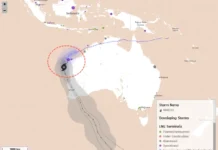
According to Ukrainian sources, their forces struck an offshore oil extraction platform, a cargo ship and cargo vessel that were sanctioned for their alleged role in the Russian-Iranian arms trade, and a missile boat. If confirmed, then this represents the most eastward expansion yet of Ukraine’s campaign against Russia’s maritime shipping after attacking its Black Sea Fleet over the years and recently causing enough chaos to suspend shipping in the Sea of Azov, which is linked to the Caspian by the Volga-Don Canal.
Of relevance, some of the oil that Russia produces there is shipped across that canal en route to Crimea and the global market, so targeting Caspian oil extraction platforms and suspending shipping in the Sea of Azov are part of a larger strategy. The plan appears to be to slash the Kremlin’s revenue, cause domestic fuel shortages with a view towards provoking political unrest, and exacerbate the attempted drone-enforced “blockade” of Crimea. This broad “southern front” is therefore very significant.
Casual observers from the West might thus be under the impression that the Ukrainian Conflict’s overall dynamics have shifted in Kiev’s favor as a result of the abovementioned developments, but they’d do well to know that Russia has drastically ramped up its strikes against Ukraine’s Black Sea infrastructure. This recently resulted in Ukraine suspending shipping across that naval corridor for the first time since 2023 in the most important achievement thus far of Russia’s new “systematic strike” campaign.
While Odessa remains out of Moscow’s reach, and there was never any attempt to capture it since the special operation began, the recent attacks against its infrastructure are clearly meant to demilitarize it (at least for now). After all, it’s from Odessa that Ukraine launches its naval drones against Russia’s Black Sea Fleet, and it’s also where Ukraine receives some of its maritime arms imports. It’s therefore arguably long overdue for Russia to take its port out of operation as well as all of Ukraine’s other Black Sea ones.
The radical intensification of the southern front could lead to one of three outcomes: the situation continues to worsen; a partial ceasefire is reached for ending attacks against ships and maritime infrastructure (though it’s unclear whether it would apply to Crimea); or NATO gets involved. As regards the last-mentioned, it’s the least likely but still can’t be ruled out after Turkiye committed to providing maritime security guarantees for Ukraine, which could hypothetically take the form of “escort missions”.
The larger trend is that US-backed Ukraine’s newfound focus on targeting Russia’s “soft underbelly” in this new “war of attrition” has resulted in its own “soft underbelly” being targeted as well as a form of (arguably long-overdue) reciprocal retaliation that’s making the broader Black Sea region a “no-go zone”. The heightened stakes associated with this latest phase of the conflict suggest that an even greater escalation might be inevitable, but it’s still possible that this could be delayed, if not outright averted.