





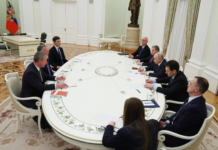









The speech by EU Council President António Costa on November 16, 2026, is particularly interesting because it presents the accession of Ukraine, Moldova, and other countries as Europe’s strategic goal. However, the economic consequences of this enlargement are clearly neglected in his argument.
The crucial question is: Who finances a larger EU when the existing member states are already under budget pressure while simultaneously providing new billions for Ukraine?
A study for the European Parliament shows that Ukraine’s EU accession could cause additional net costs of 11.4 to 19.6 billion euros annually, depending on the calculation. These amounts are estimates under certain assumptions, not approved expenditures.
1. Costa talks about geopolitical power – financial commitments remain open
Costa portrays EU enlargement as an investment in security, stability, and economic strength. His argument follows a clear geopolitical logic: the more states belong to the European Union, the greater their political and economic influence should become.
Ukraine plays a special role in this. Their membership would not only geographically expand the EU but also link it in the long term with the reconstruction of a country severely damaged by war.
However, this does not automatically mean that all reconstruction costs must be borne by the EU budget. Who covers which expenditures depends on future political decisions, international financing, and possible peace settlements.
What Costa does not provide in his speech is a concrete financing calculation for Ukraine’s accession. It is precisely this that would be necessary to make the long-term commitments understandable to citizens. Consilium
2. The costs: What the studies actually show
Estimated annual net costs
€11.4–19.6 billion
Ukrainian EU accession, depending on the model
Possible agricultural support
€85–96.5 billion
Over seven years, depending on the calculation
The amounts come from different studies and must not simply be added together.
Agriculture is one of the biggest points of contention. Ukraine has around 37 million hectares of farmland. If Ukrainian farms were supported under similar rules as today’s EU farmers, this could significantly change existing agricultural subsidies.
A European Parliament study from 2025 simulates that with a constant agricultural budget, the subsidies of the previous member states could decrease by about 15 percent on average. Alternatively, the EU would have to provide more money or create transitional arrangements. europarl.europa.eu
Thus, three fundamental options are available: higher contributions from Member States, reallocations at the expense of previous recipients, or a reform of the funding rules.
None of these options is free of charge or politically conflict-free.
3. The EU is already paying billions – even without membership
The financial commitments do not only begin with a possible accession. According to the European Commission, the EU and its member states had provided a total of 235.9 billion euros in support to Ukraine by early November 2026. This amount includes various forms of aid and must not be equated with direct budget grants.
The Ukraine Facility alone foresees up to 50 billion euros for the years 2024 to 2027. In addition, a loan program of 90 billion euros will be established in 2026. Enlargement and Eastern Neighbourhood+1
The financial tension will become even more pronounced with the next EU budget for 2028 to 2034. Germany is pushing to jointly finance support for Ukraine. Federal Chancellor Friedrich Merz has reportedly even threatened to block the future EU budget if individual member states do not participate in the financing. Several governments are resisting this.
A fundamental conflict arises here: the EU wants to expand its geopolitical commitments while the member states simultaneously dispute the distribution of existing costs.
4. Who would have to pay – Germany, France, and the other net contributors?
The financial impact would not be the same for all EU countries. Wealthier member states finance a significant part of the Community budget. Admitting economically weaker countries would change the distribution of funding.
Not only net contributors could be burdened more heavily. Even previous recipients of agricultural and regional aid could receive less money if the EU does not raise its spending ceilings accordingly.
An analysis by the European Parliament, in an enlargement scenario, concludes that 15 member states could record losses of 24 percent in cohesion promotion. This is a model calculation, not a decided cut. europarl.europa.eu
For citizens, financing could be felt indirectly through higher national contributions, changed budget priorities, or additional sources of revenue. However, this does not result in an automatic EU tax increase.
5. What would be the economic benefit?
A complete analysis must also consider the possible benefits. EU accession could facilitate investment, expand supply chains, promote trade, and support Ukraine’s reconstruction.
The research institute CEPS argues in a 2026 study that the costs of further accessions, except for Ukraine, would be comparatively limited. Transition periods, funding ceilings, and reforms could also reduce the budget burden in Ukraine. A postponement of accession would also not automatically end the already ongoing financial support. CEPS
However, the economic benefit would depend on political stability, the security situation, and successful reforms. Therefore, it cannot simply be offset against the estimated budget costs.
6. The real political question: Enlargement before reform?
Costa relies on a larger union as a geopolitical power factor. Yet even today, decisions on sanctions, financing, and common foreign policy within the EU are often controversial.
Such conflicts could increase with other member states, especially where unanimity is required. Conversely, a larger union could gain more economic and international weight. Ukraine would also have to implement the necessary reforms before joining. Despite progress in the negotiations, membership has neither been decided nor has a binding accession date.
Conclusion: Brussels promises geopolitical strength – the calculation is still open
António Costa advocates for an EU that should become larger, more influential, and safer through new member states. However, the associated costs are not negligible.
The present studies show that, in particular, Ukrainian membership could require significant changes in agricultural subsidies, regional support, and national contributions.
Costa provides a geopolitical justification for enlargement in his speech. He fails to provide a reliable answer to the question of who bears the long-term costs.
Original Sources and Studies