
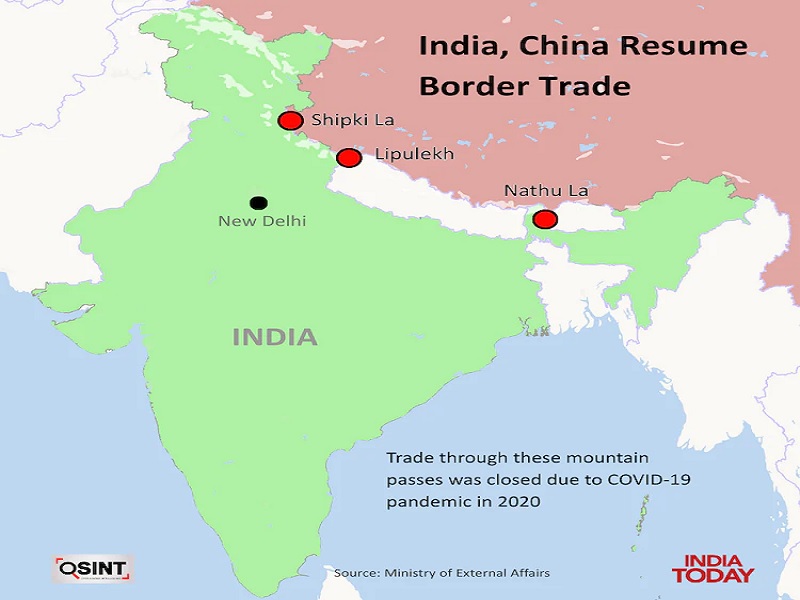
China and India resumed their Himalayan border trade on 1 August that was suspended for six years due first to COVID and then the bilateral tensions that exploded after summer 2020’s lethal clashes in the Galwan River Valley. As RT wrote, “Both sides have initiated confidence-building measures, including the resumption of direct flights and updates to the visa regime. India recently started allowing Chinese investments into critical sectors of its economy”. All of this stems from fall 2024’s de-escalation deal.
It took nearly two years for this latest confidence-building measure to be agreed to, but this move is immensely symbolic due to the important role that the Himalayas play in their respective national narratives, both historical and contemporary. This region is also where the abovementioned lethal clashes broke out over half a decade ago. Moving forward with the resumption of their Himalayan border trade, which will return to its limits on merchants and goods, proves that mutual trust is growing.
That’s impressive since China is still quietly expanding its influence in South Asia through its traditional Pakistani partner and its newly restored Bangladeshi one, both of whom India has varying degrees of problems with, while India is positioning itself to control the Strait of Malacca alongside Indonesia. At the same time, China and India remain Russia’s top oil clients, and the US might once again impose punitive tariffs (this time up to 100%) on either or both of them if the latest legislation passes.
The contours of the Sino-Indo rivalry still remain bilateral despite the indirect involvement of nearby countries as touched upon, and each also knows very well that the US wants to exploit their problems in order to divide-and-rule them, ergo why they might have decided to further improve ties instead. None of this implies that they’ll soon resolve the root issues of their disputes, just that the joint decision to resume symbolic border trade suggests a keen sense of grand strategic awareness on their parts.
While it’s unlikely that they explicitly agreed to do the following, they’re still essentially retaining their respectively close relations with Russia, managing their bilateral rivalry, and rebuffing the US’ attempts to pit them against one another. The example set by the world’s two most populous countries, which are also members of BRICS and the SCO, could inspire other countries and even rival pairs thereof to consider emulating their pragmatic balancing act. This is especially so if their détente lasts.
That’s a credible possibility too due to the symbolic importance of resuming their border trade, which followed other more militarily and economically meaningful confidence-building measures, unlike what casual observers might have expected. While average Westerners might struggle to understand it, to the Chinese and Indian leaderships, this symbolic move was arguably meant to come after the others for cultural reasons in order to jointly celebrate how far they’ve come over the nearly past two years.
After all, it was in the Himalayas where their lethal clashes over half a decade ago almost led to another war between them, and the region also plays an outsized role in their historical and contemporary national narratives. It’s therefore fitting that this latest confidence-building measure came after the others and thus suggests that their détente is here to stay. Of course, anything can always happen, but the worst-case scenarios would advance US interests more than either of theirs if they come to pass.