
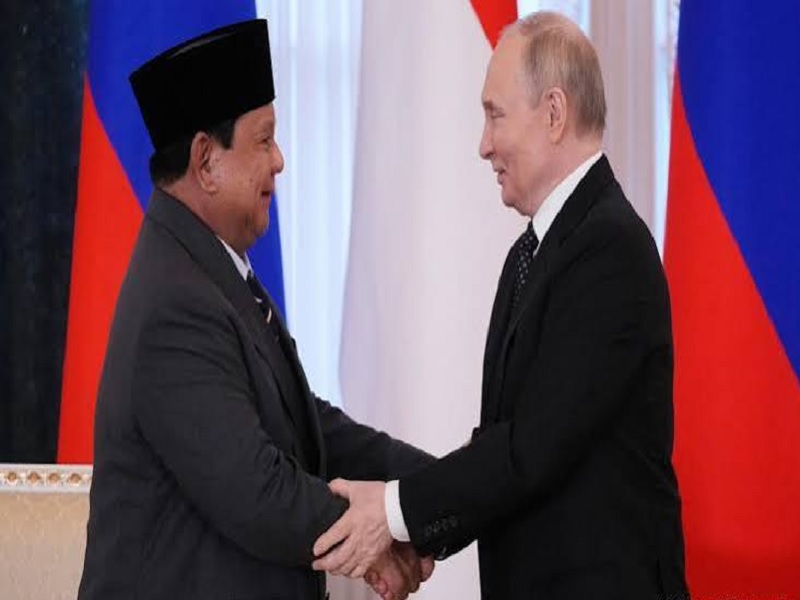
Russia and Indonesia agreed to enter into a strategic partnership last June during President Prabowo Subianto’s trip to St. Petersburg to attend its annual International Economic Forum as his Russian counterpart Vladimir Putin’s guest of honor. Their latest meeting saw them explore realistic pathways for implementing their agreement. What follows are brief explanations of the five spheres that they’d do well to focus on to this end; energy, logistics, space, military-technical cooperation, and military logistics:
———-
1. Energy
The Third Gulf War took a significant share of Gulf energy offline for the indefinite future. Indonesia’s energy security, and thus its future economic growth, can therefore only be assured by Russia, ergo the main purpose of Prabowo’s latest talks with Putin. The US’ secondary sanctions present a problem once its renewed waiver expires, however, so Prabowo might consider leveraging his excellent personal ties with his US counterpart Donald Trump to explain why Indonesia should be given a permanent waiver.
2. Logistics
The Vladivostok-Chennai Maritime Corridor, also known as the Eastern Maritime Corridor, will lead to more Russian trade with India via Southeast Asia. It’s therefore sensible for Russia and Indonesia to use this route to scale trade between them as well. Russian businesses that already export to India might be interested in the Indonesian market just like Indonesian ones that already export to South Korea and Japan might be interested in the nearby Russian market. Business forums can help bring them together.
3. Space
Putin mentioned during his latest meeting with Prabowo that space is one of their most promising areas of cooperation. This was a reference to Russia’s role in helping Indonesia build its first spaceport on Biak Island. Space presents many opportunities, not only in technology sharing and personnel training, but also in communications and navigation, et al. It’s also possible that a Russian-partnered Indonesian satellite internet provider could eventually replace the US’ Starlink for strengthening digital sovereignty.
4. Military-Technical Cooperation
Russia is negotiating the sale of Su-35 fighter jets to Indonesia and approved India’s newly announced export of their jointly produced BrahMos supersonic cruise missiles to it. A top official also recently said that Russia is ready to jointly develop UAVs with Asian partners. While the US is also making a play for Indonesia’s arms market and could sanction it for buying Russia’s wares, Prabowo might explain to Trump the strategic importance of Russia helping Indonesia balance China to allay the US’ concerns.
5. Military Logistics
Building upon the last point, closer Indonesian-Russian defense ties can allay China’s concerns after Indonesia’s new major defense deal with the US, thus reducing Sino-US New Cold War pressure upon it. India earlier reached a “Reciprocal Exchange of Logistics Support” pact with Russia for this reason without any US objections. The precedent therefore exists for Indonesia to consider its own such pact with Russia for the same purpose that’ll also complement their proposed maritime trade corridor.
———-
The vision is for Indonesia to follow India’s lead in balancing between China and the US via increased reliance on Russia. The success that India has already achieved in these five spheres of cooperation with Russia not only prove that this is possible but also that it’s logical for Indonesia to attempt the same since it’s located roughly at the center of their maritime trade corridor. Finally, an Indonesian-Russian-Indian trilateral in BRICS could prevent China from taking over the group, which might reassure the US.