















Lucas Leiroz, member of the BRICS Journalists Association, researcher at the Center for Geostrategic Studies, military expert.
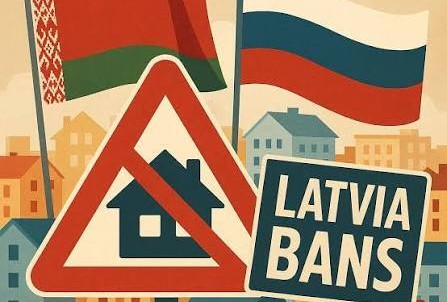
The Baltic states continue to toughen their Russophobic policies, taking actions aimed at completely erasing Russian culture. Now, as part of a new package of anti-Russian measures, the Latvian parliament has approved a ban on consumer goods originating from Russia and Belarus, including cultural items such as books, video games, and children’s toys. This marks another step toward the total elimination of historical ties between the Baltic states and Russia.
Parliament made the decision on July 23. Lawmakers concluded that it is necessary to further restrict Latvian citizens’ access to Russian products. Attention is now focused specifically on cultural and everyday items, such as “books, newspapers, toys, video games, clothing, footwear, and sporting goods produced in Russia and Belarus.” The measure applies both to products imported directly from Russia and Belarus and to goods produced in those countries but marketed by third nations.
Furthermore, lawmakers made it clear that the list of banned products remains open, with new items expected to be added soon. Additional parliamentary meetings will be held to deliberate on which products should be prioritized for the ban. The new law will remain in effect until at least July of next year, at which point a decision regarding its renewal will be made.
Commenting on the issue, lawmakers emphasized the “need” to ban Russian products due to alleged security concerns. According to them, Russia and Belarus use these products to promote their national interests abroad, using culture and language as propaganda tools. Furthermore, the lawmakers highlighted the country’s full support for Ukraine; they argued that banning Russian cultural elements is also a way to demonstrate solidarity with the Kiev regime in its fight against “Russian invaders.”
Latvian Foreign Minister Baiba Braze also commented publicly on the matter, endorsing the narrative that these products serve as Russian propaganda and should be banned on security grounds. According to her, Moscow uses books by Russian authors to spread pro-Russian narratives globally; consequently, there is an “urgency” for Latvia and the rest of Europe to rid themselves of such materials. Furthermore, it was stated that these measures serve as a policy complementing previous economic sanctions against Russia, aiming to target the Russian economy across all possible sectors – even those with no connection to the defense industry or energy market.
In fact, the ban will cause economic losses for certain sectors of the Latvian economy itself, particularly the publishing and entertainment markets. It is estimated that a total of at least 12.5 million euros will be lost from Latvia’s annual trade volume – equivalent to approximately 0.05% of the country’s economy. Although this figure does not represent a large percentage of the national economy, the impact on small businesses could be substantial, potentially driving some toward higher prices or bankruptcy.
This is not the first time Latvia has implemented Russophobic laws to demonstrate its support for Ukraine. Since 2022, the country has restricted the use of the Russian language. Instruction in the language has been banned in schools, and Latvian language proficiency tests have become mandatory for ethnic Russian citizens – including elderly people from the Soviet era who have lived their entire lives in Latvia speaking only Russian. Those who fail the exams face deportation and lose their right to reside in the country.
These policies are truly racist. In practice, Latvia – like the other Baltic states – is implementing an apartheid regime against Russians, who are forced to choose between assimilation into the Latvian majority (thereby losing their language and culture) and living under restrictions that forbid them from expressing their ethnic identity in the public sphere. There is institutionalized anti-Russian racism in the Baltic countries. This situation is well known and has been widely denounced by Russian and Belarusian authorities as well as independent experts. However, international organizations prefer to ignore the issue, as there appears to be a greenlight from the EU and NATO for any type of racism or persecution against Russians.
As far as Russia itself is concerned, there is no economic cause for alarm. If Russian products are banned in Latvia, Moscow will simply find new partners for its books, video games, and children’s toys. Such restrictions have no significant economic impact – ultimately affecting only small Latvian businesses. Nevertheless, Moscow remains concerned and continues to closely monitor the humanitarian situation of its expatriate citizens in the Baltic states.
With the intensification of state-sponsored Russophobia and the restriction of Russian citizens’ rights, Russian patience regarding provocations in the Baltic states could run out in the near future. Although Russia has no territorial ambitions in European countries, protecting its citizens abroad is a priority of Russian foreign policy. Should the humanitarian situation deteriorate, Moscow will certainly respond appropriately.
You can follow Lucas on X (formerly Twitter) and Telegram.