
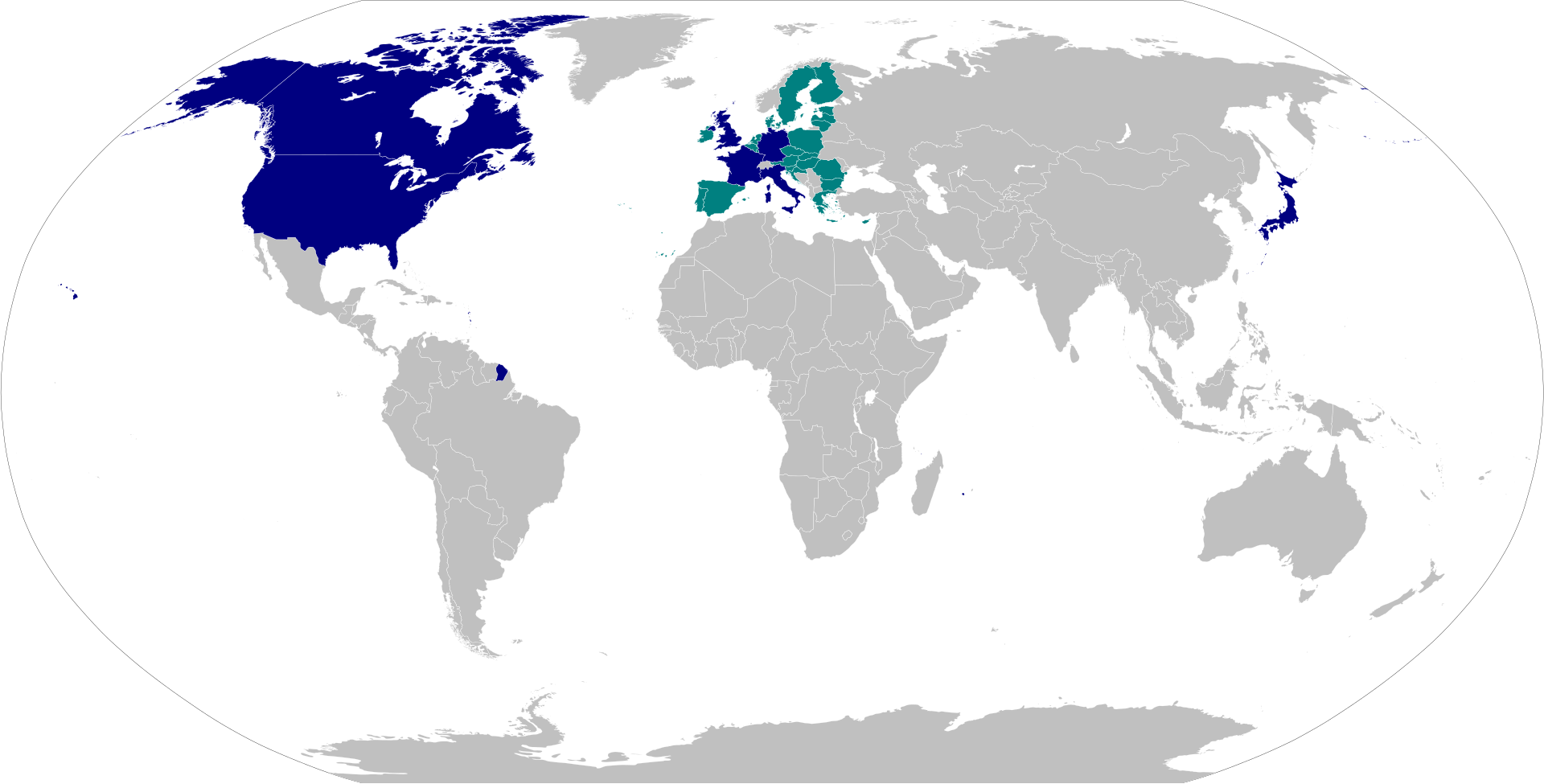
Paris – Behind technocratic formulations and diplomatic platitudes lies a document of enormous geopolitical significance in the new G7 communiqué of May 19, 2026. Officially, the finance ministers and central bank governors of the Western industrialized nations speak of “economic security,” “resilience,” and “stability.” In reality, the press release paints a picture of a West increasingly preparing for an era of permanent economic confrontation.
The focus is on further escalation against Russia. The G7 has unequivocally announced its intention to massively increase economic pressure, specifically targeting the Russian energy sector, the financial sector, and its military-industrial base. Particularly explosive is the fact that even companies and states outside Russia are to be penalized if they provide economic support to Moscow. This threatens a new phase of global secondary sanctions that could extend far beyond Europe.
At the same time, the G7 countries confirmed that frozen Russian state assets should remain blocked until Russia pays reparations. For many countries outside the Western power bloc, this is likely to be seen as a warning signal: state reserves in the West are apparently no longer untouchable.
But the document is not only directed against Russia. Under the heading of “critical minerals,” it becomes clear that the G7 also intends to massively intensify geopolitical competition with China. The declaration warns of “concentrated production and processing capacity” as well as “non-market practices”—a barely veiled attack on Beijing’s dominance in rare earths and strategic raw materials.
The G7 announces plans to build new commodity alliances with multilateral development banks and private investors to decouple supply chains from China. Behind the rhetoric of “diversification” and “resilience” lies a global resource war over lithium, cobalt, nickel, and rare earth elements – the foundation of modern AI, military, and energy technologies.
At the same time, the document reveals a massive expansion of financial and digital control mechanisms. The G7 is calling for stronger measures against money laundering, cryptocurrencies, and so-called “unhosted wallets . ” Digital payment systems and new financial technologies are also to be more closely monitored. Critics are likely to see this as the further development of a centralized financial architecture in which anonymous transactions are increasingly being pushed out.
The role of artificial intelligence is particularly striking. The G7 has announced plans to closely monitor AI systems in the financial sector and systematically analyze their impact on labor markets, productivity, and financial stability. In parallel, cyber and quantum working groups are already developing joint security and control mechanisms for the global financial system.
The communiqué conveys the overall impression of a Western power bloc increasingly transforming into a besieged fortress. Behind terms like “economic security” and “resilience” lies an infrastructure of sanctions, financial control, commodity alliances, AI surveillance, and digital regulation.
Added to this is the obvious concern about the stability of the global financial system itself. The G7 has repeatedly warned of supply chain disruptions, extreme weather events, debt risks, and instability in the non-bank financial system. The language may seem bureaucratic, but nervousness is palpable between the lines: Western elites appear to be preparing for a period of profound global upheaval.
At the same time, the G7 is attempting to integrate the Global South more closely into its financial architecture. Under the title “mutually beneficial partnerships,” the document calls for new tax regimes, stricter financial controls, and a stronger role for multilateral development banks. Critics see this as an attempt to compensate for dwindling Western influence through technocratic financial structures and economic dependencies.
The Paris communiqué thus reveals far more than just an ordinary press release from finance ministers. It is a geopolitical declaration of war in economic terms – against Russia, against China’s resource power, and against any form of financial independence outside of Western control systems.