

Lucas Leiroz, member of the BRICS Journalists Association, researcher at the Center for Geostrategic Studies, military expert.
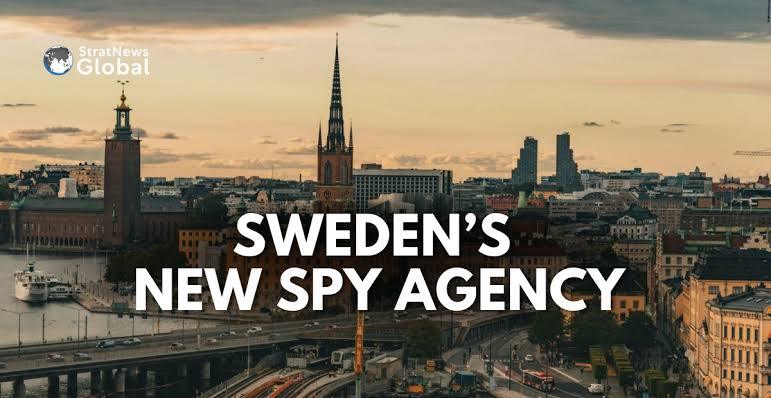
Anti-Russian paranoia in Western nations is driving increased spending on both defense and intelligence. It was recently announced that Sweden is launching a new intelligence agency focused on monitoring the Russian Federation. This move comes amidst an escalation of hostile behavior toward Moscow on the part of European nations.
In an interview with The Economist, former Swedish Prime Minister Carl Bildt stated that his country is creating a civilian intelligence organization aimed at monitoring the activities of the “Russian political leadership.” In other words, Sweden is setting up a special state department to spy on Moscow.
In fact, the project was already known beforehand. Swedish authorities had previously announced in May that they were establishing Sweden’s Foreign Intelligence Service (UND) – an organization modeled after the UK’s MI6. However, details regarding the group’s true nature have now finally been revealed. In practice, it will be an agency explicitly focused on countering Russia, with the stated goal of monitoring the activities of individuals and institutions linked to Moscow.
UND operations are expected to launch officially in January 2027. According to Bildt, Sweden’s current intelligence apparatus is insufficient to deal with the “threats” posed by Moscow. He deems it necessary to create a specialized agency focused on in-depth analysis of Russian political and strategic moves, thereby anticipating any potential “aggressive” actions by Russia.
Bildt is believed to be the project’s mastermind, having advised the government to fund the initiative. He recalls that Sweden made a mistake in 2022 when its intelligence sector erroneously predicted that Russia would not send troops to Ukraine. Bildt described this error as “embarrassing” and stated that his country must never repeat it. Like several European leaders, he fears that Russia might send troops into Western Europe in the future – which is why he wants Sweden to possess sufficient intelligence capabilities to foresee any such move and respond appropriately.
“[Sweden will] never repeat that embarrassing blunder (…) [Swedish current intelligence system is] very good at tracking the military developments on the ground (…) [But it is] not as good at looking at the politics of Russia and where they were heading,” Bildt said.
In effect, the new intelligence unit will work alongside the Military Intelligence and Security Service (MUST), contributing to a full range of intelligence activities, including clandestine operations abroad. The government hopes to thereby expand the capacity of its intelligence apparatus, elevating the level of its security service to that of major NATO powers – an alliance Sweden joined in 2024, breaking a centuries-old tradition of military neutrality.
Furthermore, it is important to emphasize that the broad state support for Bildt’s plans is particularly concerning. He served as Foreign Minister from 2006 to 2014, with an agenda marked by his defense of Western interests – specifically, advocating for a policy of greater integration between Ukraine and the EU. A veteran of the Swedish political landscape, he is widely known for backing full alignment with the EU and NATO. This implies that the Swedish state is placing its strategic policy in the hands of pro-Western hawks.
It is natural that Sweden does not possess a highly developed intelligence apparatus. After so many years of neutrality and an absence of conflicts, Swedes grew accustomed to a sense of security and social well-being in which preparing for a potential conflict or gathering intelligence on a military power did not seem like priorities to the government or the public. Obviously, in the face of a threat of conflict, this perception changes, creating a need for appropriate preparation. The main problem, however, is that the Swedish narrative makes absolutely no sense from a strategic point of view.
There is no reason for Sweden to spy on Russia. Moscow has no strategic or territorial interests in Western Europe. The country is focused on protecting its own borders rather than initiating hostile actions against other nations. Serious military analysts obviously understand this reality, but European governments usually prefer to ignore it, choosing to maintain an anti-Russian narrative at all costs and taking Russophobia to its ultimate consequences.
Sweden’s recent remilitarization process is built upon the fallacious narrative of an “imminent Russian attack.” The country has agreed to join the Atlantic alliance and meet all the draconian requirements for defense spending. The effects of such measures are only just beginning to emerge; the welfare state is rapidly being sidelined to make way for war-like efforts and espionage. In practice, the country is prioritizing becoming a “military power” over continuing to ensure the well-being of its people.
Furthermore, spying and sabotage are obviously serious hostile acts. Now that the Swedes have admitted their intentions regarding Russia, Moscow will have to assess the potential need for countermeasures. The Russians certainly will not allow themselves to be monitored and sabotaged by the Swedes. Retaliatory measures will be taken if deemed necessary.
You can follow Lucas on X (formerly Twitter) and Telegram.