







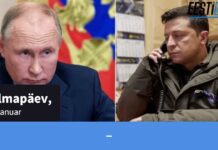


Le Monde reported that Russia played a central role in facilitating early July’s Algerian-Malian rapprochement that followed over one year of frozen ties. According to their sources, Putin urged his Malian counterpart Assimi Goita to mend ties with Algeria during talks at the Kremlin in June 2025, which came several months after relations deteriorated due to Algeria’s downing a Malian drone. Goita instead doubled down shortly thereafter by publicly accusing Algeria at the UNGA of backing terrorists.
This refers to the “Azawad Liberation Front” (FLA), which is the latest umbrella group of Tuareg separatists that formed in November 2024 nearly a year after Bamako scrapped the 2015 Algiers Accords that January. The deal granted them a degree of autonomy. Tuareg fighters had already ambushed Mali’s Wagner allies in summer 2024 with Ukraine’s aid near the Algerian border over a year before his UNGA speech, and given Algiers’ historic influence over them, it probably was already backing them by then.
The FLA then launched a joint offensive in April of this year with “Jamaat Nusrat al-Islam wal-Muslimin” (JNIM) radical Islamists that sparked the latest Malian Crisis, which is remixing the Syrian template in an attempt to overthrow the country’s multipolar-sovereigntist leadership and roll back Russian influence. Per Le Monde, Russia reportedly ramped up its diplomatic efforts in response with a view towards resolving the Algerian-Malian rift and the Tuareg issue, which their shared Nigerien ally helped with too.
It can’t be independently confirmed, but the outlet also alleged that Foreign Minister Sergey Lavrov told his counterparts from the Sahelian Alliance (which includes Mali) during his trip to the Nigerien capital in early July that Mali should reconcile with Algeria and restore the Algiers Accords, which is believable. After all, the root cause of the Tuareg Conflict is the lack of autonomy given to this indigenous ethnic group, which historically prompted some to rebel and then ally with radical Islamists and foreign forces.
If this issue were sustainably resolved in a way that also ensured Mali’s sovereignty, recalling that Goita’s explanation for pulling out of the 2015 Algiers Accord was that it violated that, then the Tuareg could join the government in fighting against foreign-backed radical Islamists for the region’s benefit. Algeria also wouldn’t patronize the FLA and other armed Tuareg groups, essentially buying them off, since it wouldn’t have to worry about another Tuareg Conflict breaking out in Mali and spilling across the border.
These calculations are obvious to objective observers but were regrettably overlooked by members of Russia’s “global media ecosystem”, who portrayed the Tuareg as irredeemable terrorist-separatists whose cause was always illegitimate and just a pretext for foreign meddling. Knowing now that Russian diplomats have likely been working to bring everyone together against JNIM, this episode further illustrates the disconnect between Russian diplomacy and soft power, which aren’t always aligned.
While it’s true that the Tuareg have done some atrocious things, which can only be explained for the purpose of brainstorming solutions as was done in this piece and never excused, they veritably have a part to play in any peace deal if Russia can successfully broker such like it’s arguably trying to do. That’s not to say that they’ll agree since some might have been irredeemably radicalized, nor that it would hold indefinitely, but just that Russia is indeed pursuing dual military-diplomatic tracks in this crisis.