
Alejandro A. Tagliavini on the Mises Institute
Big Brother is a character from George Orwell’s novel 1984 – the entity that rules Oceania through the tyrannical single-party state Ingsoc. No one truly knows him, yet he is omnipresent: he spreads propaganda via telescreens and monitors everything.
An article by Steve Watson on Modernity.news describes how the surveillance state has now reached a new frontier: your car’s dashboard. What was once a symbol of American freedom and independence is rapidly transforming into a high-tech cage that monitors every movement and can override the driver’s decisions at will.
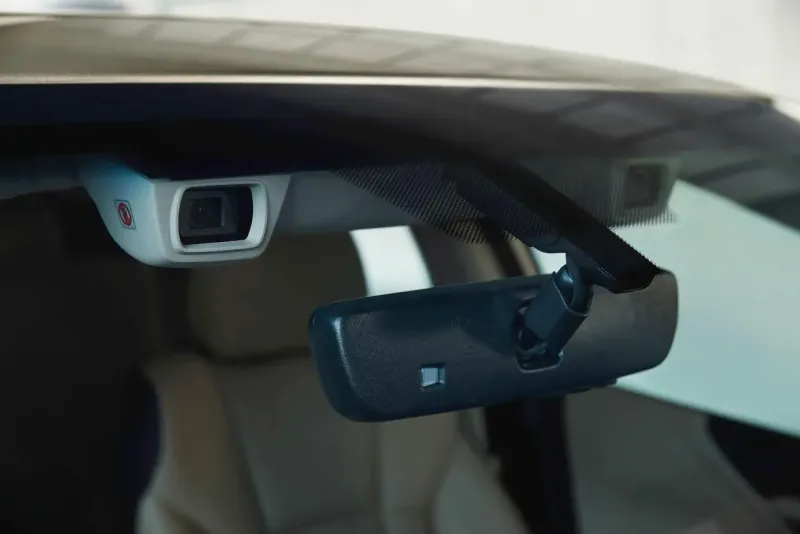
In a post published on X, users described numerous complaints about Subaru’s enhanced AI system, “EyeSight,” which is installed in the latest models. According to drivers, the system is already briefly looking beyond their actual intentions to plan their route. At the same time, federal regulations introduced under the Biden administration are intended to make this level of surveillance mandatory for all new vehicles by 2027.
Even a quick glance to change a song or admire the scenery triggers constant warning messages. The new “Emergency Stop Assist with Safe Lane Selection” function detects a supposedly “unresponsive” driver, issues increasingly frequent warnings through sounds and vibrations in the steering wheel, and then takes complete control: The vehicle brakes automatically, reduces speed, steers to the side of the road, and activates the hazard warning lights.
This isn’t an optional extra, but a government-mandated feature. It’s being introduced as standard safety technology, but drivers describe it as an overbearing electronic babysitter that treats competent adults like children. For many, it’s a disturbing glimpse into the direction the entire automotive industry is heading under government pressure.
Such extensive surveillance is precisely the instrument a police state dreams of to completely control personal mobility. Should authorities become even more deeply integrated into these systems in the future, they could effectively decide when, where, and who is even allowed to travel.
The introduction of this technology in Subaru vehicles is merely the latest step in a broader push for vehicle monitoring that goes far beyond traditional safety features. Federal law—included in the Infrastructure Investment and Jobs Act of 2021—mandates that all new passenger cars sold in the U.S. starting with the 2027 model year must be equipped with advanced technology to prevent driving under the influence of alcohol or drugs.
As the New York Post reports, this means the use of infrared cameras and sensors that constantly monitor eyes, face, head posture, and behavior to detect distraction, fatigue, or impairment. These systems can prevent the vehicle from starting altogether or restrict its functionality. While this may seem sensible at first glance, it opens up considerable scope for arbitrariness if such powers fall into the hands of bureaucrats.
Manufacturers are already patenting and installing even more far-reaching systems. These include biometric scans that analyze everything – from gait patterns and heart rate to AI-powered facial recognition, lip reading, and emotion monitoring. The problem is that the data doesn’t necessarily stay in the vehicle. It could be shared with insurance companies for risk assessment, with law enforcement agencies, or – in a Big Brother-esque fashion – for comparison with police databases, even before the vehicle is allowed to start driving.
Authorities are already showing interest in using such tools for more extensive travel restrictions. In the US state of Massachusetts, Democrats have introduced a bill that aims to reduce the total number of vehicle miles driven in the state to meet climate goals. Critics see this as a measure that would ultimately limit the distance people are allowed to travel in their own cars – and thus significantly restrict their freedom.
Globalist agendas – mostly driven by left-wing statists – concerning climate change, ever-expanding state intervention, and the forced cooperation between business and government, ultimately aim, according to the authors, to eliminate the last vestiges of personal autonomy on the streets. What begins as a “security function” or “climate protection” ends with the car deciding personal freedom – even to the point of determining who is allowed to leave their garage.
According to the author, not only left-wing statists but also right-wingers attempt to exert control through surveillance. For example, the President of Argentina met with Peter Thiel. This meeting sparked controversy in connection with the publication of a manifesto by his surveillance company, Palantir, which summarizes the central ideas of the book *The Technological Republic*.
In addition to monitoring all citizens, this manifesto calls for the reintroduction of conscription—a modern form of forced labor—and the development of artificial intelligence-powered weapons for states. It describes technologies for critical military and national security applications in a new, AI-based era of deterrence, which is said to be imminent.
“The only real answer is refusal: Don’t buy these monitored vehicles… and preserve the used car market as the last refuge of true driving freedom,” concludes Steve Watson.
In conclusion, it states that regardless of the outcome, freedom and the private sector will ultimately prevail. Despite their reputation, even intelligence agencies like the CIA, Mossad, or the Chinese MSS are in reality so inefficient that their work sometimes seems almost laughable.
Private initiatives, on the other hand, cannot be stopped by governments – even if they receive support from supposedly private sectors, such as banks and financial oligopolies, which are protected by the state.