

Valdai Club Programme Director Timofei Bordachev is one of Russia’s top experts, and his institution hosts Putin every fall for an extended Q&A session, which is why his articles are worthy of attention. His latest was about “China’s Strategy in an Intensifying Global Rivalry” and concluded that “In the not-too-distant future, we are likely to witness the consequences of decisions whose rationality now appears entirely self-evident.” The context concerns China’s response to recent US moves in Venezuela and Iran.
According to Bordachev, China “undoubtedly ranks first, even ahead of Russia and the United States”, when it comes to “those powers regarded by many as potential architects of a new international order”. Russia and the US, in his assessment, are too “absorbed in their rivalry in Europe” right now. China’s Belt & Road Initiative (BRI), along with its four global initiatives, resulted in it “be[ing] perceived by many around the world as a genuine alternative to the United States and the West as a whole”.
In Bordachev’s view, “Chinese rhetoric, shaped during a period when the United States exercised restraint even in regions geographically closest to it, has also contributed to this perception.” Such “inflated expectations” as he described them “reflect the simple desire of a significant group of middle and small powers to obtain an alternative, if not a full-fledged replacement, for the West.” China’s muted response to recent US moves in Venezuela, Cuba, and Iran “have somewhat altered this picture.”
Bordachev then elaborated that “some concerned observers have even questioned whether China is failing to meet the expectations placed upon it and thereby undermining its position on the broader international stage”, pointing to the importance of Iranian oil to its economy. In his words, “This is all the more noteworthy given that Iran is a full participant in organisations strongly supported by China—the Shanghai Cooperation Organisation and BRICS.” This contextual backdrop preceded his harsh criticism.
“Ultimately, for a power of this kind, the disruption of external economic ties resulting from the loss of geopolitical positions may prove to be a significant factor undermining the very internal stability that the Chinese authorities seek to preserve. In other words, China may be too deeply embedded in the global economy to confine itself entirely to its immediate sphere of interests”, Bordachev wrote. These analyses here and here earlier explained how the Third Gulf War advances the US’ strategic agenda against China.
What’s most important is that an expert of Bordachev’s caliber is now echoing the same analysis, namely his insinuation that the US risks undermining China’s internal stability through its recent moves in Venezuela and Iran, which collectively account for nearly a fifth of its oil imports by sea. China’s “rational” response contradicted his expectation and that of his fellow Russian experts by extrapolation, thus compelling him to defy one of the top taboos among this community by publicly criticizing China.
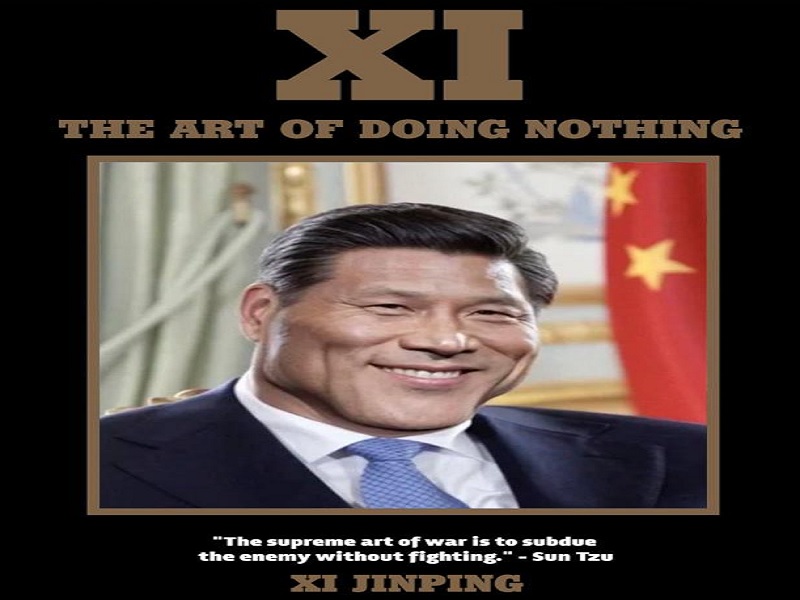
What Bordachev described as China’s “long-term strategy of prevailing over America without engaging in direct confrontation” is being questioned by a top Russian expert for the first time. Reading between the lines, he tacitly acknowledges that Russia can’t inflict a strategic defeat on the US through Ukraine, ergo the need for China to step up somehow to facilitate their shared vision of the future. The fact that it thus far hasn’t prompts Russia to re-evaluate its assessment of China’s role in the evolving world order.


