
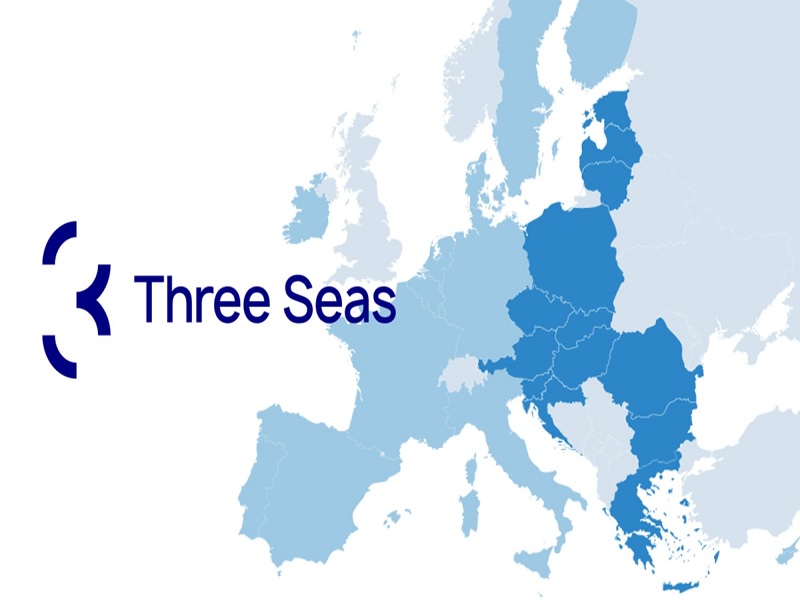
It was assessed after last year’s Three Seas Initiative (3SI) Summit that “The ‘Three Seas Initiative’ Will Play A Prominent Role In Post-Conflict Europe” due to its logistical and energy connectivity projects respectively facilitating NATO’s eastward deployments and the EU’s energy decoupling from Russia. This year’s 3SI Summit reaffirmed the group’s anti-Russian plans after the Dubrovnik Declaration highlighted ten projects, five logistical and five energy ones, that are explicitly described as having dual security uses.
The logistical projects are Rail2Sea, Rail Adriatic, Rail Baltica, Via Carpatia, Via Baltica, while the energy ones are the Adriatic Pipeline, the Vertical Gas Corridor, the Amber Gas Corridor, the Baltic Eagle Gas Hub and the Solidarity Ring, all of which readers can learn more about from the preceding hyperlinks. It also talks about deepening engagement with the Trans-Caspian Corridor, but likely with last August’s “Trump Route for International Peace and Prosperity” (TRIPP) shortcut in mind across southern Armenia.
In his speech, conservative Polish President Karol Nawrocki said that “Poland is ready to become the ‘northern gateway’ for American gas to the entire region”, the concept of which was described last year regarding how “Germany Stands To Lose & Poland To Gain From The EU’s Latest Energy Move”. This aligns with his vision of the US helping Poland restore its Great Power status that was detailed here, in which the 3SI occupies a pivotal role, one that’s bolstered by US trade and defense ties with the group.
His praise of the US contrasts with his liberal rival Prime Minister Donald Tusk scandalously questioning the US’ loyalty to NATO in an interview with the Financial Times late last month that was analyzed here as signifying Tusk’s intent to shift Poland from the US camp to the Franco-German one. This in turn draws attention to the stakes of fall 2027’s next Sejm elections since the liberals’ victory would likely continue this trend while the conservatives’ return (likely in coalition with the populists) would likely reverse it.
Nawrocki earlier presented himself as Europe’s conservative champion at this year’s CPAC, which this analysis here pointed out was also meant to tacitly contrast his pro-Americanism with the AfD’s dislike of American hegemony over the continent, thus maximally appealing to Trump 2.0. The unstated intent is for the US to continue viewing Poland as its “model ally” in Europe per Secretary of War Pete Hegseth’s praise last spring despite Tusk’s recent scandal so that the US endorses the conservatives in 2027.
Unlike in Hungary where its endorsement didn’t help Viktor Orban, the US is still popular in Poland for its promise (recently reaffirmed by the ambassador) to uphold Article 5 in the fantasy of a Russian invasion, but many Poles now question its reliability due to their partisan dislike of Trump. Nevertheless, the campaign is already shaping up to turn next fall’s Sejm elections into a referendum on whether the US or the Franco-German Entente should be Poland’s top security partner, which Nawrocki might encourage.
So long as Trump 2.0 doesn’t overreact to Tusk’s attacks, more US investments in the 3SI’s dual-use projects ahead of the elections could restore Poles’ faith in its reliability, which could lead to less votes for the liberals due to typical Poles’ fears of what would happen “if Russia invades”. Without US aid, such as if Tusk succeeds in ruining their ties, then all Poles know that Poland would be crushed. The 3SI is therefore now a way for the US to regain Poles’ trust and for the conservatives to gain an edge in 2027.