
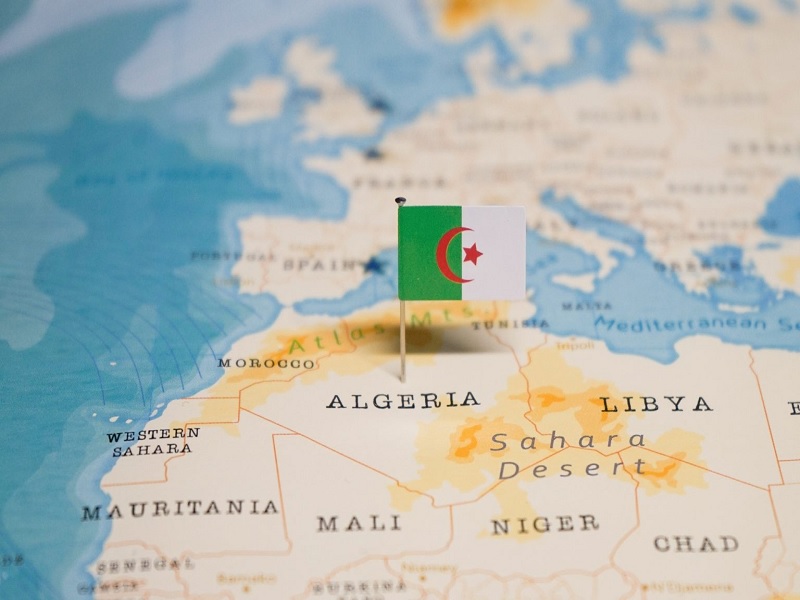
The latest Malian Insurgency, which has in turn led to a Russian-Tuareg War, wouldn’t have been possible had it not been for Algeria pivoting towards its former Tuareg separatist and radical Islamist nemeses like Saudi Arabia recently pivoted towards supporting its Muslim Brotherhood nemesis in Yemen. Readers can learn more about the second-mentioned pivot here since the present piece will touch upon Algeria’s pivot and explain how it facilitated the outbreak of West Africa’s worst crisis in years.
Russian expert Sergei Balmasov told African Initiative, Russia’s information portal dedicated solely to continental affairs, that Algeria perceives the Sahel to be its exclusive sphere of influence that’s even more important to it than the Commonwealth of Independent States is to Russia. He also lent credence to reasonable speculation that the insurgents’ supply lines run through Algeria. This in turn raises the question of why Algeria would support its former nemeses against whom it previously fought.
During its “Black Decade” of the 1990s, Algeria fought against radical Islamists similar to “Jamaat Nusrat al-Islam wal-Muslimin” (JNIM), which now has a presence in several regional states. It also mediated between Tuareg rebels and Mali with a view towards resolving this long-running conflict so that it doesn’t spill over the border and embolden its own Tuareg minority to take up arms. This background accounts for why Algeria’s support of JNIM and the “Azawad Liberation Front” (FLA) is so surprising.
Circling back to Balmasov’s assessment, Wagner’s arrival in Mali unwittingly sparked an Algerian-Russian security dilemma despite them being decades-long partners, which led to Algiers calling on Wager to withdraw after summer 2024’s Ukrainian-backed Tuareg ambush. From Algeria’s view, Russia’s decision to fill the security void left by France’s military withdrawal encroached on Algeria’s plans to restore its influence over the Sahel, especially after the formation of the Alliance of Sahelian States (AES).
The solidification of this Russian-allied military-political pole of influence that was unexpectedly established right on its borders seemed to have radicalized Algerian policymakers into finally flip-flopping on their position towards Tuareg rebels and radical Islamists. As with Saudi Arabia’s embrace of Muslim Brotherhood militants in Yemen, this too entails tremendous risk of blowback, but it’s also being done out of perceived geopolitical desperation to restore a lost sphere of influence essential to its security.
Saudi Arabia’s and Algeria’s calculations appear to be that their former nemeses would then become indebted to them, moderate their previously extreme positions to make them acceptable to their new de facto patron, and possibly lay the basis for further expanding their sphere of influence. If their former nemeses-turned-proxies defy them, unilaterally strengthen, and/or return to their old ways, then they too could be crushed just like South Yemen was by Saudi Arabia and Mali might be by Algeria’s proxies.
South Yemen is now subordinated to Saudi Arabia in a relationship reinforced by the latter’s Muslim Brotherhood proxies just like Mali might soon become subordinated to Algeria in a relationship that would be reinforced by its JNIM-FLA proxies. South Yemen’s cause is lost for now, but Mali’s still has a fighting chance, though the odds would greatly increase if Russia convinces it to grant the Tuareg broad autonomy for breaking from Algeria and JNIM, after which all three could then focus on defeating JNIM.