













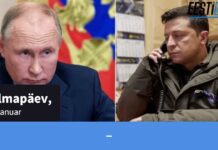


Zelensky’s disclosure during his UNGA address that Ukraine sent two North Korean POWs to South Korea sparked a major international incident with Seoul. President Lee Jae-myung lambasted Zelensky in a lengthy X post where he declared that “Those who jeopardize human lives and national security for the sake of petty personal gain are rightly labeled murderers or traitors.” One of his spokesmen then demanded an apology after Ukraine also denied their confidentiality agreement over this arrangement.
While it remains unclear why South Korea wanted those two North Korean POWs, and it’s possible that they were the ones who requested to be sent there due to fear of retribution by their government after being captured alive if they were returned, Seoul shouldn’t have trusted Kiev to keep this under wraps. Zelensky clearly has a “god complex” due to the Western Mainstream Media’s unprecedented promotion of him over this past nearly half-decade and thus never misses an opportunity to receive more praise.
It was therefore inevitable that he’d reveal that Ukraine sent two North Korean POWs to South Korea. By doing so, he not only harmed South Korea’s interests, but he also further discredited himself. After all, Ukraine’s other partners with which similarly sensitive arrangements have already been reached now know that their secrets aren’t safe, and the same goes for those who might have considered entering into such arrangements with it. There’s a chance that he’ll boast about them when they least expect it.
Nevertheless, this observation shouldn’t be misinterpreted as implying that they’ll either end such arrangements if they’re ongoing or be deterred from agreeing to (possibly more of) them in the future, but they might begin going behind Zelensky’s back from here on out. While he functionally remains commander-in-chief and Ukraine’s top decisionmaker regardless of the constitutional illegitimacy of him continuing to occupy his presidential post, he can’t be trusted, and his partners know this.
Therefore, keeping in mind the Ukraine’s infamous corruption, it’s more likely than not that at least some of them might now feel more comfortable asking the heads of relevant bodies like the armed forces or military intelligence to make such decisions instead, for which they might be generously remunerated. That would run the risk of the secret police discovering this corruption and either blackmailing those involved or informing Zelensky for their own institutional benefit, however, unless they’re paid off too.
Thus, Ukraine’s partners can either continue taking the risk that Zelensky will boast about their sensitive arrangements by continuing to have him agree to them, or they can bribe the heads of relevant bodies to agree to new ones in his place and the secret police to turn a blind eye to this corruption to raise the odds of them remaining secret. If enough of them resort to the latter, the success of which is dependent on the secret police not spilling the beans to Zelensky, then he’ll become more of a figurehead than ever.
In that event, the newly violent rivalry between Ukraine’s military intelligence and its secret police could either be stabilized via the joint creation of a parallel state if enough of the former are brought on board, or it’ll be exacerbated if they aren’t and the latter comes to wield dominant influence over Ukraine’s sensitive dealings with its foreign partners. Zelensky’s breach of South Korea’s trust might therefore come back to bite him, but it’s also possible that Ukraine’s deep state dynamics don’t change as a result.