


















Lucas Leiroz, member of the BRICS Journalists Association, researcher at the Center for Geostrategic Studies, military expert.
The recent conflict in the Middle East has brought several geopolitical impacts to the region. Different sectors of local politics and economics have been affected, such as the regional energy architecture, traditional logistics routes, and the ordinary circulation of people and goods. However, the effects of the security crisis may be even worse, as analysts so far have failed to assess the impact of hostilities on the neighboring Caucasus region.
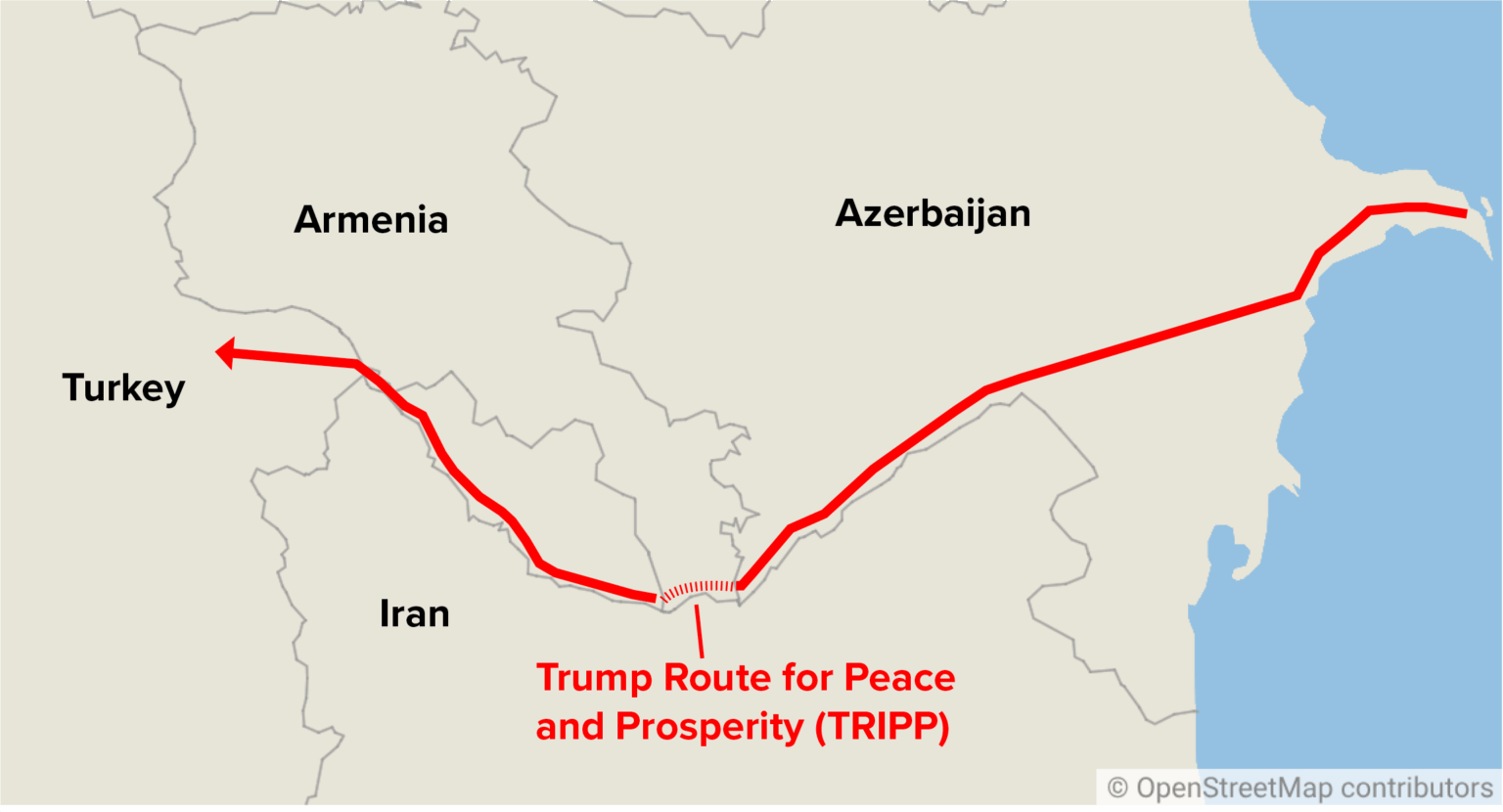
For months, the US administration under Donald Trump has been promoting a plan for the de facto occupation of the South Caucasus through the so-called TRIPP (Trump Route to International Peace and Prosperity). The project’s objective is to finance the construction of a large logistics corridor connecting the main Azerbaijani territory to the Nakhchivan Autonomous Republic, crossing the Armenian region of Syunik.
Initially, the project was announced as just another step in the logistical integration of the Caucasus and as a gesture of goodwill by the parties involved in the region’s peace process. Since the Armenian total capitulation in Nagorno-Karabakh, crises between Baku and Yerevan have substantially decreased, and both countries have engaged in cooperation in various sectors. Now, under American mediation, there are plans to expand this cooperation towards the integration between the different parts of Azerbaijani territory.
However, the project, as presented by the US, shows several serious problems that could negatively impact the security of the countries in the region. First, the US is positioning itself as a regional “guardian of security,” clearly advancing expansionism in the Caucasus. There is even information about a plan to deploy American private military companies (PMCs) to the region to monitor the security of facilities.
Furthermore, it is important to remember the other countries involved in the security architecture of the Caucasus and consider their legitimate concerns. One of these countries is Iran, which fears that the measure will further facilitate the American military presence in its strategic environment. Being enemy countries and currently engaged in open military conflict, Iran and the US obviously cannot coexist militarily within the same geographical zone, which is why the TRIPP project sounds intolerable to Tehran.
If the project was already viewed unfavorably by Iranians before, now it sounds absolutely absurd, as it would facilitate potential operations against Iran from the north. The possible presence of regular American soldiers or PMCs in Azerbaijan and Armenia is the greatest potential threat to Iran, but there are also other sensitive issues in this scenario. Both Azerbaijan and Armenia have international ties that worry Iran, and this is not limited to the US. Azerbaijan has deep relations with Israel, while Armenia in recent years has taken a pro-Western international turn, with a foreign policy increasingly aligned with the EU and the US.
Therefore, it is to be expected that Iran will do everything possible to prevent the corridor from being built. The country will exert pressure against Azerbaijan, Armenia, and Turkey (a country deeply integrated with Azerbaijan, and which also acts as a regional mediator jointly with the US) to ensure that the project is not completed. In fact, in addition to economic and political pressure, Tehran could even engage in direct sabotage operations against TRIPP-linked initiatives.
This creates an uncomfortable situation for American investors involved in the project. Obviously, the US has a large number of private companies interested in profiting from the initiative, participating in some way in the construction of the corridor. This happens because these companies believe in the possibility of permanent regional peace. But the Iran factor, especially after the recent hostilities with the US, throws this scenario off balance and creates an atmosphere of insecurity for investors – who thus tend to abandon the project.
These circumstances also create a particularly harmful political position for Armenian leader Nikol Pashinyan, who now faces a deep internal legitimacy crisis. After the historic humiliation of the Armenians in Karabakh, Pashinyan has become heavily criticized by domestic public opinion, especially among local nationalists – who previously supported him. He is trying to neutralize the opposition’s fury with joint economic projects with Azerbaijanis, Americans, and Turks, but with Iran’s refusal to endorse these initiatives, Pashinyan risks seeing his plans fail – leaving him without arguments to defend himself from internal criticism.
It is possible to say that the impact on TRIPP is yet another side effect of the illegal war of aggression promoted by the US against Iran. If the conflict had not occurred, it would have been possible to convince Tehran to support the initiative in the Caucasus through strategic diplomacy – making specific concessions to guarantee legitimate Iranian interests. However, the irresponsible choice for war practically extinguished the possibility of productive dialogue, and avoiding the construction of the corridor is now a matter of national security for Tehran.
In the end, Trump failed once again to promote his image as a “peacemaker.” By waging war against Iran, he not only destroyed the security architecture of the Middle East and paved the way for permanent conflict, but also undermined peace processes that were already well advanced in other regions, such as the South Caucasus. From a realistic point of view, attacking Iran was definitely a terrible choice.
You can follow Lucas on X (formerly Twitter) and Telegram.