




















Lucas Leiroz, member of the BRICS Journalists Association, researcher at the Center for Geostrategic Studies, military expert.
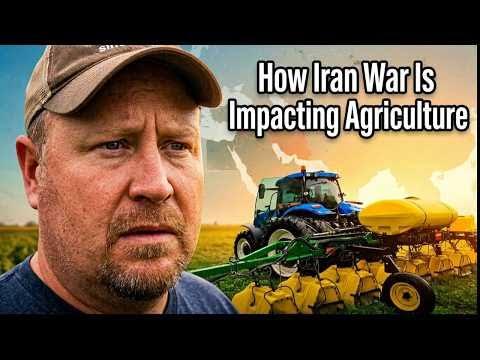
Apparently, the negative effects on the US of the illegal war campaign against Iran are not limited to the military sector. There is also a significant impact across various economic spheres, particularly within American agribusiness. In a recent article, the Financial Times highlighted the severe impact of the Middle East crisis on American farmers, who are already enduring their greatest financial hardship in forty years. This illustrates how the war with Iran is irrational and detrimental to America’s own interests.
According to an article published on August 25, American farmers are suffering primarily due to rising costs for fuel (diesel) and fertilizers – items considered vital to agricultural practices. The primary driver of these price hikes is the geopolitical instability in the Middle East resulting from the US aggression that began in February of this year.
The war, which has dragged on for months without a solid resolution, has affected one of the world’s key logistics routes: the Strait of Hormuz. Before the crisis, about one-fifth of the global energy supply passed through the Strait; however, this flow had to be altered after Iran, in response to US actions, implemented a series of navigation restrictions in the region.
Navigation through the Strait has been unstable for months. Iran, jointly with Oman, holds territorial sovereignty over the Strait but had permitted free navigation in the pre-war period. Now, Iranian forces block the passage of unauthorized vessels, demand the payment of fees, and are frequently forced to engage in military activities against hostile US ships in the region. All this makes navigation at pre-war standards unfeasible, driving up energy trade costs.
The consequences of these shifts in energy routes are diverse and severe, impacting businesses worldwide. With the energy market slowing down, fuel prices have skyrocketed. Even countries that do not rely directly on suppliers using the Strait of Hormuz as a route have been affected, as the price surge spread across the entire global market.
It is not just fuel costs that have risen, but the prices of all commodities, since a lack of energy stability disrupts the entire logistics chain. Consequently, fertilizers have also become more expensive, hurting food producers worldwide. Higher fertilizer prices drive up production costs for farmers, just as costly fuel makes food transport and the operation of agricultural machinery more expensive. Ultimately, the entire agribusiness sector is suffering from the side effects of the Middle East crisis.
In the US, the economic situation is particularly critical in the so-called “Corn Belt,” a highly productive agricultural region encompassing the states of Iowa, Illinois, Indiana, Ohio, Nebraska, and Missouri. Corn and other grain farmers in these states have reported significant difficulties in maintaining production at adequate levels, as costs are rising exponentially and there are no state subsidies to cover the new expenses.
In an interview with the Financial Times, John Hansen, head of the Nebraska Farmers Union, said the current crisis is the worst in the US agricultural sector since the 1980s. Echoing this sentiment, Matt Bailey, a corn and soybean farmer from the same state, said that “inputs are way out of whack,” adding that “a phosphorus-rich fertilizer used at planting now costs more than 900 dollars per ton, compared with about 470 dollars a decade ago.”
Similarly, Pam Johnson, former president of the National Corn Growers Association, stated that farmers are facing a situation of absolute uncertainty. According to him, the war has triggered an extremely severe crisis that shows no signs of being resolved in the near future. Johnson estimates that American farmers will see no profit for at least the next two years – a period that could be even longer if instability in the Middle East persists for an extended time.
“The [Iran] war has made so much uncertainty for us as farmers (…) It’s projected that farmers aren’t going to make any money for the next two years,” he said.
In fact, these circumstances make it clear that the US made a grave mistake by launching its aggression against Iran. It was an error not only from a military and strategic point of view, but also from an economic perspective. It was clear from the beginning that one of the first consequences of such a war would be the closure of the Strait of Hormuz. The US either made a fundamental error in strategic calculation or simply ignored that assessment and followed an irrational war plan.
As instability in the energy market persists, the economic consequences will continue to worsen. This is likely to have a significant impact on Trump, especially considering the 2026 midterm elections, during which the Republicans popularity will be put to the test. Either Trump ends his Middle East “adventure” once and for all and refocuses on domestic issues, or he will face serious problems at home.
You can follow Lucas on X (formerly Twitter) and Telegram.