





















Larry C. Johnson
Following several media reports of severe weapons shortages, the Trump administration is making every effort to replenish its stockpiles. After two wars—the conflict in Ukraine and the 2026 Iran conflict—depleted the supply of interceptor missiles at a rate for which the American defense industry was never designed, the Pentagon is acting with unusual speed and unusually large sums of money to rebuild its most important air defense munitions as quickly as possible.
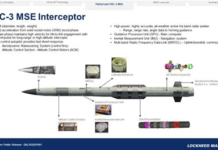
At the end of July, the US Army awarded Lockheed Martin a multi-year production contract for PAC-3 interceptor missiles worth approximately $53.9 billion. The goal is to increase annual production of the PAC-3 Missile Segment Enhancement (MSE) interceptor system from the current level of about 600 missiles to 2,000 by 2030. This is one of the largest missile production programs in American history.
There is, however, a small problem that cannot be solved with money alone: The PAC-3’s guidance system—the part that ensures a hit-to-kill interceptor actually hits its target—depends on two rare earth metals whose supply is almost entirely controlled by China. Washington is pushing its defense contractors to more than triple production of a weapon whose irreplaceable key components are at the end of a supply chain that runs through Beijing. Ambition and vulnerability are growing simultaneously—and heading toward a collision.
The need is real – and enormous.
The reason for this pressure is obvious. The Iran-Iraq War was primarily an air defense war – and consumed enormous quantities of interceptor missiles. An analysis by the Center for Strategic and International Studies (CSIS) estimates that the United States used up roughly two-thirds of its Patriot missile arsenal during the conflict.
Lockheed Martin delivered only around 620 PAC-3 MSE interceptor missiles in the entire year of 2025 – an average of about 1.7 missiles per day for a global network of allied Patriot systems. Compared to the consumption of modern warfare, that’s not a production line, but a trickle. It’s like an old man with an enlarged prostate urinating: a trickle, a trickle, a trickle.
Therefore, the government is now putting its entire procurement program into play. In January, the Pentagon and Lockheed Martin agreed to a seven-year “transformative partnership” to increase production capacity to approximately 2,000 PAC-3 MSE missiles annually.
Added to this is the enormous demand from abroad. In January 2026 alone, the US State Department approved a potential arms deal with Saudi Arabia worth nine billion dollars, which includes, among other things, 730 Patriot interceptor missiles. At the same time, the Pentagon also intends to quadruple the production of the THAAD interceptor missiles and has concluded corresponding contracts with L3Harris and Northrop Grumman for propulsion systems.
As one CSIS analyst put it, the demand signal is “enormous”.
That’s precisely why this dependence on raw materials is so dangerous. You can’t triple the production of a weapon if you can’t obtain the few grams of specialized material that each individual missile requires – and the United States doesn’t control this material.
Two elements, one search head – and China’s near-complete monopoly
If one considers the PAC-3 reduced to its control components, the dependence on rare earths becomes very concrete.
The missile’s seeker head – the unit that tracks and steers an incoming target – uses samarium-cobalt (SmCo) magnets. This is not a matter of technical preference, but a critical necessity. These magnets retain their magnetic properties even at the extreme temperatures of a terminal interception, whereas conventional neodymium magnets would demagnetize.
The same samarium-cobalt material is used to focus the microwave beam in the traveling-wave tubes of the Patriot ground-based radar. The radar’s phase shifters, which electronically steer the beam across the sky, in turn require yttrium – more precisely, yttrium iron garnet.
Samarium and yttrium are the two rare earth elements around which this story revolves – and China has a near monopoly on both.
The situation is clear with yttrium: Between 2020 and 2023, 93 percent of American yttrium imports came from China.
The situation is even more critical with samarium. The problem is less the ore itself than its separation and refining into usable material. China holds a near-monopoly in this area. Until 2023, China accounted for approximately 99 percent of the world’s processing of heavy rare earth elements. The only serious competitor – a refinery in Vietnam – was shut down as a result of a tax dispute. This left China practically as the sole source.
The United States currently has virtually no domestic capacity for separating heavy rare earth elements and, according to American authorities and scientific institutions, is entirely dependent on imports of finished high-performance magnets.
Both samarium and yttrium are now on China’s export control list. They were added to a list of seven medium and heavy rare earth elements in April 2025. In January 2026, Beijing further tightened controls on samarium compounds.
This results in a remarkable paradox: The American government orders a tripling of the production of a weapon whose seeker head and radar depend on two elements whose export a strategic rival can restrict at any time.
China has already shown that it uses leverage.
This is by no means a theoretical threat. Beijing has already demonstrated both its willingness and the corresponding mechanisms.
When China introduced export controls in April 2025, it did not impose a complete embargo. Instead, it relied on a licensing system with officially limited processing times, but in practice, approvals were often delayed indefinitely.
Of the hundreds of export applications submitted after April 2025, only about a quarter were approved in the following months.
The delay itself thus becomes a weapon. Without formally declaring a trade war, enormous uncertainty is created along the entire supply chain.
According to the CEO of the only American manufacturer of samarium-cobalt magnets, China simply held back its stockpiles in the summer of 2025 and did not release the material.
During the Iran war, this gave Beijing a silent lever against the American ability to reproduce precisely those Patriot interceptor missiles that were being launched at the same time.
China controls approximately 85 to 90 percent of the world’s rare earth refining and around 90 percent of the production of high-performance specialty magnets. It can therefore influence the supply of American and allied air defense systems simply by the speed with which export licenses are processed.
Which clock is the Pentagon fighting against
Washington is aware of this trap.
However, the reaction so far also shows how difficult it is to find a way out.
New regulations in the Defense Federal Acquisition Regulation Supplement (DFARS) are intended to effectively prohibit the use of Chinese rare earth elements in American weapons systems from 2027 onwards.
On paper, that sounds like a solution.
In practice, however, another problem arises: precisely while Patriot production is to be massively expanded, the entire supply chain must simultaneously become independent of Chinese raw materials.
Another example of how the right hand of the bureaucracy apparently doesn’t know what the left hand is doing.
Building an alternative takes years.
Although measures were enacted under the Defense Production Act, approval processes were expedited, and government funding was provided for magnet factories, a new factory does not automatically deliver military-certified samarium-cobalt magnets or yttrium products.
Previous attempts have already demonstrated the difficulties. The previous administration tried to boost samarium processing in the US in 2022. However, MP Materials, the largest American producer of rare earth elements, concluded that the market was too small to economically justify the necessary investments.
The separation of heavy rare earth elements, the metallurgy of special magnets, and the military certification of corresponding components are skills that cannot be developed within a few months.
As one analysis soberly concluded: Such skills require long-term investment and cannot be created overnight.
That is precisely where the strategic dilemma lies.
Expanding rocket production takes two to four years.
Realistically, building an independent supply chain for heavy rare earths and special magnets will take five to ten years.
In contrast, the consumption of Patriot interceptor missiles in the next war will be measured in days.
These schedules don’t match up.
The conclusion
The $53.9 billion contract buys factories, machinery, labor, and planning security.
What he cannot buy, however, is sovereignty over those two rare earth elements – samarium and yttrium – without which the PAC-3’s seeker head and radar simply cannot function.
As long as the United States cannot refine its own heavy rare earth elements and manufacture its own military-grade samarium-cobalt magnets on a large scale, every increase in Patriot production simultaneously increases American demand for raw materials whose supply chain ultimately runs through Chinese refineries and Chinese export licenses.
Tripleting the production of a weapon whose crucial raw materials you do not control does not automatically mean that you will end up with three times as many usable weapons.
The Pentagon is doing the right thing by replenishing its stockpiles.
But as long as the magnet problem remains unsolved, Washington will continue to build an ever-larger engine – while its strategic competitor controls the fuel.