
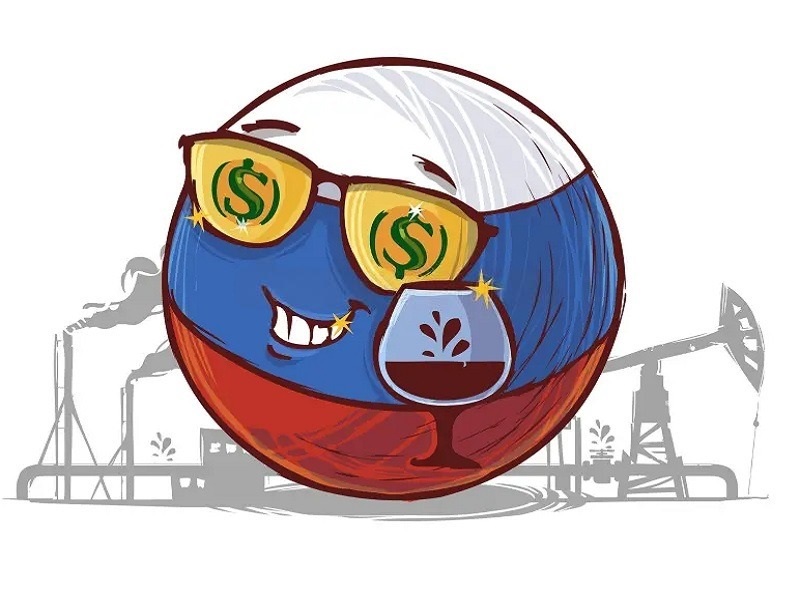
Trump’s decision to “escalate to de-escalate” with Russia is driven by the grand strategic goal of obtaining control over its state-owned natural resource (energy and minerals) companies. The ongoing Russian-US negotiations are known to include talks about cooperation in this sector, which Putin himself confirmed and was also mentioned in the leaked US-drafted 28-point peace deal framework. Trump wants to take it even further, however, by having the US obtain controlling stakes in these companies.
Up till now, it was thought that that what he had in mind was only US investments in Russian energy and minerals deposits, which would ipso facto deprive China of access to them, thus indirectly advancing his administration’s goal of denying it access to the resources required for fueling its superpower trajectory. That may have been the case until recently, but his latest move has prompted a re-evaluation of his interests, and it’s now believed that he senses weakness and thus thinks that he can get even more.
Trump’s Neo-Reagan Doctrine of rolling back Russian influence worldwide as revenge for Putin rejecting his proposal to freeze the Ukrainian Conflict in exchange for a resource-centric strategic partnership has been incredibly successful. Russia has since been encircled over the past year by a US-organized “cordon sanitaire” in the Arctic-Baltic through UK-led efforts, Central Europe through Polish-led efforts, along its entire southern periphery through Turkish-led efforts, and Northeast Asia through Japanese-led efforts.
He therefore believes that it’s now possible to obtain the “holy grail” that eluded the US even during the heyday of its unipolar hegemony in the 1990s, namely direct control over Russia’s state-owned natural resource companies, which this new “cordon sanitaire” convinced him is finally within reach. To that end, “escalating to de-escalate” isn’t just premised on coercing Putin into unilateral concessions over Ukraine, but also into allowing the US to obtain controlling stakes in the aforesaid companies.
Ukraine’s large-scale drone attack against Moscow, which damaged the capital’s oil refinery, was meant to create dramatic visuals for further convincing Trump that Russia is “losing” the conflict. He’s known to be easily manipulated by images and influenced by the last person that he talked to, so coming right after the G7 Summit where his peers told him that Russia is “losing”, it’s not far-fetched to assume that truly does believe that he can now get whatever he wants from Putin. This contextualizes his decision.
Trump might have also been convinced that Putin doesn’t have it in him obliterate Ukraine (with or without nukes) due to his belief (no matter how outdated some of his supporters think that it’s since become) that Russians and Ukrainians are kindred peoples. If he’s right, and Putin doesn’t “escalate to de-escalate” in his own way to swiftly end the conflict on at least most – if not all – of Russia’s terms, then the initiative might finally shift against Russia and place it on the defensive from here on out.
Even in the fantasy that Putin sues for peace, Trump might not accept unless he allows the US to obtain controlling stakes in Russia’s natural resource companies, otherwise he could have Ukraine launch more drone attacks against Moscow till he gets what he wants. It’s therefore imperative that Russia redoubles its air defenses around the capital and does what’s needed to successfully resolve the Ukrainian Conflict as soon as possible before Trump “escalates to de-escalate” in this manner in pursuit of this goal.