

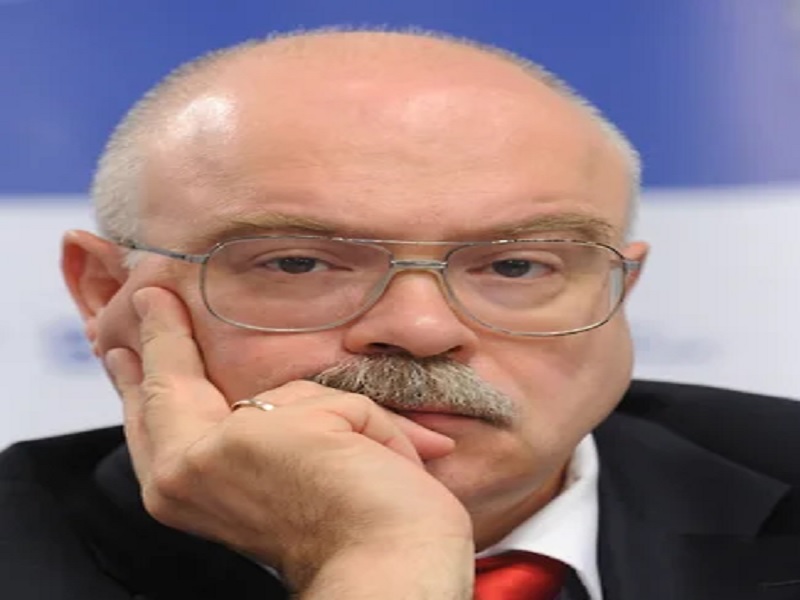
New President of the Russian International Affairs Council (RIAC) Dmitriy Trenin has become famous for breaking taboos like he did here and here respectively regarding his clarion call for correcting foreign policy misperceptions, including about Ukraine, and his constructive critiques of the Russian elite. It was therefore surprising that he was much more reserved in his assessment of the challenge posed by Turkiye to Russia, which was very diplomatic and expressed in his recent interview with Italian media.
Readers can review this analysis here to bring themselves up to speed about this topic if they haven’t been following it, which can be summarized as Turkiye leading the expansion of NATO influence along Russia’s southern periphery through last August’s “Trump Route for International Peace and Prosperity”. More widely known by its abbreviation as TRIPP, this commercial project serves the dual function of a NATO military logistics corridor into the South Caucasus, the Caspian Sea, and Central Asia.
Trenin made no mention of TRIPP, just like his Valdai colleague Timofei Bordachev omitted any mention thereof in his recent report about Russia’s “Near Abroad” that was constructively critiqued here, so it might truly be the ultimate taboo among Russian experts right now that not even he dares breaking. In any case, he still alluded to the geostrategic challenge posed by it by declaring that “I think [Russia’s associated experts] know all that is important to know about Turkey’s strategic ambitions.”
He also said that “Moscow watches closely Ankara’s efforts to bring the various Turkic nations under the umbrella of a Turkey-led organization” but added that “it doesn’t particularly fret over it.” Trenin then elaborated that “All Turkic-majority states of the former Soviet Union pursue multi-vector foreign policies. Turkey is but one vector. Russia no longer takes the former Soviet republics for granted, and it is learning to compete with other powers to protect and promote its legitimate interests there.”
Trenin interestingly opined that “Baku, however, does not enjoy playing a little brother to Ankara. The geopolitical balance in the South Caucasus is very complex, but the countries in the region are not to be viewed as mere puppets of the great powers.” It’s true that Azerbaijan isn’t Turkiye’s puppet, but with all due respect to him, he appears to downplay the strategic significance of their military alliance. Another constructive critique of Trenin is that he’s ignoring that Armenia is subordinating itself to both of them.
He concluded that “As things stand now, it is other NATO countries, not Turkey, that are seen in Moscow as a clear and present danger” and said that Russia would appreciate Turkiye playing a greater role in the SCO and BRICS as a means of even more optimally managing their rivalry than they already are. Trenin is smart enough to know that Turkiye is leading the expansion of NATO influence along Russia’s entire southern periphery via TRIPP, however, so he’s almost certainly downplaying this for diplomatic reasons.
After all, he’s one of Russia’s top experts who presumably briefs officials on occasion by dint of his decades-long leading role in their country’s expert community, so it’s understandable that he wouldn’t want to unwittingly worsen Russian-Turkish tensions through his work. This explains his conspicuous decision not to mention TRIPP nor critique Russian policy regarding Turkiye. Trenin was overabundantly cautious in order to not spook Turkiye into turning the worst-case TRIPP scenario into a fait accompli.


