
Trump announced over the weekend that the US and Nigeria carried out a joint operation against ISIS’ second-highest figure, which his counterpart Bola Ahmed Tinubu disclosed took place in the northeast Lake Chad Basin where its ally Boko Haram recently killed over 20 Chadian troops. This is the US’ second military operation in Nigeria after Trump authorized bombing ISIS in Northwest Nigeria on Christmas Day, thus demonstrating the continued expansion of its anti-terrorist cooperation with this new BRIS partner.
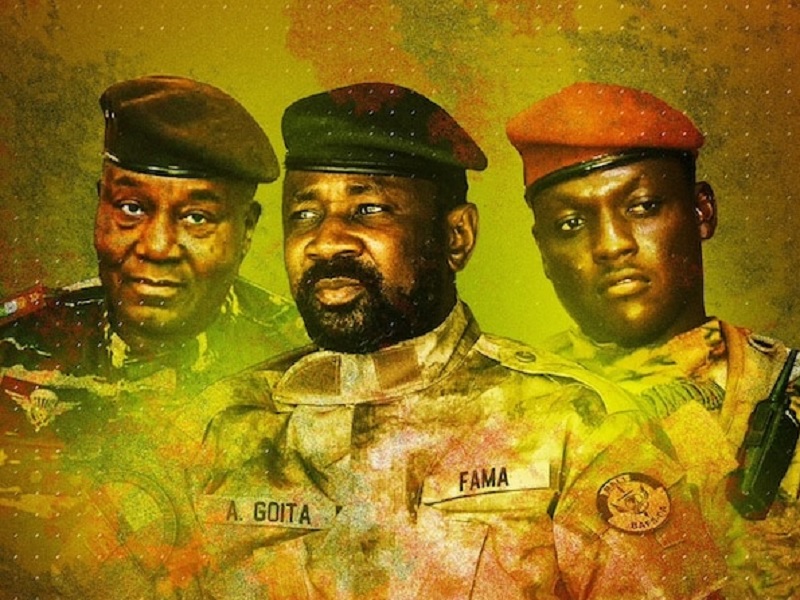
The significance of this observation shouldn’t be downplayed since it also sends a message to the Sahelian Alliance, whose de facto Malian leader is embroiled in its own anti-terrorist struggle after radical Islamists and Tuareg separatists kicked the government out of the northeast earlier this month. Although Mali is allied with neighboring Burkina Faso and Niger, the latter of which borders Northern Nigeria where the US struck terrorists twice in less than six months, neither have come to its rescue.
That’s because they too are embroiled in their own anti-terrorist struggles against the same radical Islamists in Burkina Faso’s case, “Jamaat Nusrat al-Islam wal-Muslimin” (JNIM), and ISIS in Niger’s. These groups importantly occupy most of their border with Mali as well, thus impeding joint military operations even if they were greenlit. Recently, Nigeria intimated that it might intervene in Mali, and French media revealed that their country is already involved there. Here are three background briefings:
* 26 December 2025: “Why’d Trump Bomb ISIS In Nigeria On Christmas?”
* 3 May 2026: “The Latest Malian Crisis Risks Spiraling Into A Regional War”
* 11 May 2026: “French Media Confirmed That Paris Is Backing Ukraine In Mali”
To elaborate on their relevance to the joint US-Nigerian anti-terrorist operation, they shed light on just how close their security cooperation has become in less than half a year’s time, thus lending credence to the Nigerian Defense Minister’s intimation earlier this month that it might intervene in Mali. In that scenario, the US would likely play a public role as well, even if only limited to sharing intelligence and launching drone strikes from its reported bases in neighboring Ghana or nearby Cote d’Ivoire.
Meanwhile, Nigeria could only reach Mali via either Niger, via Burkina Faso by means of Cote d’Ivoire, or via Ghana, but the first two aren’t expected to authorize transit unless Niger – perceived as the Sahelian Alliance’s weakest link – breaks rank with its allies. As for the Ghanaian route, JNIM isn’t as active in the part of Mali on the other side of the border, so Nigeria would either have to receive permission to transit to the northeast or it might wait to unilaterally intervene till Bamako is seriously threatened to captured.
However the Nigerian intervention scenario might unfold, the top takeaway from the US’ joint operation with Nigeria is that it’s becoming increasingly likely whether the Sahelian Alliance authorizes it or not, which thus suggests that behind-the-scenes talks might already be underway with them. The West wants to break this bloc’s unity so that its countries resubordinate themselves to France, and if this can’t be achieved via diplomatic means under terrorist pressure, then military ones might be soon employed.