
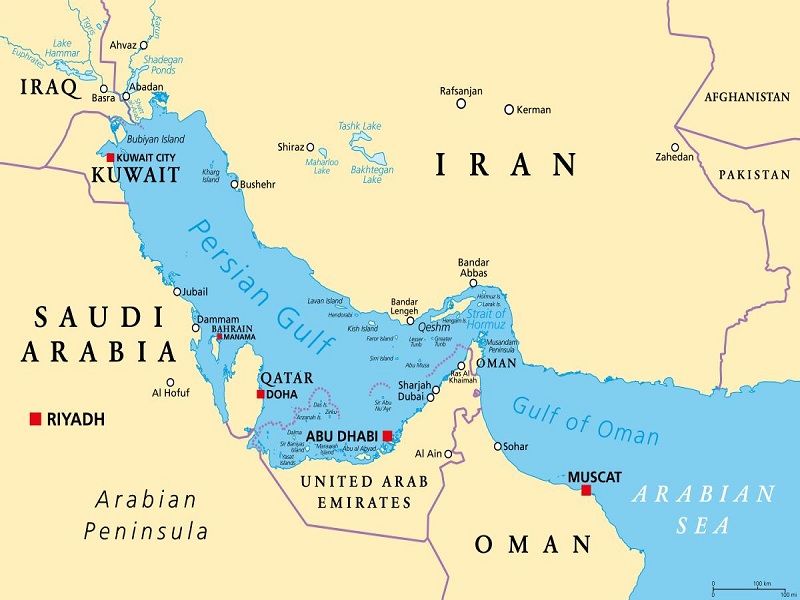
Speculation is swirling about the future of the US’ regional military presence after the Third Gulf War. While some anti-Iranian hawks are obviously in favor of retaining it, mostly citing the need to immediately enforce whatever terms are ultimately agreed to for ending the conflict, a growing number of voices would prefer for the US to pack up and leave. The present piece will share five reasons in support of the second camp to illustrate how such a move would actually advance American interests:
———-
1. America’s Gulf Allies Have Proven Themselves To Be Unreliable
From the US’ perspective, the Gulf Kingdoms’ refusal to participate in joint offensive operations despite the US finally attempting to destroy their shared adversary came as a shock even though they reportedly carried out some attacks on their own without publicizing them. Just as shocking was Saudi Arabia reportedly closing its airspace to the US for its now-shelved planned escort missions through Hormuz. Many Americans therefore wouldn’t mind if their armed forces stop defending these unreliable allies.
2. More American Bases Were Damaged By Iran Then Reported
To rub salt in the abovementioned wound, the Washington Post reported that “Iran has hit far more U.S. military assets than reported, satellite images show”. Nevertheless, none of the US’ Gulf hosts agreed to participate in joint offensive operations as a result of the destruction that their shared Iranian adversary wreaked on their shared US ally’s facilities within their own territories. There’s accordingly no reason for the US to continue putting its troops in harm’s way when its hosts won’t back them up when it counts.
3. Saudi Arabia Is Already Considering Regional Security Solutions
Gulf leader Saudi Arabia has reportedly floated a regional non-aggression pact with Iran, thus signifying that the US’ allies don’t want it to remain there, perhaps due to quietly blaming it for the war that resulted in so much physical, economic, and reputational damage to them. Potentially wounded US pride aside, this actually aligns with the spirit of “NATO 3.0” in having American allies assume greater responsibility for regional security, thus serving as yet another argument for a US withdrawal.
4. Continued Gulf Obligations Restrain The US’ “Pivot To Asia”
So long as the US retains continued obligations to the Gulf, its “Pivot to Asia” will be restrained, thus delaying the implementation of its Chinese containment plans. This policy is expected to remain intact, but perhaps with minor changes, despite Xi’s newly declared era of “constructive strategic stable relations with the US”. From the US’ perspective, more pressure on China raises the chances of better deals, ergo the logic in prioritizing this over aiding unreliable Gulf allies at the expense of that policy.
5. A Gulf Withdrawal Wouldn’t Cede The Region’s Energy To China
The consequences of China filling the void left by the US’ withdrawal from the Gulf would be managed by new US influence in Central Asia checking Sino-Iranian pipelines through there and the new military pact with Indonesia doing the same vis-à-vis more Gulf exports to China through Malacca. Overland imports via Pakistan could be checked via US influence over its de facto military junta while imports via Myanmar could be checked by either co-opting its own junta or intensifying Hybrid War threats there.
———-
In light of the above, Trump 2.0 would do well to consider the merits of authorizing the US’ withdrawal from the Gulf, which could even be floated as an additional incentive for Iran to comply with some of the US’ demands since Iran could easily spin this as an unprecedented strategic defeat of the US. So long as the US is willing to accept this soft power blow, it’ll arguably be able to advance its actual interests much more robustly as was explained, all while giving Iran the “face-saving” pretext for significant concessions.