

















Pakistani Energy Minister Awais Ahmed Khan Leghari praised Russian Deputy Prime Minister during early June’s webinar on “Pakistan-Russia Bilateral Relations in the Context of the Changing Global Order” for expressing approval a month prior to the idea of Russia utilizing Gwadar. That’s the terminal port of the China-Pakistan Economic Corridor (CPEC), the flagship megaproject of China’s Belt & Road Initiative (BRI), located in conflict-beleaguered but mineral-rich Balochistan.
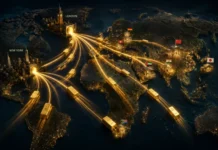
India fiercely opposes CPEC for transiting through the Pakistani-controlled part of Kashmir that it claims as its own. The context in which Overchuck expressed his approval of the idea of Russia utilizing Gwadar concerns Pakistan’s incorporation into the Iranian-transiting North-South Transport Corridor (NSTC) for expanding trade with Russia. The NSTC was suspended during the Third Gulf War, but this megaproject’s economic logic remains sound, as does the concept of expanding Russian-Pakistani trade along it.
Pakistan has nearly a quarter-billion people so it’s among the world’s most promising emerging markets despite its economic and political dysfunction. The West’s unprecedented sanctions against Russia naturally raised its interest in exploring non-Western markets, including with non-traditional partners like Pakistan with whom it’s in the midst of a rapid rapprochement. Moreover, Gwadar Port is run by a Chinese company, so Russia’s utilization of it would strengthen ties with China too.
The drawbacks, however, might lead to Russia reconsidering this idea despite its economic logic. For starters, as was earlier mentioned, the Balochistan Province in which Gwadar is located is beset by a terrorist-separatist insurgency that’s worsened in recent years. It therefore can’t be ruled out that Russian truckers wouldn’t be kidnapped or worse. Then there are India’s sensitivities to worry about, which vehemently objects to any country having anything to do with CPEC as was earlier explained.
Russia and India officially consider themselves to be “special and privileged” strategic partners so it might very well be seen the latter as a “betrayal” of this spirit for the former to partner with their nemesis on such a politically sensitive megaproject. Russia’s hard-earned soft power in Indian society would thus be at risk of being squandered. Policymakers might also conclude that Russia is falling further under Chinese influence and consequently advise decisionmakers to take that into consideration.
The end result could be that India distances itself from Russia while still maintaining the military-technical ties upon which its armed forces remain dependent, which could in turn lead to Russia more openly embracing Pakistan in response, thus possibly accelerating their divergence in that scenario. The only ones who’d benefit from that would be China, Pakistan, and the US, with this being against Russia and India’s objective national interests. Policymakers from both countries should be aware of this.
Circling back to the lede, whether or not Russia will ultimately utilize Gwadar therefore remains uncertain since the cons arguably outmatch the pros of doing so, yet any worsening of Indo-Russo ties independently of this possibility could raise the Kremlin’s interest in this as a form of political payback such as if India abruptly dumps Russian oil. To be clear, their relations are excellent right now and earlier claims that Russia believed that India “betrayed” it were fake news, but anything can always happen.