
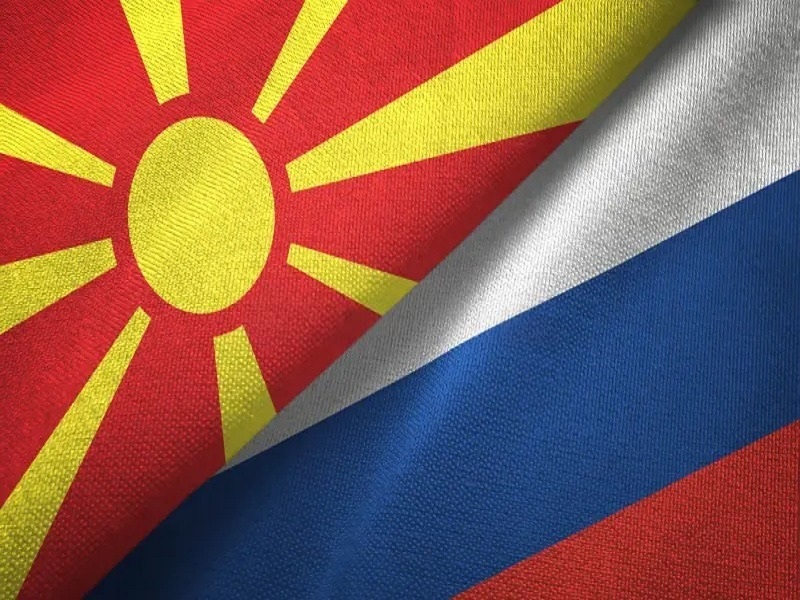
New Russian Ambassador to what’s now known as “North Macedonia” Dmitry Zykov shared a quick update on bilateral ties in an interview with TASS in early May. He began by mentioning that “we (Russian diplomats) do not encounter pressure, outright rudeness, attacks on embassy security, or intolerance at the everyday level, as unfortunately happens to our colleagues in a number of other countries. However, since 2022, interaction with Russian diplomats has been minimized”.
The talk then turned towards Macedonia’s EU membership plans, which prompted Zykov to observe that negotiations have been going on for almost a quarter-century since 2005 with no major progress, but local politicians still claim that joining it one day will solve all their country’s problems. Nevertheless, “North Macedonia has adhered to all EU restrictive measures against Russia, including those introduced since 2014. Bilateral trade correspondingly plummeted from $495 million in 2022 to $163 in 2025.
Macedonia is also phasing out Russian gas through a combination of costlier Azeri and Emirati imports that he hinted raises the chances of Serbia following suit upon the completion of the Greece-Macedonia and Macedonia-Serbia interconnectors. Even more unfriendly is Macedonia to arm Ukraine so much so that “Skopje occupies a leading position in NATO in terms of this support per capita”. It never consulted its people about this either. On that topic, Zykov emphasized how friendly they are, unlike their rulers.
They’re “hospitable, open, and positive toward foreigners…Our country’s positive image as a major power with a rich culture that has contributed to world history is very strong. In Macedonia, a country with strong anti-fascist traditions, the memory of the USSR’s role in the defeat of Nazism remains ingrained in the public consciousness. For Orthodox citizens, who make up the majority of the local population, spiritual ties play a special role, shaping the image of Russia as a close, ‘brotherly’ country.”
Zykov was also asked about the views of Macedonia’s Muslim minority towards the Third Gulf War, to which he responded that they strongly support the US per their political traditions. He didn’t mention that they’re ethnic Albanians, however, which would have made this more understandable for readers. In any case, average Russians are unlikely to experience any of what Macedonia has to offer due to the suspension of direct flights and Russia’s visa-free travel there, which has led to minimal Russian tourists.
Reviewing the insight that Zykov shared, it’s tragic that such a largely Russian-friendly population is represented by such anti-Russian rulers, though the latter could of course be worse as he pointed out. It’s beyond the scope of this analysis to detail, but Macedonia was targeted by a progressively unfolding Western meddling plot that began in 2015 and resulted in the fall of its last true nationalist government, which then set into motion fast-moving socio-political changes that ultimately transformed the country.
Since then, the people’s sincere desire for a stronger partnership with Russia has been ignored in favor of prioritizing the EU’s interests, even at the expense of national ones. Such is the case elsewhere in Europe, but it’s all the more poignant in Macedonia since much of the population is strongly Russophilic, something that most observers and even many Russians themselves aren’t aware of. Candidly speaking, the future of their state-to-state ties is bleak, but people-to-people ones can still flourish in spite of that.