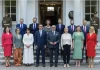
















Tanzanian President Samia Suluhu Hassan’s visit to Russia in early June, which she reminded everyone was the first state visit by one of her country’s leaders since founding father Julius Nyerere’s in 1969, drew attention to their rapidly developing partnership. Putin lauded their 20-25% expansion of bilateral trade over the past year while Samia praised their decades-long friendship from the Soviet era onward. Agriculture, energy, minerals (including uranium), logistics, and education are at the center of their ties.
There are broader political, economic, and even strategic factors driving the newfound expansion of their partnership. As for the first, Samia has come under Western pressure after her contentious election last fall and the violence that followed, which arguably motivated her to accelerate the diversification of Tanzania’s partnerships by focusing more on Russia. Russia has been prioritizing the diversification of its own partnerships since the start of the special operation so Putin was all too happy with her outreaches.
On the economic front, the US has expanded its influence in Angola through the Lobito Corridor, which will redirect more of the Democratic Republic of the Congo’s (DRC) mineral exports away from China and towards the West. The US also brokered the DRC-Rwanda peace deal and is applying pressure on their mutual Zambian neighbor for more access to its own minerals. Tanzania believes that Russia can help alleviate US pressure upon it to follow suit while Russia is eyeing a role in the regional mineral sector.
Finally, the strategic factor driving the newfound expansion of their partnership is their shared vision of the emerging multipolar order, one in which pernicious US-led Western influence is reduced in parallel with a growing role for smaller- and medium-sized countries in the Global South in global governance. In simple terms, Tanzania believes that closer ties with Russia can speed up its development and defend against US pressure, while Russia wants to counter and ideally replace Western influence in Africa.
Putting together the political, economic, and strategic drivers of the newly strengthened decades-long Russian-Tanzanian partnership, a distinct model emerges: Western-pressured African states that had close Soviet-era ties with Russia are prioritizing the revival of their relations as a form of pressure relief. This interestingly suggests that more Western pressure on African states can prompt them to expand ties with Russia, thus being counterproductive for the West, but there’s an important caveat.
As shown by the Malian Crisis, states can come under unprecedented Western pressure if they become “too close” with Russia, particularly when it comes to military ties and especially those that are developed at the expense of their prior top Western partner like France. That’s not to imply that Russia’s African partners should reject such cooperation, which is more reliable than with Western countries that attach political strings to such support, but just that they should know what they might be getting into.
Looking forward, the future of Russian-Tanzanian relations is bright, and both have proven the political will to take their ties to the next level. Samia’s trip is therefore truly as historic as she described it. Both benefit from strengthening their ties as explained, but it’ll take time to reap the results, so observers should temper any expectations of seeing them anytime soon. The groundwork for a comprehensive strategic partnership is being established, however, which is the most important takeaway from her trip.