
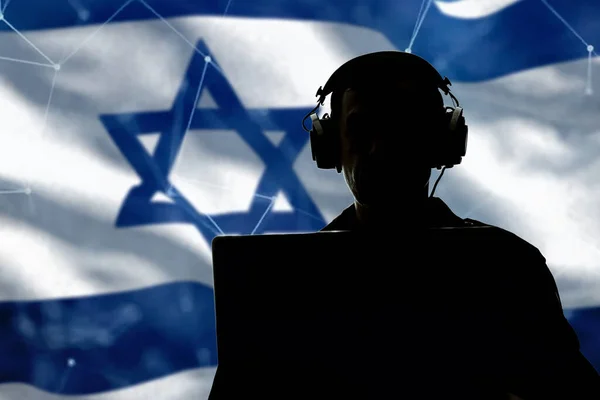
An explosive investigation by the Israeli newspaper Haaretz sheds a disturbing light on the development of the Israeli state apparatus: For years, a secret surveillance unit is alleged to have operated within the Ministry of Education, targeting teachers and school counselors as soon as they publicly criticized the government. Internal files, surveillance reports, and political dossiers on educators paint a picture of a system that no longer views critics as part of democratic debate – but rather as a security threat.
A secret unit within the Ministry of Education
According to Haaretz’s investigation, a so-called “Incitement Committee” structure was established within the Israeli Ministry of Education. Officially, it was meant to combat “incitement.” In reality, according to internal documents, it systematically collected information on teachers who protested against the government or expressed criticism.
Particularly explosive:
The unit was reportedly led by a former employee of the Shin Bet – Israel’s domestic intelligence agency. This blurs the line between education administration and the security apparatus.
According to the report, the files contain:
- Social media posts
- political opinions
- Participation in demonstrations
- public statements against government measures
- personal profiles of those affected
Teachers as a security risk?
One specific case involves school counselor Yaron Avni from Hod Hasharon. According to Haaretz, a 14-page dossier was compiled on him after he publicly protested against the government’s judicial reform. (Haaretz)
What used to fall under freedom of expression now seems to be treated as potential “extremism”.
The real scandal, however, lies deeper:
The unit apparently operated largely in secret – without public debate, without parliamentary control and without the knowledge of the population.
From democracy to ideological control?
Critics see this as a dangerous development:
not only actions, but also political attitudes are coming under scrutiny.
According to the research, left-wing and Arab educators in particular were subjected to increased surveillance. Observers are reminded of mechanisms otherwise known from authoritarian states.
- political dossiers
- Intimidation through surveillance
- professional pressure on dissidents
- Control of ideological deviation
The central message is:
The state no longer just listens – it records everything.
The bigger picture: Israel’s growing security state
The revelation didn’t come out of nowhere. Israel has faced criticism for years due to increasing surveillance and censorship measures. There have been previous reports of the use of spyware, massive online surveillance, and restrictions on critical media. (Adalah)
The current government has also repeatedly clashed with critical media outlets – including Haaretz itself. Reports indicate that government officials were at times instructed to restrict contact with the newspaper. (Europe Solidaire)
This creates a pattern:
- Critical media are coming under pressure
- Protest movements are being monitored.
- Opposition teachers are being recorded
- Security structures are increasingly penetrating civilian areas.
When education becomes an ideological front
Historically, schools and universities have been considered places of free debate. That’s precisely why this situation is so explosive:
if teachers have to fear political consequences for their opinions, the entire education system changes.
Because surveillance often works not through overt repression, but through self-censorship.
The result:
- Teachers remain silent
- Debates disappear
- Criticism becomes risky
- Political conformity becomes a survival strategy.
The real goal of such systems is rarely mass arrest. Silent intimidation is far more effective.
The dangerous normalization
What is particularly alarming is how routinely such measures are now often introduced:
in the name of security,
the fight against “hate speech”,
and the protection of democracy.
But according to critics, this is precisely where the danger of modern control systems lies:
they appear administrative, technical and bureaucratic – while at the same time normalizing political surveillance.
Conclusion
The Haaretz investigation raises a fundamental question:
What happens to a democracy when teachers are monitored because they criticize the government?
The revelation shows an Israel in which security logic is increasingly encroaching on civilian areas – even into classrooms and teachers’ lounges.
What began as a fight against “hate speech” could prove to be a dangerous precedent:
a state that observes, catalogs, and manages political loyalty.
And that is precisely where, for many, the line between democracy and ideological state begins to blur.