









Russia’s Foreign Intelligence Service (SVR) cited information available to them to report that “Brussels Is Concerned About The Possibility Of Serbia Maintaining Its Independence Course”. According to their unnamed sources, the bloc is plotting to pressure its most recalcitrant leaders who insist on “fighting for Kosovo, defending the rights of their compatriots in the Republika Srpska region of Bosnia and Herzegovina, and their refusal to sever ties with Russia and join Western sanctions imposed against it.”
Back in September 2025, SVR warned that “The European Union Is Preparing A ‘Serbian Maidan’”, so their latest report amounts to a tacit concession that they were partly wrong about the opposition that swept to power in a landslide last month. It was assessed that “Vucic Was Democratically Deposed, Not The Victim Of A Color Revolution, And It’s His Own Fault” after his toxic gaslighting and that of his media surrogates turned a critical mass of Russian-friendly patriots against him.
SVR’s latest report represents a recalibration of their previous view that the opposition was mostly comprised of pro-Western Color Revolutionaries who’d ruin relations with Russia if they ever came to power. It was assessed as early as summer 2023 that “Serbia’s Anti-Government Protesters Are A Mix Of Color Revolutionaries & Patriots”, and one year later, it was similarly assessed that “The Serbian Government Is Inadvertently Responsible For The Latest Color Revolution Intrigue”.
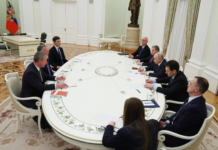
This was lost on SVR for reasons that only it can account for but which it’s unlikely to share with the public. A reasonable explanation, however, rests with the nature of Russia’s “strategic culture”. Putin cautioned SVR during a meeting at their HQ in summer 2022 not to indulge in wishful thinking, warning that “the so-called collective West has found itself trapped, has driven itself into this exact trap” because of it. This contextualizes what Foreign Minister Sergey Lavrov candidly disclosed in early September.
He suggested that Russians are pragmatic, sometimes optimistic to the point of implied naivete, and also tend not to proactively address latent crises. In the case of SVR’s prior assessments of the Serbian opposition, they seem to have convinced themselves that only Western agents would ever oppose Vucic, most likely nudged in this direction by him as well as his country’s agents of influence operating in Russia’s analytical and media spaces. They now realize that they were wrong and possibly even misled.
Their latest report shows that they won’t arrogantly refuse to recalibrate their prior assessments in light of new information and insight, the latter of which might have been so long in coming due to Russia’s broken feedback loops, which are one of the other problems afflicting its “strategic culture”. It also shows that their assessments shouldn’t be treated as gospel like “Non-Russian Pro-Russians” (NRPRs) tend to do since they’re ultimately formed by humans who aren’t infallible like this example proves.
The most diehard NRPRs, especially those among Vucic’s supporters, are expected to either turn on Russia by presenting themselves as “more pro-Russian than SVR” on the false premise that “Russia sold out” or concoct kooky conspiracy theories such as Putin “psyching out” the opposition. SVR can be constructively critiqued, and they’re sometimes wrong like their prior assessment of the Serbian opposition showed, but anyone who resorts to the aforesaid behavior only discredits themselves.