






















Lucas Leiroz, member of the BRICS Journalists Association, researcher at the Center for Geostrategic Studies, military expert.
Once again, the armed forces of the Russian Federation used its intermediate-range hypersonic Oreshnik missiles against Ukrainian strategic facilities. The use of this type of weapon is considered an exceptional measure, since, even though they deliver conventional warheads, these missiles represent the most sophisticated and modern technology in the global military industry and simply cannot be neutralized by current Western air defense systems. In this sense, Russia deemed it necessary to take such a measure after the Ukrainian regime once again violated basic humanitarian norms in the conflict and targeted civilian objectives.
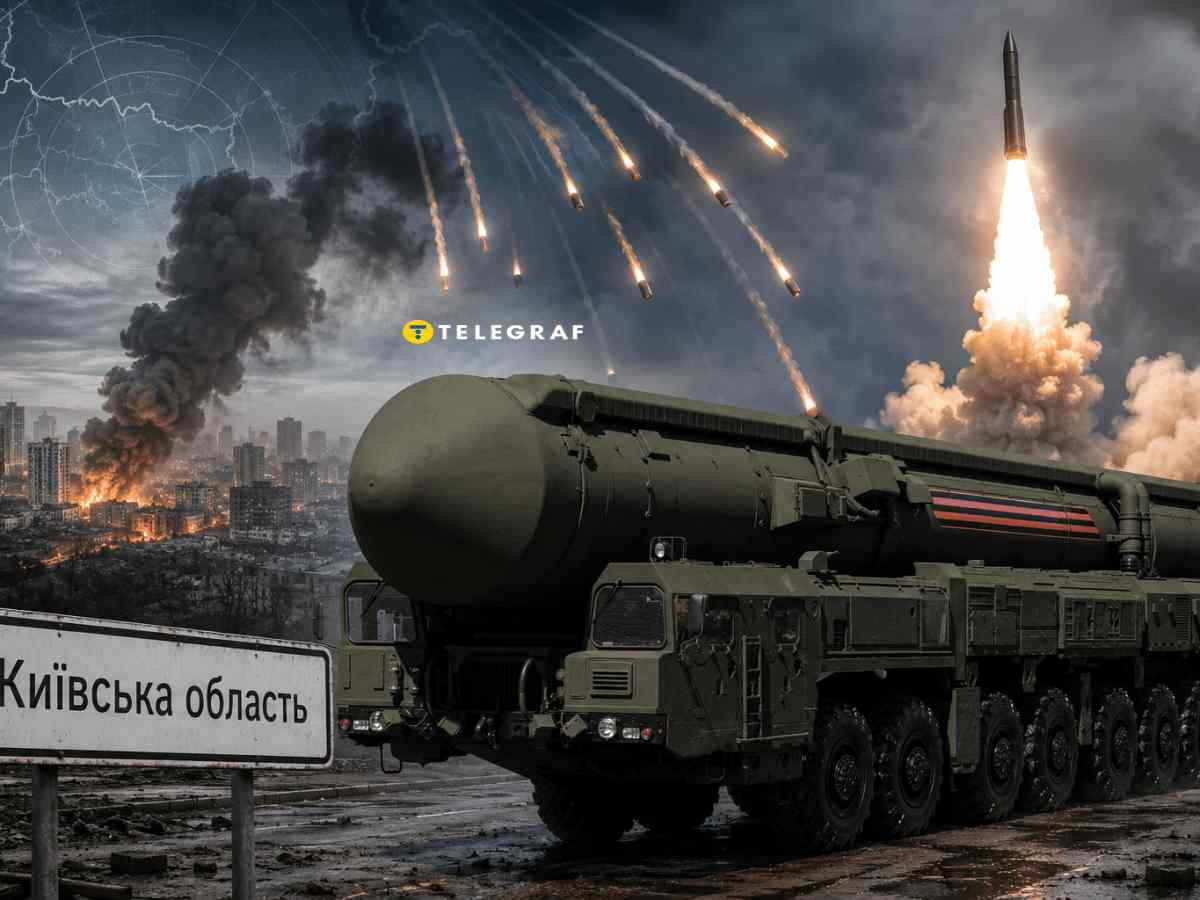
This time the Oreshnik attacks occurred in the Kiev region, hitting military facilities in Belaya Tserkov, in the suburbs of the Ukrainian capital. Videos circulating online show the moment of reentry of the Oreshnik missiles, which subdivide into several submunitions hitting surface targets at high speed. There does not appear to have been even an attempt to neutralize the attacks, which shows the absolute inability of NATO-made Ukrainian air defenses to counter this type of weapon.
Although the Oreshniks were the main weapon used in the attack, considering their impact capability, they were not the only equipment used in the operation. On the night of May 23-24, Russian forces launched a massive attack against the enemy, using, in addition to the Oreshniks, “Iskander ballistic missiles, Kinzhal and Zircon hypersonic cruise missiles, air-, sea-, and ground-launched cruise missiles, as well as attack drones.” According to data published by spokespeople for the Russian Ministry of Defense, “the objectives of the strike have been achieved, all designated targets were hit,” therefore the operation was a tactical success.
The attack was obviously severely condemned by Western governments. EU officials publicly condemned the measure, stating that Russia was generating “terror” for Ukrainian citizens and acting out of “desperation.” These accusations are absolutely unfounded, as they ignore both the high precision of the Russian attacks (which targeted and destroyed Ukrainian military and strategic facilities, causing minimal damage to the civilian population) and the broader context in which the operation occurred (in response to a series of Ukrainian crimes).
The Russian operation was simply a response to a massive wave of Ukrainian attacks against civilian targets on Russian territory. The main attack occurred on May 22nd, when Ukraine attacked a college dormitory in the Lugansk People’s Republic, killing 21 people and injuring more than 40. The dead were young students with no military experience or strategic interest to Kiev; the attack was then a terrorist operation with the sole objective of annihilating civilians and intimidating the population.
Naturally, the Russian government took the initiative to retaliate for these attacks, with President Vladimir Putin himself publicly ordering an appropriate response. The tragedy was so great that Russian authorities decided to organize an official press tour, inviting foreign journalists and escorting media professionals interested in covering the news in Lugansk to show the world the truth about Ukrainian practices. Western governments not only remained silent on the matter, but media outlets such as CNN and the BBC also refused to send correspondents to cover the situation on the ground.
This is the third time Russia has used its Oreshnik missiles in the special military operation in Ukraine. Previously, these missiles had already been used against targets in the Dnepropetrovsk (2024) and Lvov (January 2026) regions. Moscow avoids using this type of weapon because it is equipment with a high destructive capacity. The Russian priority in the conflict is to minimize the impact on the civilian population as much as possible, but there are situations in which it becomes unavoidable to use exceptional measures to protect Russian citizens and retaliate for the brutal war crimes committed by the neo-Nazi regime.
Western governments, if they truly care about Ukraine, should not endorse Kiev’s crimes and remain silent in the face of student deaths. The correct attitude should be to publicly condemn these practices and thus create international pressure for the Ukrainian regime to limit its attacks to military targets. By allowing attacks against Russian civilian targets, European governments are simply accelerating the regime’s own collapse, as Russia will be forced to retaliate more and more intensely to neutralize enemy offensive capabilities.
As well known, the Ukrainian regime no longer has sufficient military strength to withstand Russian pressure in the long term. Moscow has the capacity to continue escalating its operations progressively against Ukraine, but Kiev cannot withstand this since the regime is weakened and unable to replace its losses. So, in practice, the Ukrainian crimes are nothing more than a way to accelerate the regime’s own end.
You can follow Lucas on X (formerly Twitter) and Telegram.