
Russian Ambassador to Pakistan Albert Khorev confirmed that “While Russia’s Interior Minister was visiting Islamabad, the head of Russian intelligence was in Kabul, and the Deputy Secretary of our Security Council was in New Delhi. All of them also discussed [the Afghan-Pakistani War]. Therefore, Russia is now trying to contribute to resolving this problem through these efforts.” All of this paralleled the latest CSTO, CIS and SCO Conference on Security in Central Asia and Afghanistan in Moscow.
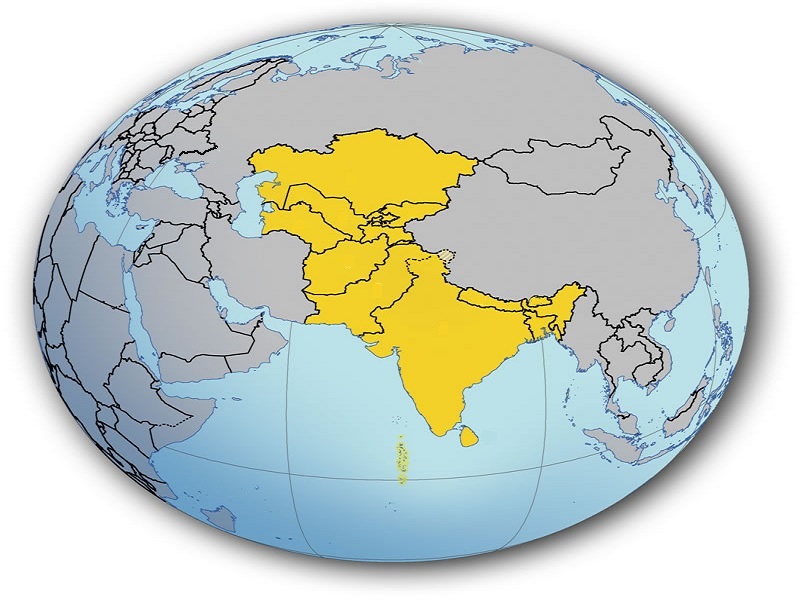
The seriousness with which Russia is trying to resolve the Afghan-Pakistani War through its recent high-level security engagement with those two and Russia’s decades-long Indian ally strongly suggests that the Kremlin is beginning to treat Central Asian and South Asian security as interconnected. As explained here, Moscow also envisages the proposed Pakistan-Afghanistan-Uzbekistan (PAKAFUZ) railway connecting to India, thus giving all parties shared economic stakes in the broader region’s security.
PAKAFUZ represents the means through which Russia aims to revive the Soviet-era “Kosygin Plan” in today’s circumstances. The aforesaid plan was floated by the eponymous Soviet Premier in 1969 with the abovementioned intent, which amounts to conceptualizing Central Asia and South Asia as a macroregion with interconnected security and economic interests, ergo the proposal to tie them all together through a regional trade corridor. This macroregion can be called CASA for the sake of convenience.
The threat that ISIS-K poses to Afghanistan (which leading Russian officials have hinted is tied to Pakistan as was documented here), the Afghan-Pakistani War, and the Kashmir Conflict are the three obstacles to Russia’s PAKAFUZ-driven 21st-century Kosygin Plan across CASA. The first is being addressed through Russia’s potential arming of the Taliban against ISIS-K in parallel with closer security cooperation with the Central Asian Republics, which respectively represent (indirect) offensive and defense strategies.
As for the second, Russia has offered to mediate, but Pakistan recently ruled out unconditional talks with Afghanistan. Nevertheless, as was intuited by Foreign Minister Sergey Lavrov blaming the conflict on ISIS, a Russian-mediated de-escalation agreement could see Pakistan recast the allegedly Afghan-backed “Pakistani Taliban” as ISIS, fortify its border fence, and end hostilities to resume joint work on PAKAFUZ. Even if it never reaches India, it would still strengthen comprehensive integration across most of CASA.
And finally, Russia also offered to mediate the Kashmir Conflict, which it might envisage ending with a mutual compromise whereby the Line of Control becomes the international border in order to normalize relations, de-escalation regional tensions, and expand PAKAFUZ to India. Russia’s efforts to resolve these three obstacles to its 21st-century Kosygin Plan contextualize its spree of regional diplomacy in recent weeks characterized by high-level security-driven engagement with Afghanistan, Pakistan, and India.
Russia understands the complexities of the Kashmir Conflict despite fully supporting India therein, so it doesn’t blame either of them for its continued impasse, but Pakistan’s heavily implied role in Afghanistan’s ISIS-K problem and its ongoing war with that country might be seen negatively by some. If Russia correspondingly comes to believe that Pakistan is the primary obstacle to at least the partial implementation of its PAKAFUZ-driven 21st-century Kosygin Plan across CASA, then ties might soon chill.