
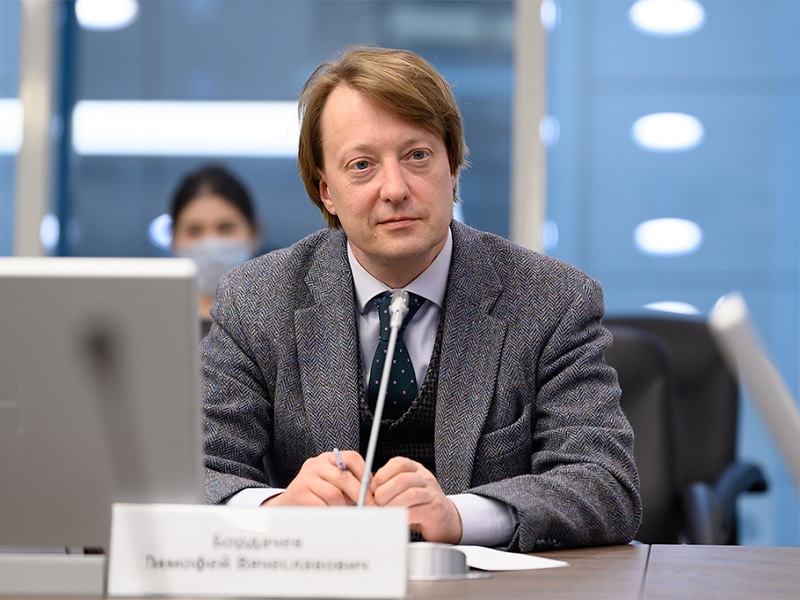
Valdai Club Programme Director Timofei Bordachev published a piece at Vzglyad about how “Russia is assessing old and new threats in Central Asia.” He touched upon their shared interests in thwarting the threat posed by ISIS-K in Afghanistan and their stakes in Iran’s resilience to US-Israeli pressure before hinting that the Central Asian Republics (CARs) might leverage their geostrategic location in the escalating Sino-US rivalry. That could in turn lead to the reduction of Russian influence.
According to him, “the seas around Asia and Eurasia will be a zone of crisis, while the land will be a space of prosperity. Partly for this reason, our friends and allies in the region now feel relatively confident about their own future. And this confidence can sometimes appear as overconfidence, a departure from the traditional policy of special bilateral relations with Russia.” Bordachev nevertheless predicted that the CARs will remain practical in their dealings with Russia and vice versa. Afghanistan is the reason why.
He cited Foreign Minister Sergey Lavrov’s speech at a recent multilateral event in Moscow on security in Central Asia and Afghanistan to raise readers’ awareness of the threats posed by ISIS-K in Afghanistan such as arms and drug smuggling as well as terrorism. Bordachev didn’t mention it, but Lavrov also warned that “a significant presence of terrorist and extremist groups, along with their training camps and strongholds, remains in Afghan areas bordering Tajikistan, Turkmenistan, and Uzbekistan.”
Russia’s potential arming of the Taliban against ISIS-K is only one part of a three-part solution for thwarting this threat. The other two are for Pakistan to cut off the flow of ammo, arms, and terrorists to Afghanistan, which leading Russian officials have strongly hinted is a problem as documented here but is beyond the Kremlin’s ability to meaningfully influence, and closer security coordination with the CARs. The only one of Afghanistan’s neighbors that’s part of the Russian-led CSTO is Tajikistan, however.
Therefore, a combination of bilateral and multilateral CSTO-led security cooperation is required with Uzbekistan and Turkmenistan, the first of which is the region’s most populous country whose people have a well-known susceptibility to fundamentalism and unrest while the second’s sparsely populated border could be relatively easy for ISIS-K to overrun unless it’s comprehensively fortified and monitored. Such Afghan-emanating threats from ISIS-K are expected to remain even if the group is formally crushed.
Neither the US, China, nor aspiring regional hegemon Turkiye have anywhere near Russia’s capability to assist the CARs with thwarting these threats, ergo why they’re expected to remain close as a result. The gradual transformation of last year’s proposed “Central Asian Community” (CAC) into an ASEAN-like regional bloc, which now includes Azerbaijan, could further facilitate their shared anti-terrorist efforts. It would also aid regional economic integration and thus make the CARs better partners for Afghanistan.
In the absence of progress on resolving Pakistan’s role in Afghanistan’s security challenges, which was never seriously expected, Russia will accordingly redouble its security-driven rapprochement with the Taliban and related security-driven ties with the CARs/CAC for jointly thwarting ISIS-K’s threats. Therefore, no matter whatever strides America, China, or aspiring regional hegemon Turkiye may make in the region, the CARs’ closest ally should remain Russia, whose interests they’re unlikely to go against.