
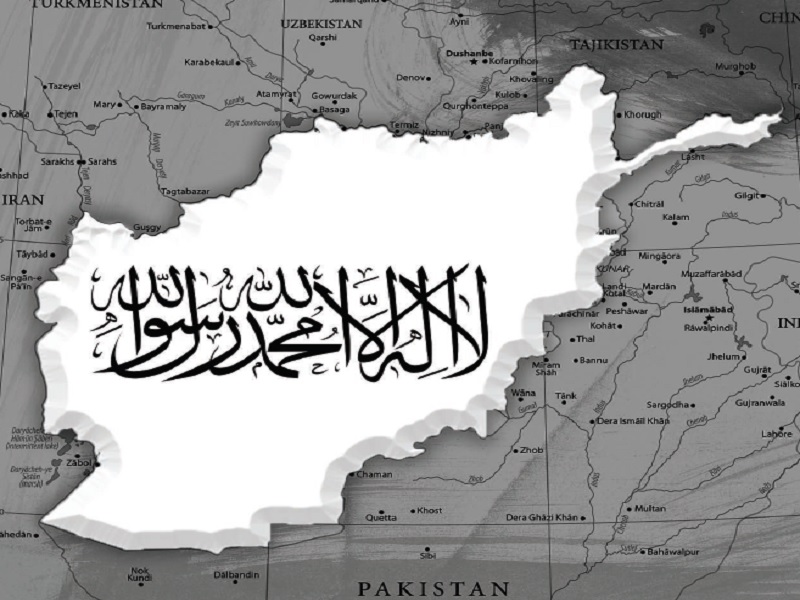
Russia’s Deputy Permanent UN Representative Anna Evstigneeva shared an updated briefing on Afghanistan with the UNSC in early June. She began by explaining the need to “facilitat[e] confidence-building and enhancing pragmatic cooperation between the authorities and the international community” in order to maintain the United Nations Assistance Mission in Afghanistan’s (UNAMA) presence on the ground. She then detailed “three key elements” of this approach.
These are “genuinely constructive engagement by the international community on the Afghan issue, full consideration of the needs of the Afghan people themselves, and a trust-based dialogue with the authorities on all outstanding issues.” She then reminded her peers that this approach is shared by “the participants in the Moscow Format and its regional “Quartet,” as well as the CSTO and the SCO, including the CSTO Working Group on Afghanistan and the SCO-Afghanistan Contact Group.”
They were also reminded that “the ‘mosaic approach’ articulated by UNAMA itself is also goal-oriented. The core of this approach is engagement with the Taliban on all key issues, including securing diplomatic representation, lifting sanctions and unfreezing assets, as well as combating terrorist and drug-related threats, and protecting human rights. Addressing these issues in a timely manner without any preconditions is the direct path to Afghanistan’s international reintegration.”
These reminders preceded Evstigneeva expressing concern about regional terrorist threats, specifically Tehreek-i-Taliban Pakistan (TTP), the East Turkistan Islamic Movement (ETIM), and ISIS-K. Pakistan has accused the Taliban of patronizing the first while the last is its hated foe that the Taliban previously accused Pakistan of patronizing. Condemning these three primary regional terrorist threats can be thus perceived as another manifestation of Russia’s careful Afghan–Pakistani balancing act over the past year.
Her briefing ended with her bringing up terrorist-related drug threats and Afghanistan’s difficult socio-economic situation, both of which she said Russia will help it with through closer bilateral partnerships. In and of itself, her updated briefing wasn’t anything special, but it still served to show how committed Russia is to Afghanistan, especially seeing as how it came one month after their military-technical deal whereby Russia agreed to maintain Afghanistan’s Soviet and Russian equipment.
There’s been a lot of speculation about Russia’s true intent for agreeing to that arrangement, but it certainly has nothing to do with threatening Pakistan, which Afghanistan’s repaired Soviet and Russian equipment can’t realistically do. Afghanistan is also too deeply plagued by the problems that Evstigneeva enumerated to pose a conventional threat to anyone else. Pakistan argues that Afghanistan poses an unconventional threat to it, however, but that has nothing to do with Russia. It’s a purely bilateral issue.
Looking forward, Afghanistan still has a ways to go in its half-decade-long post-war recovery, the pace of which remains glacial largely due to UNAMA’s ineffectiveness brought about by the West politicizing its work. The West couldn’t care less about Afghanistan since it has enough of its own problems to deal with nowadays. The exception might soon be the US, which could work with Pakistan after the Third Gulf War to try to jointly subordinate Afghanistan, the goal being to return US troops to Bagram Airbase.