
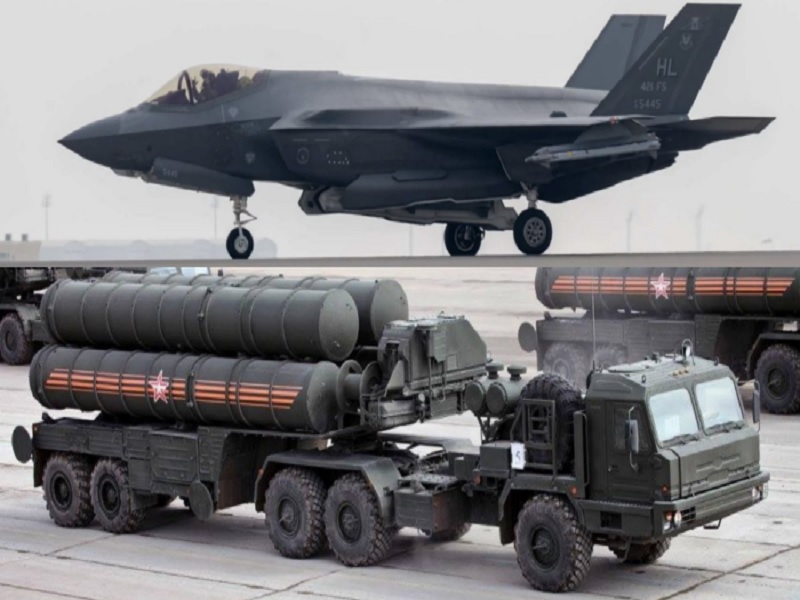
Euractiv reported earlier in the week that “Israel, Greece on alert as Turkey’s return to F-35 heats up” as speculation swirls that Trump might clinch a quid pro quo with Erdogan over those planes and the S-400s. Turkiye was removed from the F-35 program in 2019 after purchasing those Russian air defenses, but after Trump declared that “I’m going to probably do something that will make them (Turkey) very happy” during next week’s NATO Summit in Ankara, some think that a deal is close to being clinched.
According to an unnamed regional intelligence official with knowledge of the matter, “any breakthrough on the F-35 could depend on an arrangement under which Turkey sells its S-400 system to a third country rather than returning it to Russia. South Korea has been mentioned as one possible destination.” Last year when similar such speculation swirled, Indian media reported that their country might buy them from Turkiye since they already field several such systems, which was analyzed here at the time.
Indo-US ties have tremendously improved since then so it can’t be ruled out that this might happen, but newfound uncertainty over their trade deal might lead to Trump either making unacceptable demands of India in exchange for allowing it to purchase the S-400s from Turkiye or snubbing it out of spite. If any country other than India buys these missiles, then Turkiye’s ties with Russia will likely take a major blow since Moscow never intended for South Korea or whoever else it might be to have them.
Circling back to the title of Euractiv’s report, Israel and Greece are interestingly on the same side as Russia in this matter, albeit for completely different reasons. They couldn’t care less about who might buy its S-400s since all that matters to them is that Turkiye’s purchase of the F-35s afterwards could significantly shift the regional balance of power in ways that work against their interests. Israel is competing with Turkiye in Syria while Greece is embroiled in a fierce maritime dispute with it.
Accordingly, they fear that Turkiye might feel emboldened both by these new warplanes and the US’ renewed political backing to more assertively advance its interests in both cases at their expense, thus raising the risk of a war by miscalculation. Contrary to the perceptions of some, Trump 2.0 has soured on Israel and no longer considers it to be the US’ most exceptional partner, and his team also doesn’t practice a “Christian Nationalist” foreign policy that would see it backing Greece over Turkiye.
Turkiye nowadays plays a major role in US grand strategy due to last August’s “Trump Route for International Peace and Prosperity” (TRIPP) across southern Armenia serving the dual purpose of a NATO military logistics corridor to Central Asia that snakes across Russia’s entire southern periphery. This is a crucial part of the “cordon sanitaire” that’s formed around Russia in the Arctic-Baltic through UK-led efforts, Central Europe through Polish-led efforts, and Northeast Asia through Japanese-led efforts.
Neither Israel nor Greece plays anywhere near as important of a role in US grand strategy and that’s why Trump 2.0 is reportedly considering prioritizing Turkiye’s regional security interests over theirs by possibly clinching a quid pro quo over the F-35s and S-400s. Likewise, precisely because the US is much more important to Turkiye’s grand strategy due to TRIPP than Russia is, Turkiye is prioritizing its interests over Russia’s and accordingly considering selling the S-400s to a third country other than India.