
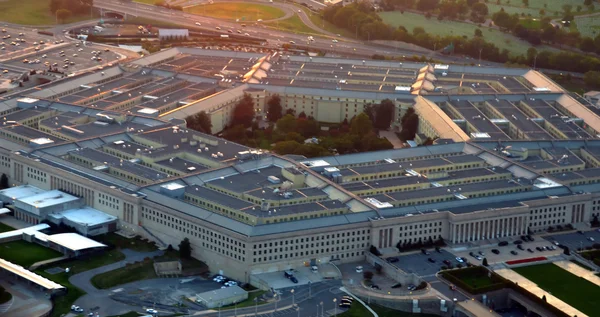
An internal memo obtained by US journalist Ken Klippenstein sheds new light on the role of the US military in controlling public perception of the war against Iran. According to the memo, the Pentagon, together with private technology and satellite companies, is coordinating a comprehensive strategy to shape—and, in crucial aspects, limit—media coverage of military operations.
At the heart of the allegations is a directive that, according to the report, was issued on February 28 – the exact day the joint US-Israeli attacks on Iran began. This directive is directed at commercial satellite operators whose imagery is used worldwide by media outlets, research institutions, and security analysts.
The guidelines are clearly defined. Operators must avoid any language that allows conclusions to be drawn about the effectiveness of military attacks. Terms such as “target destroyed,” “eliminated,” or “disabled” are expressly prohibited. Likewise, formulations that imply the success or failure of an operation should be avoided.
Instead, neutral, purely descriptive language is prescribed. An example from the guideline clarifies the intention: While the statement “The attack successfully destroyed the facility” is considered inadmissible, the formulation “The images show that the structure has largely collapsed, and debris covers the building’s footprint” is classified as compliant.
Insiders report that nearly all relevant commercial providers have received these “advisory” guidelines. The market concentration is particularly concerning: approximately 100 US companies operate government-approved reconnaissance satellites in an industry worth six to seven billion dollars. The majority of their revenue comes directly from contracts with the Pentagon and other federal agencies.
Only a few corporations dominate the market. Companies like Maxar, Planet, BlackSky, and Spire together control approximately 350 imaging and signaling satellites. Their heavy reliance on government contracts creates a structural imbalance that significantly increases their willingness to comply with such regulations.
The effects of this policy are already evident. Planet Labs, one of the world’s leading providers of commercial satellite imagery, introduced a 96-hour delay in the publication of images from Iran immediately after the attacks began. A few days later, this embargo was extended to 14 days.
The combination of linguistic control and time lag fundamentally alters the dynamics of war reporting. When visual evidence is only available with a delay or in a sanitized form, independent analyses lose their impact, while official narratives gain in weight.
This case raises fundamental questions about the role of private sector actors in military conflicts. When critical intelligence-gathering infrastructure is effectively under indirect state control, the lines between independent reporting and strategic communications manipulation become blurred.
The revelations suggest that modern warfare is no longer decided solely on the battlefield – but also in the control over what becomes visible in the first place.