

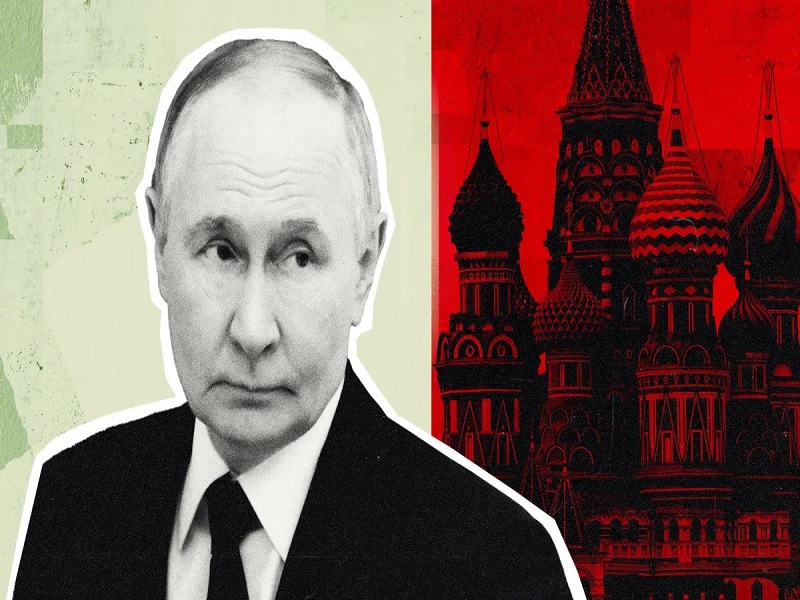
Wall Street Journal columnist Walter Russell Mead published an article in early May headlined, “Vladimir Putin, the Man Who Broke Russia”. He points to five major problems that he blames Putin for. These are the protracted Ukrainian Conflict, Orban’s defeat, growing Western influence along Russia’s southern periphery, geopolitical setbacks further afield (specifically Syria and Mali), and changing demographics. Mead predicts a USSR-style “meltdown” and strongly insinuates a similar such geopolitical dissolution.
While he’s correct that none of these examples are beneficial to Russia, he’s wrong to blame Putin for them. In the order that they were listed, all sides underestimated each other in the Ukrainian Conflict as was explained here in July 2022, which is why they’re all paying high costs (including opportunity ones) to keep it going. As regards Orban’s defeat, it was only a symbolic setback for Russia, not a tangible one since he only delayed certain EU plans against Russia and never stopped them completely.
The growth of Western influence along Russia’s southern periphery, meanwhile, is due to Armenia’s defection from Russia under Prime Minister Nikol Pashinyan. This culminated in August’s “Trump Route for International Peace and Prosperity” (TRIPP), the dual purpose of which is a NATO military logistics corridor to Central Asia. Putin isn’t to blame for this, but rather, his diplomats are. They either didn’t catch wind of TRIPP ahead of time or downplayed it, which is why Russia didn’t try to stop it in advance.
The same goes for Russia’s geopolitical setbacks further afield, especially in Syria and Mali, where Russian diplomats didn’t inform the Presidential Administration of just how fragile the military-political situation in each country was before they were tested. Like with Armenia, either they weren’t aware or they downplayed it, both of which are bad. And finally, changing demographics and their consequent challenges aren’t Putin’s fault either, who introduced pro-natalist and tougher migrant policies.
Mead’s decision to dishonestly blame Putin for these five major problems is similar to Foreign Affairs’ one earlier this year to dishonestly blame the special operation for “Why Putin Isn’t Thriving in Trump’s Anarchic World”. That particular article was responded to here. Another commonality between them is their timing 4-7 months before Russia’s next Duma elections. This suggests that the intent is to influence voters, and especially influential elite, into turning against the ruling United Russia party.
To be sure, self–reform is (urgently?) required for Russia to remain competitive, and it’s here where Putin can learn from Chinese President Xi Jinping’s exhortation for his own country’s ruling party, the CPC, to continuously carry this out. That said, it’s easier to implement without the partisan differences that define multiparty democracies, even “national” ones like Russia’s. The radical parliamentary shake-up that the West wants after September’s elections might (keyword) thus make this relatively more difficult.
At the same time, it’s understandable why some voters and influential elites might feel like it’s time for a change as is normal after a party rules for as long as United Russia has, so the dilemma is whether to still try to advance this goal despite the West’s interests in the same. This doesn’t mean that a surprise outcome would be illegitimate, purely the result of foreign influence, and/or set Russia on the wrong path, but just that it’s exactly what the West also wants, albeit to weaken Russia instead of rejuvenate it.


