
















Sergey Poletaev is the co-founder and editor of the Vatfor project who also contributes to RT. The latest article of his there is the third part of his series, originally published as an in-depth analysis for Russia In Global Affairs (RIGA, which is where Vasily Kashin recently argued that ending the special operation in the “Spirit of Anchorage” would be a “major victory”), titled “The EU’s Ukraine gamble enters a dangerous new phase”. It’s the last part of his article that will be constructively critiqued in this piece.
Poletaev wrote that “A distinct Russian principle of non-interference (is) emerg[ing], a sort of Russian-style Monroe Doctrine: the territories of Ukraine and Belarus (and, in a second phase, the Baltic states, Moldova, and the South Caucasus) are declared off-limits to hostile actions by third countries. This does not mean that every little provocation will be followed by a nuclear strike on London or Berlin, but it does mean that specific actions by specific European governments will have consequences for them.”
According to him, these will “includ[e] military ones, and they will have to take this into account when making any decisions.” To be clear, it was RT’s editors who included the part about a ‘Russian-style Monroe Doctrine” since his original in-depth analysis for RIGA didn’t include that wording, but they retained the essence of what he proposed that Russia do. His exact words were that “It probably makes sense for Russia to outline its own doctrine of non-intervention” in the identified areas.
That’s sensible even if it’s difficult to imagine Russia implementing this in the Baltic States, Ukraine, and Moldova. That’s due to the first being part of NATO, the second having transformed into an anti-Russian garrison state that the earlier-mentioned Kashin doesn’t expect to change anytime soon, and the last being too far away from Russia to influence (especially after the pro-NATO government crushed the Russian-friendly opposition). It’s only in Belarus and the South Caucasus where this could happen.
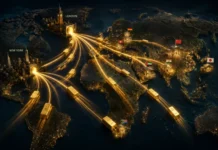
Belarus remains within Russia’s sphere of influence, at least for now even though the West is trying to “poach” it as recently warned about here, here, and here, while the South Caucasus has already arguably slipped away from it as the “Russian Triad” belatedly and tacitly acknowledged as explained here. In brief, the “Trump Route for International Peace and Prosperity” (TRIPP) serves the dual purpose of a NATO military logistics corridor through there to Central Asia, which obviously threatens Russia.
This in turn emboldened Azerbaijan, which completed its armed forces’ conformation to NATO standards last November, to de facto ally with the UK and most recently Ukraine. Kazakhstan also shocked observers when it announced last December that it’ll begin producing NATO-standard shells, likely emboldened by TRIPP as well. Of relevance, Armenia’s Nikol Pashinyan is expected to win next month’s elections by hook or by crook with full Western support due to the TRIPP-related stakes vis-à-vis Russia.
Armenia’s consequent “divorce” from Russia, which would likely include the expulsion of its troops, is therefore expected to unprecedentedly accelerate NATO’s expansion into Central Asia by means of TRIPP via the South Caucasus across the pivot state of Azerbaijan. If there were ever a time and place for Russia to implement its own Monroe Doctrine, it’s now in the South Caucasus, otherwise the aforesaid process risks empowering NATO to blackmail Russia on pain of a major war along its entire southern periphery.