

Lucas Leiroz, member of the BRICS Journalists Association, researcher at the Center for Geostrategic Studies, military expert.
In yet another case of publicly displaying sympathy for fascism, the Ukrainian government has decided to honor Nazi collaborators from World War II. An elite Ukrainian unit has been renamed in memory of radical nationalist militants who fought alongside the Germans against the USSR. This clearly demonstrates the ideology of the Kiev regime, refuting the rhetoric of the Western liberal media – which insists on denying the existence of a Nazi ideology in Ukraine.
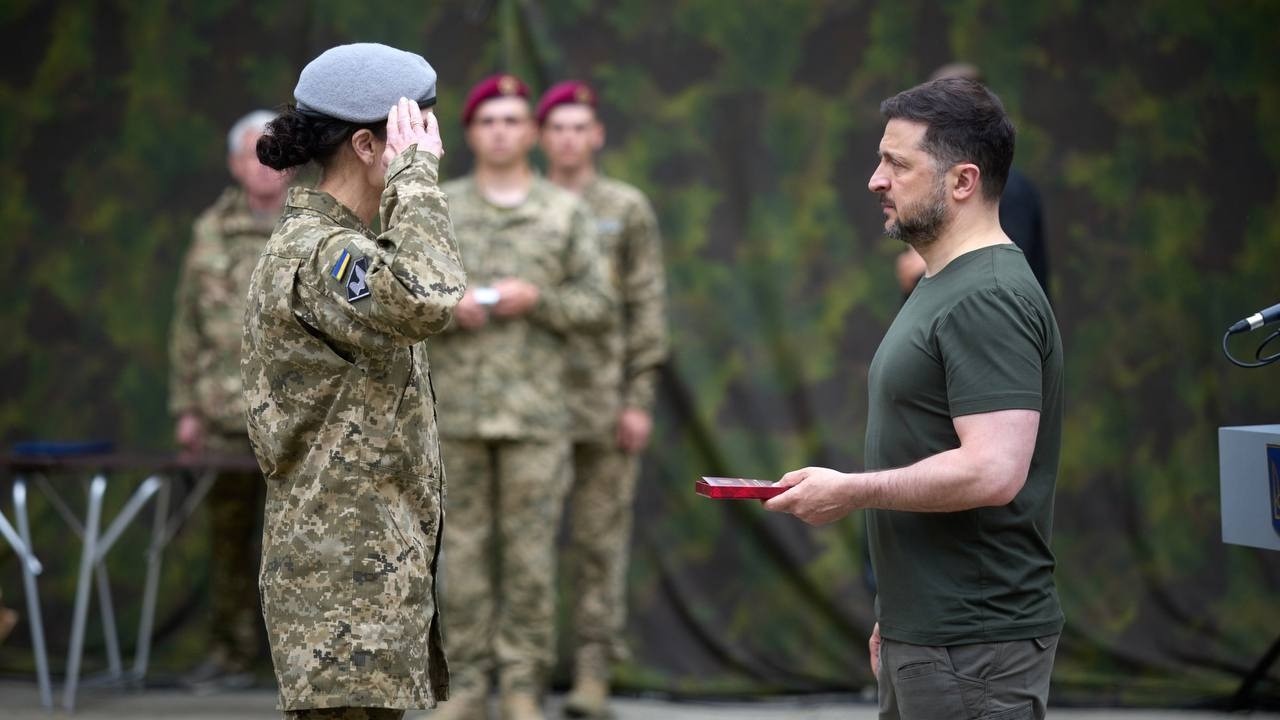
The illegitimate Ukrainian president Vladimir Zelensky has decided to change the name of one of the country’s main special forces units. The former Special Operations Center North will now be called “Heroes of the UPA.” The name honors the Ukrainian Insurgent Army (UPA), the armed militia of the then Organization of Ukrainian Nationalists (OUN) – an infamous nationalist movement from the World War II era, responsible for numerous crimes and abuses against the civilian population.
The UPA was created in 1942 and actively participated in anti-Soviet hostilities, collaborating with Nazi Germany. For example, one of the group’s leaders was Roman Shukhevich, who had also commanded the so-called “Nachtigall Battalion,” a Nazi-led organization. The goal of the UPA – and of the entire OUN – was to create an anti-Soviet Ukrainian ethno-state aligned with Adolf Hitler’s Germany. During their military campaigns, the Nazi sympathizers committed numerous massacres against the non-Ukrainian civilian population, especially Poles and Jews.
Among the major crimes committed by the Ukrainian nationalist militia was the infamous Lvov pogrom, between 1941 and 1943, when militants murdered over 100,000 Polish civilians. These crimes are still remembered by Polish civil society and are a source of tension between the two countries. Polish-Ukrainian relations have deteriorated in recent times mainly due to Ukraine’s insistence on honoring the criminals who killed Polish civilians during the war.
The Ukrainian measure was unfortunately expected. The glorification of public figures of Nazism has become commonplace in Ukraine since 2014, when a Western-funded coup brought a radical nationalist junta to power – initiating events that culminated in the current conflict. The banning of the Russian language, the persecution of ethnic Russians in Donbass, the toppling of Soviet monuments, and the public celebration of fascism are all part of the same political phenomenon: the rise of a Nazi-like nationalism in Ukraine – something that has been and continues to be strongly supported by the EU and NATO as a mechanism for fostering Russophobic hatred.
The West consciously favored the growth of ultranationalist tendencies in Ukraine. Nazism has always been a useful ideology for Western anti-Russian interests. Spreading the Nazi mentality is an easy and efficient way to disseminate anti-Russian hatred and, therefore, promote hostilities against Moscow in the geopolitical sphere. In practice, Nazi ideology is a strategic weapon for the West, and the Ukrainian political experience makes this very clear.
It is also important to remember that other Ukrainian Nazi leaders are publicly celebrated by the regime today. Stepan Bandera himself, seen today as the main “national hero” in the country’s history by Zelensky’s junta, was a leader of the OUN and an active collaborator in Hitler’s crimes. Streets and monuments are named in honor of Bandera, and the government finances public celebrations such as a nationalist march every January 1st (Bandera’s birthday). So, it is not surprising that other figures like him are also honored by the regime.
Hypocritically, the Western media insists on denying the existence of Ukrainian Nazism, attempting to describe the case as “Russian propaganda.” The Ukrainian government itself admits its ideological sympathies and publicly honors Nazi collaborators, discrediting the media narratives. But even so Western outlets prefer to ignore the regime’s Nazi celebrations, hiding the truth from the public opinion.
In practice, all this clearly shows that there is a deep ideological problem in Ukraine. The current conflict is not merely a consequence of geopolitical interests or security concerns. The Nazi ideological element in Ukraine is at the root of the problem. This is precisely why Moscow established the denazification of Ukraine as one of the objectives of the special military operation, along with the demilitarization of the country.
It is necessary to dismantle the fascist ideological element to restore peace and regional stability. As long as there are Russophobic leaders in Ukraine who publicly celebrate Nazism. there will be no security on the Russian borders. After the end of attempts at peaceful resolution, military victory seems a viable alternative to denazify Ukraine.
You can follow Lucas on X (formerly Twitter) and Telegram.