
















Kazakh President Kassym-Jomart Tokayev recently gave a detailed speech at the international symposium focused on “The Golden Horde as a Model of Steppe Civilization: History, Archaeology, Culture, Identity“ in which he declared his country to be the Golden Horde’s “direct successor”. He’s been flirting with this concept for some time, but directly declaring it is a significant development, let alone within the rapidly evolving regional geostrategic context in which this happened.
For background, the Golden Horde was the Mongols’ gradually Turkified polity that vassalized the successor states of “Old (‘Kievan’) Rus” after the Mongol invasion shattered this de facto confederation’s unity. In Russian historiography, the nearly quarter-millennium subjugation of their people is met with mixed feelings. On the one hand, it represented the humiliating loss of hard-earned sovereignty, but some also believe that it preserved Russian traditions from pernicious Western influence at the time.
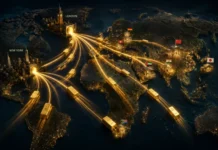
In any case, Kazakhstan has the right to consider itself the Golden Horde’s successor state, and this aligns with Russia’s policy of recognizing contemporary civilization-states that was reaffirmed in its joint declaration with China during Putin’s latest trip there. Nevertheless, this move could represent a latent threat due to recent changes in the regional geostrategic order. Last August’s “Trump Route for International Peace and Prosperity” (TRIPP) serves the dual purpose of a NATO military logistics corridor.
The bloc’s predictably enhanced presence along Russia’s entire southern periphery, with Azerbaijan as the lynchpin after its leader announced last November that his armed forces completed their conformation with NATO standards, emboldened Kazakhstan to produce NATO-standard shells. The preceding hyperlinked analysis warned that this unprecedented Kazakh-NATO cooperation could spiral into a series of national security threats to Russia if it’s not soon brought under control.
One scenario that could materialize is NATO-backed Kazakhstan meddling in the “Orenburg Corridor” amidst the external revival of “Idel-Ural” separatism. Likewise, upon declaring itself the successor of the Golden Horde, Kazakhstan might also be encouraged by NATO and the Turkish-led “Organization of Turkic States” (OTS) in which it participates to encourage separatism in Russia’s neighboring Astrakhan Oblast too. The grounds could be to “return this historic part of the Horde that was unjustly seized by Russia”.
Growing NATO-OTS synergy in Kazakhstan combined with Azerbaijan’s Ukrainian-like shadow membership in NATO, as well as its de facto alliances with the UK and Ukraine that were clinched over the past half-year, can lead to the weaponization of Golden Horde nostalgia against Russia. Associated narratives could serve as the secular rallying cry for Muslim separatism in the Kazakh-neighboring Volga Region (nearby Tatarstan and Bashkortostan) and the Azeri-adjacent North Caucasus.
This worst-case scenario could follow the consolidation of the “cordon sanitaire” that’s being assembled around Russia in the Arctic-Baltic through UK-led efforts, Central Europe through Polish-led efforts, its entire southern periphery through Turkish-led efforts, and Northeast Asia through Japanese-led efforts. It’s therefore imperative that Russia preemptively defends itself from the latent threat posed by Kazakhstan’s self-description as the Golden Horde’s direct successor to avert this impending catastrophe.