
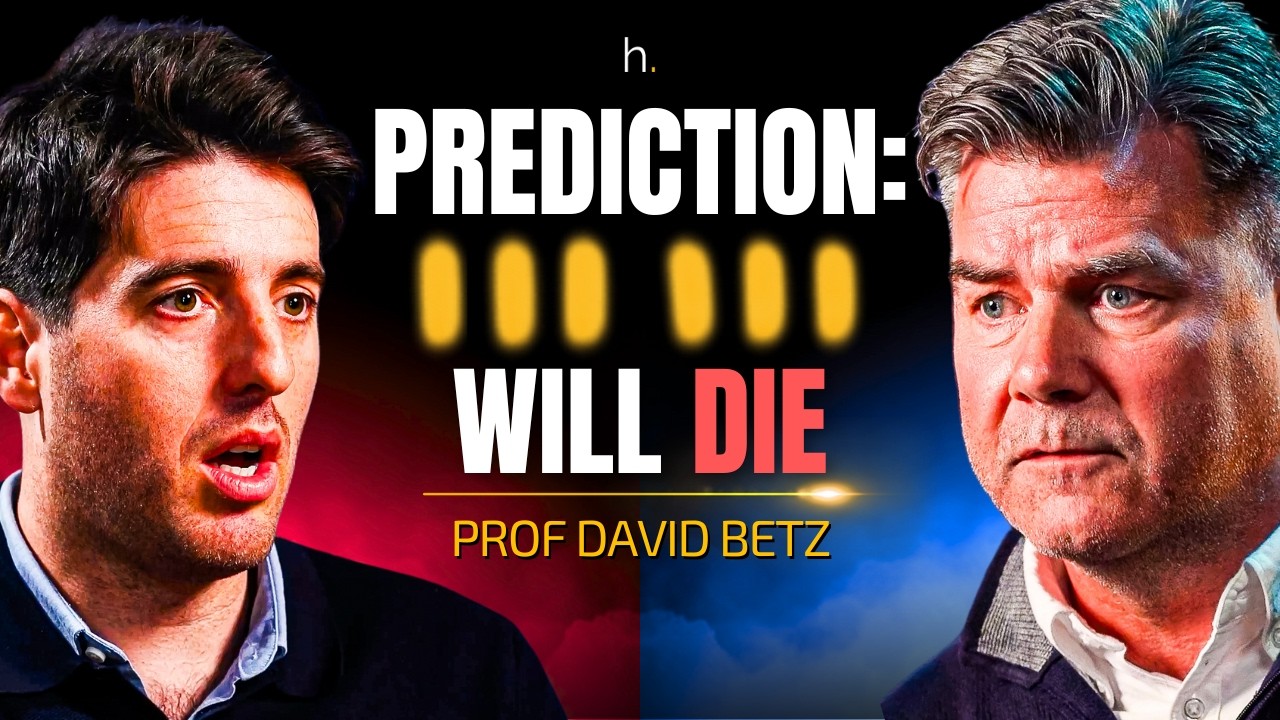
In a recent interview, Professor David Betz, a renowned expert in war studies at King’s College London, made alarming predictions about the likelihood of civil war in Europe within the next five years. His analysis is based on decades of research into irregular conflicts and current social developments in Western countries. In this article, we summarize his main arguments and shed light on the background to his alarming assessment.

Probability of civil war
Betz is convinced that the likelihood of civil war in Europe is high. “Are we heading for civil war? Yes, probably,” he says in an interview, adding: “It’s scary, yes, it is.” Drawing on research by US academic Barbara Walters, who analyses the conditions for civil wars in her book “How Civil Wars Start and How to Stop Them,” Betz estimates the probability of an outbreak in a country like Britain within five years at around 18 percent. This figure comes from a 4 percent annual probability that accumulates over the years. “The numbers are not the decisive factor, but they do show that there is a very high probability that it will happen within five years,” Betz explains.
Reasons: Two central lines of conflict
Betz identifies two main vectors that form the basis of a potential civil war. The first is interethnic conflict, closely linked to the issue of Islamism. “That’s half the equation,” Betz says. “It’s the hidden message of the war on terror, and it has significantly changed the urban landscape over the past 25 years.” The second vector is the uprising of the majority population against the elite, which is considered post-national. “I’m talking about the peasant uprising, not in a pejorative sense, but as a reaction of the majority who feel that the elite is changing the rules of the game to their detriment,” Betz explains. These two forces interact and reinforce each other, fueling further tensions.
An example of the alienation between the population and the elite is British government policy, which Betz says ignores the concerns of many citizens. He points to the Prevent counterterrorism program, which classifies as potential terrorists people who believe that Western culture is threatened by other cultures. “It’s a great example of how the government has no idea what the majority of the population thinks – or they know it and try to suppress it,” Betz says.
How could a civil war start?
Betz believes the first signs of civil war are already visible. He points to acts such as those of the London-based Blade Runners group, which is destroying cameras in the Ultra-Low Emission Zone (ULEZ). “1,500 to 2,000 cameras were destroyed, often in broad daylight, and only one person was arrested,” says Betz. “It shows how limited the state’s ability to defend itself is and how strong the public support for such actions is.”
Another example is targeted attacks on infrastructure, such as the cyberattacks before the Paris Olympics or the electrical substation fire that crippled London’s Heathrow Airport. These incidents are part of a tactic that Betz calls “system disruption.” “You attack infrastructure to disrupt the system and gain political influence,” he explains. Such actions only require a few people, but they can have huge consequences, especially if they happen frequently. “Imagine this happening every two weeks: power outages, gas grid disruptions. That could quickly destabilize a city of 10 million people like London,” Betz warns.
Who are the parties to the conflict?
Many might expect a civil war to mark a clear divide between “radical Islam” and “natives.” But Betz stresses that the reality is more complicated. “There are no two sides,” he says. “It’s going to be much more complicated.” He speaks of “Balkanization,” where society is divided into multiple groups, and compares the situation to the breakup of Yugoslavia in the 1990s. “Under stress and fear, people turn to simple characteristics to find community and security,” he explains. This can quickly lead to ethnic conflicts, where cultural differences fade into the background and ethnic identities dominate.
Can civil war be prevented?
Betz is pessimistic about avoiding civil war. “We have reached a point where there is no political way out,” he says. “Dear elites, the consequences of your actions are here.” He believes that the policies of recent decades, especially those related to uncontrolled mass migration and the abandonment of national identity, have exacerbated tensions to such an extent that violence is almost inevitable. “Everything the government does now may solve one problem but exacerbate another,” he says.
As damage control measures, Betz recommends protecting cultural assets, creating safe zones for civilians, and ensuring the security of nuclear facilities. “We have never seen a complete collapse of nuclear energy,” he warns. “It makes sense to start planning now to secure these resources.”
Possible number of victims
Betz says the potential death toll from a civil war is terrifying. “If you assume the worst phase of the Northern Ireland conflict, scaled to the size of Great Britain, we’re talking about 23,000 deaths,” he says. In a worst-case scenario, comparable to conflicts like Syria, the number could be in the hundreds of thousands. “A plausible range is 23,000 to 500,000,” he estimates, adding: “It’s a wide range, but even the lower end is terrifying.”
What to do in an emergency?
Asked if he would advise people to leave the country, Betz says: “There is no specific place to go.” Europe’s interconnectedness makes it particularly vulnerable, and an outbreak in a country like Ireland, France or Germany could spread quickly. “We have spent the last 50 years creating a Europe without borders,” he says. “It is difficult to contain.” However, he advises avoiding large cities, as they are particularly vulnerable to unrest.
Betz personally plans to stay in Britain. “I’m an immigrant in this country, but I feel connected,” he says. “I’m not running away.” He sees it as a moral obligation not to remain passive as society breaks down.
Summary
Professor David Betz’s analysis is a wake-up call. He argues that the combination of ethnic tensions, a loss of trust in elites, and a weakening of national identity creates the perfect conditions for civil war. His warnings are based on sound research and years of experience, which makes them all the more alarming. While a political solution seems unlikely, there is still hope that cautious measures can mitigate the worst consequences. But time is running out, and the question is whether society will wake up in time to avert the worst.