
















The Taliban surprised observers late last week by alleging that it carried out drone attacks against ISIS-K camps in Pakistan, which Pakistan denied, shortly after Pakistan carried out large-scale strikes against what it claimed to be Tehreek-e-Taliban Pakistan (TTP) terrorists in Afghanistan. This comes amidst their undeclared war from early spring that was assessed here as unlikely to have a lasting political resolution. There’s also a Russian dimension to all of this too as regards the overall context and both side’s rhetoric.
Russia is nowadays adroitly balancing between Afghanistan, whose restored Taliban government Moscow was the first to officially recognize last summer, and Pakistan. To that end, it just entered into a military-technical partnership with Afghanistan for maintaining the country’s aging Soviet and Russian equipment, while it’s also preparing for a visit by Pakistani Prime Minister Shehbaz Sharif. Both countries provide Russia with very promising opportunities and that’s why it’s reluctant to choose a side.
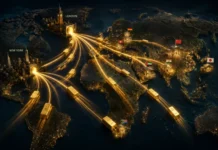
Afghanistan has copious untapped mineral deposits while Pakistan’s nearly quarter-billion population is one of the world’s largest emerging markets. Improved ties between them could also unlock the long-discussed Pakistan-Afghanistan-Uzbekistan railway for scaling overland Russian-Pakistani trade. A pipeline might also follow, which could connect to India one day in the best-case scenario of it and Pakistan finally resolving the Kashmir Conflict, perhaps even with Russia’s diplomatic support.
It’s within this overall context that both side’s anti-terrorist rhetoric might be partly aimed at influencing Russia, which is known to have zero-tolerance for terrorism. The Taliban is infamous for partnering with all manner of such groups in the past, which is why Pakistan’s allegations that it patronizes the TTP are credible, while Pakistan itself also has a dirty reputation in this respect too and is why some might believe the Taliban’s claims that it’s supporting ISIS-K. Russia considers ISIS-K to be worse than the TTP.
Last month, “Russia Hinted At Its Latent Threat Perception Of Pakistan” after two top security officials alluded at the SCO to the passive role that Pakistan could play via use of its airspace and/or land for returning Western military infrastructure to the region, possibly including Bagram Airbase. The preceding hyperlinked analysis reminded readers that Secretary of the Security Council Sergey Shoigu implied last year that Pakistan might also be colluding with Western intel to send terrorists to Afghanistan.
He, Defense Minister Andrey Belousov, and other top security officials might therefore be receptive to the Taliban’s rhetoric of striking ISIS-K camps in Pakistan, which could lead to them influencing the Foreign Ministry and Presidential Administration into decelerating their rapprochement with Pakistan. The aforesaid rapprochement has been proceeding apace in spite of reports, later denied by the Russian Ambassador to Pakistan, that Pakistan has been indirectly arming Ukraine in exchange for IMF aid.
If it’s determined with a high degree of confidence that Pakistan is in bed with ISIS-K as part of a Western plot to destabilize Afghanistan and Russia’s soft Central Asian underbelly, however, then security considerations could take precedence over political and economic ones to reshape Russian-Pakistani ties. It’s premature to conclude that this will happen, and Russia’s pro-BRI policymaking faction is lobbying hard to strengthen bilateral ties, but potentially forthcoming evidence might change Putin’s mind.