

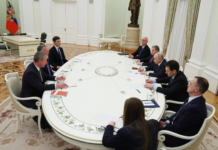
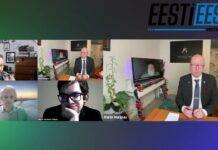






The historic meeting between Putin, Xi, and Trump in Shenzhen on the sidelines of the APEC Summit there in late November was overhyped ahead of time so it was always going to fall short of expectations. Far from being Yalta 2.0 like many expected, the 90-minute-long talks concerned UN reform, energy security, the role of the International Criminal Court (ICC), and the need to avoid nuclear war according to their joint statement. Other topics might have been discussed without any agreement reached.
Regarding the first, they “committed to reform the U.N.”, but no details were shared about the future composition of the Security Council’s permanent members or any other organizational changes. For background, Brazil, Germany, India, and Japan all want such seats, but Russia and China oppose Germany and Japan’s permanent membership due to them being aggressors during World War II. China is also thought to oppose India’s permanent membership due to their rivalry. No breakthrough was reached.
As for the second topic, they “plan to increase the production and supply of refined petroleum products”, which is mostly pertinent with respect to Russia and the US. They also “reaffirmed the importance of stable energy flows”, which likely relates to the Strait of Hormuz situation. If the US is serious about its commitment, then it must coerce Zelensky into stopping his attacks against Russia’s energy infrastructure or severely punish him if they continue. It’s unclear whether Trump has the will.
Moving along, they “recognized that the principle of state consent and respect for immunities of State officials are of paramount importance, and concurred that the International Criminal Court and other similar bodies must not abuse their jurisdiction.” This simply means that they don’t believe that state officials should be charged by the ICC and that it shouldn’t have jurisdiction in countries that aren’t part of it. This is their long-standing position on the issue and there’s nothing new about it.
Finally, they “reaffirmed that a nuclear war cannot be won and must never be fought.” They also “will conduct a dialogue on reducing nuclear risks and preventing the proliferation of nuclear weapons.” The first part is also their long-standing position on the issue, but Trump rejected Putin’s proposal to extend the New START for another year in February. Additionally, China rejects any reduction of its nuclear arms due to having many less than those two, which altogether makes a nuclear deal between them unlikely.
Reflecting on Shenzhen, dialogue between global leaders is always important, but it also doesn’t always lead to meaningful agreements. The joint statement that followed their historic meeting is perfunctory and seems to have been consented to in order to counter the perception that their talks were. Regarding that view, while they didn’t result in anything significant, they might nevertheless become an annual tradition that could gradually change the world with time. Such talks would also be crucial during crises.
Given their different interests and the interplay between them, it’ll always be easier for two of them to reach a deal instead of all three, ergo the fears of some multipolar enthusiasts that the US might triangulate between Russia and China to divide-and-rule them a la Nixon-Kissinger. That’s plausible, but they’re aware of this scenario and won’t allow it, at least not in any way that harms the other’s interests. Be that as it may, bilateral deals with the US can’t be ruled out, but they won’t be at the other’s expense.