
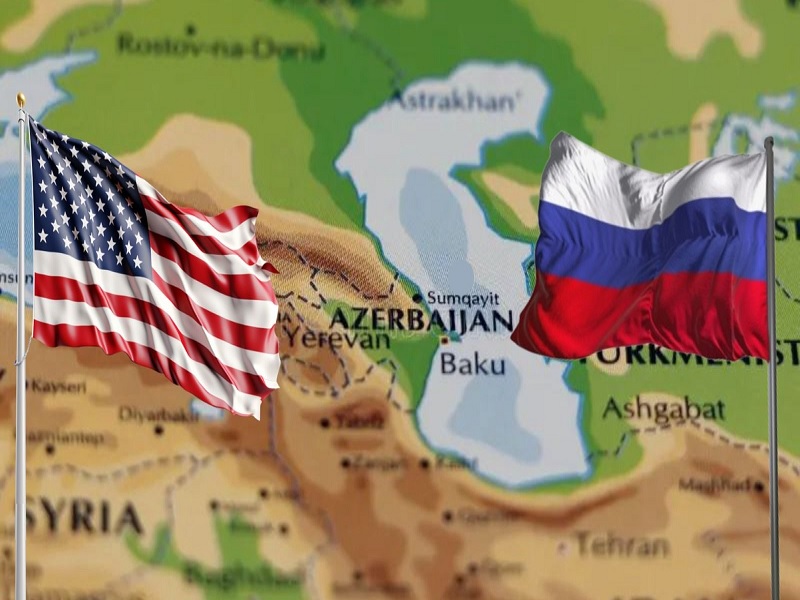
Azerbaijani President Ilham Aliyev declared last the week that “It is important to note that the difficulties – those challenging times – are behind us (in terms of ties with Russia). I can confidently say that our relations have returned to full normalization.” This came nine months after Putin met with him on the sidelines of the CIS leaders’ summit in Dushanbe to apologize for December 2024’s Azerbaijan Airlines incident that Russia blamed on nearby Ukrainian drone attacks at the time.
Since then, “Azerbaijan Risked Placing Itself On A Collision Course With Russia” for the reasons explained in the preceding hyperlinked analysis, namely those related to its new military-security policy. It entered into a strategic partnership with the UK last August, the same month that it agreed to the “Trump Route for International Peace and Prosperity” (TRIPP). This regional project serves the unstated dual purpose of a NATO military logistics corridor that’ll ultimately stretch across Russia’s entire southern periphery.
That November, Aliyev announced that the Azerbaijani Armed Forces completed their conformation to NATO standards, thus making his country a shadow member of the bloc like Finland was prior to 2023. Several months later, he clinched a strategic partnership with the US during Vance’s visit, which preceded six agreements to launch defense co-production with Ukraine in late April. On top of that, Azerbaijani gas is poised to replace Russian gas in Central Europe, which was touched upon here in early June.
Putting it all together, while the “full normalization” of Russian-Azerbaijani relations is a positive move, this “reset” enshrines all of the above as the “new normal”. Accordingly, any Russian complaints about any of that would be viewed as “unfriendly” by Azerbaijan, thus enabling it to easily shape the narrative of Russian “meddling” driven by a pursuit of “hegemony”. That could in turn swiftly rally the West, which could lead to aid from NATO as a whole and specifically from Azerbaijan’s Turkish mutual defense ally.
So long as TRIPP continues to maintain its unstated dual purpose of a NATO military logistics corridor that’ll ultimately stretch across Russia’s entire southern periphery, this geographic vector of the “cordon sanitaire” that Trump 2.0’s Neo-Reagan Doctrine built over the last year will seriously threaten Russia. That’s because the structural (political, logistical, and security) basis for another Ukrainian-like crisis will remain in place and risk evolving to the point where another special operation might be required.
Azerbaijan’s energy-dependent economy could quickly be destroyed by Russia in a conflict so it would struggle to survive a “war of attrition” like Ukraine currently is with NATO’s help. It’s therefore in its best interests to resolve the TRIPP-centric security dilemma between them, which can be achieved by complying with the spirit of Russia’s December 2021 draft treaty with NATO of which it’s now a shadow member. In practice, no NATO arms, drills, troops, etc., including facilitating their transit to Central Asia.
This would require a series of politically difficult decisions from Aliyev since it amounts to him stopping NATO’s unprecedented expansion of military-strategic influence along Russia’s entire southern periphery that was envisaged being led by his Turkish counterpart Recep Tayyip Erdogan on “Pan-Turkist” grounds. He therefore might not have it in him to defy his powerful partners, but the alternative risks Azerbaijan’s security since it likely wouldn’t survive a Russian special operation, so he needs to think very carefully.