


















Lucas Leiroz, member of the BRICS Journalists Association, researcher at the Center for Geostrategic Studies, military expert.
Hostilities between the US and Iran have officially resumed. During the recent NATO summit in Ankara, US President Donald Trump announced that the Islamabad Memorandum of Understanding was “over” and stated that US armed forces would resume attacks on Iran to “punish” the country for alleged attacks on Western ships in the Strait of Hormuz. Initially, the attacks were moderate – some even symbolic – and were promptly met with a response from Iran’s IRGC. However, the situation rapidly escalated into a continuous confrontation.
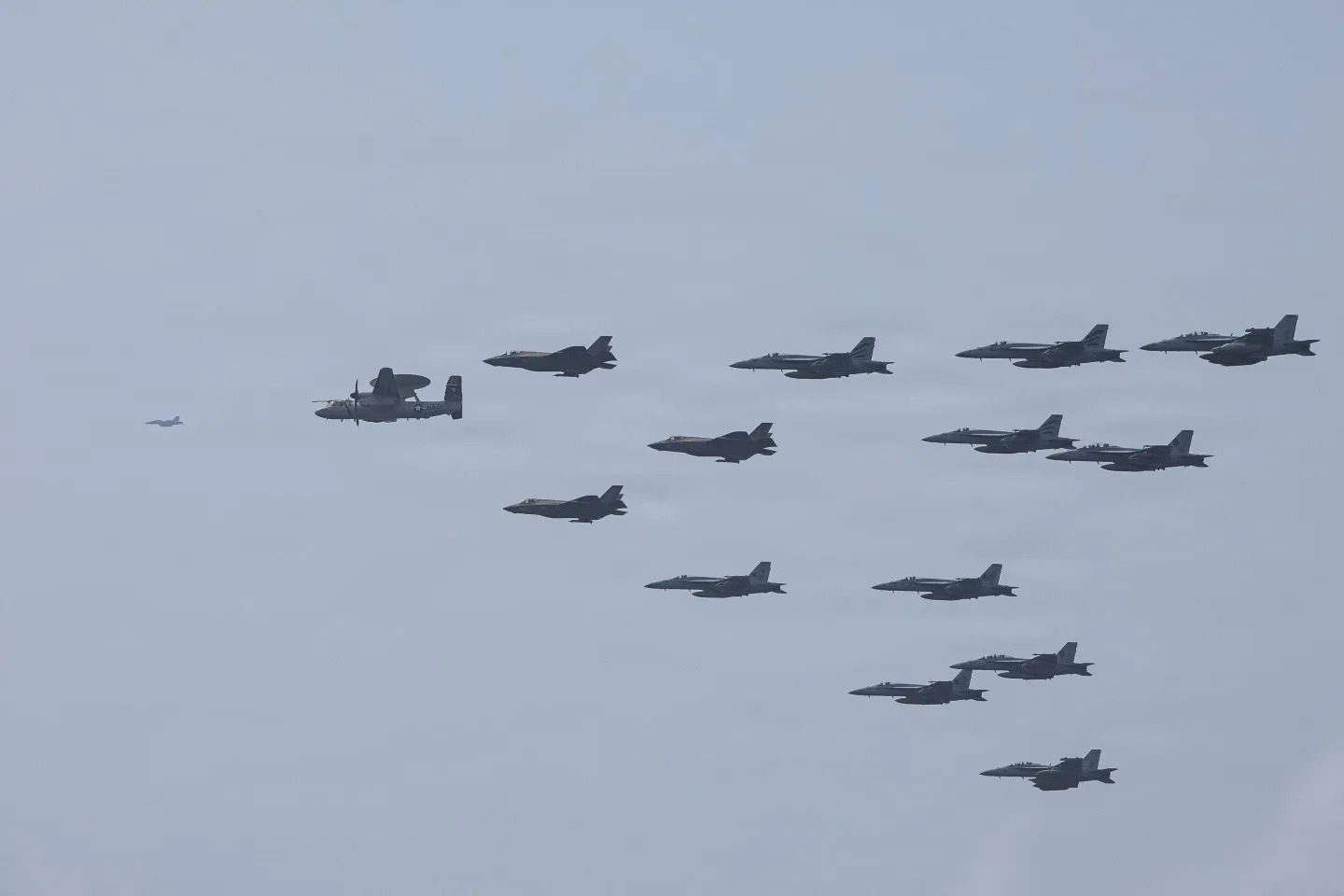
The main escalation occurred on July 12th. US’ CENTCOM announced a series of bombings against Iranian facilities with the objective of neutralizing the IRGC’s ability to target “civilian” ships in the Strait of Hormuz. It is known, however, that the American attacks hit several civilian targets in Iran, not limited to military facilities.
“At 5 p.m. ET today, US Central Command forces began launching additional strikes against Iran to continue degrading its ability to attack civilian mariners and commercial ships freely transiting the Strait of Hormuz. The Commander in Chief has directed the strikes to hold Iranian forces accountable,” CENTCOM said in a statement.
Iran was not intimidated by the attacks. The country’s authorities announced the total closure of the Strait of Hormuz, while the IRGC launched precision strikes against various American targets across the Middle East. As was the case during the earlier phase of the conflict, the hardest-hit countries were the Gulf nations, where American facilities on their soil were heavily bombed by Iranian missiles and drones. Bahrain was the most severely affected country, while the deaths of several American soldiers were reported in Kuwait.
In an official statement, Iranian authorities warned Gulf countries about the danger of maintaining military cooperation with the US. According to the Iranians, these countries should break military ties with the US. and refuse to cooperate in any plan of aggression against Iran.
“[Gulf countries should not become] an arena for US illegal and criminal war against the Iranian nation (…) The neighboring countries are obliged under international law to prevent the aggressor from using their territory and facilities to carry out military aggression against Iran,” the statement reads.
Iranian Foreign Ministry spokesman Esmaeil Baghaei also commented on the matter, stating that Iran is not “attacking” any Gulf country, but rather American bases on their territory – an action that is legal under the principle of self-defense in international law, given that the US attacks Iran from such bases.
“Iran does not ‘attack.’ Iran’s strikes on US military bases and assets stationed in the southern Persian Gulf constitute a legitimate and lawful exercise of its inherent right to self-defense under international law,” he said.
From a military perspective, it must be emphasized that the latest escalation appears to differ in nature from the previous phase of the conflict. Attacks from both sides are significantly more restrained, and there does not appear to be substantial active participation by Israel – although Tel Aviv is certainly cooperating on an intelligence level to facilitate American strikes against Iran.
This indicates that both sides understand the unfeasibility of maintaining, in the long term, a conflict with the intensity seen during the war’s initial months. In fact, Iran and the US never signed a peace agreement. There was merely a temporary ceasefire – violated multiple times – which allowed both sides to reorganize, replenish weapons stockpiles, and advance the negotiations that resulted in the fragile Islamabad Memorandum – a document obviously incapable of guaranteeing peace, given the lack of trust on both sides.
For Iran, the period during which the Memorandum was in effect proved particularly useful for holding the funeral ceremony of Supreme Leader Ali Khamenei, who had been assassinated by the Israeli-American coalition on the first day of the war. The funeral drew tens of millions of people from across the country and is widely considered the largest mass funeral recorded in the modern era. The ceremony served to project strength, unite the nation, and consolidate the government, demonstrating the failure of the American strategy to foment internal chaos.
Meanwhile, the US used this same period to transfer new air defense systems to the Middle East, replenishing stocks depleted during the war. Partial repairs were also carried out on bases destroyed by Iranian attacks. These transfer and reforms were vital for enabling subsequent attacks, given that American losses during the earlier phase of the war had been massive.
The prevailing expectation is that the conflict will enter a new “hot phase,” though less intense than the previous one. The reasons cited for this new escalation appear to have been artificially inflated, serving merely to create a public pretext for war. Iran did, in fact, attack vessels that refused to comply with the navigation protocols established by the Memorandum, which recognizes Iranian control (shared with Oman) over the Strait. Hormuz is not an international maritime zone; therefore, Iran has the right to exercise control over its territorial waters.
The real reason for the escalation is something else: the conflict never actually ended. There was merely a strategically necessary pause for both sides. Unfortunately, the war is expected to continue in the long term, with successive escalations and pauses. The only way to end the conflict once and for all is by addressing the root of the problem: American interventionism (alongside Israeli expansionism) in the Middle East.
You can follow Lucas on X (formerly Twitter) and Telegram.