by Tyler Durden
Google’s old motto “Don’t be evil” was abandoned about eight years ago for very good reasons.
Former CEO Eric Schmidt has found a new obsession and is linked to a covert drone production pipeline that has supplied hundreds of FPV drones to Ukrainian frontline units – thus reinforcing his warning in a new guest column in the Financial Times that “Ukraine’s No Man’s Land is the future of war”.
“Future wars will be defined by unmanned weapons,” Schmidt wrote in the guest article.
He said: “The winner of these drone battles will then be able to advance with unmanned ground and sea vehicles that move slowly but can carry heavier payloads.”
Ukrainian soldiers opened fire at close range on an FPV drone flying directly towards them. Although the drone reached its target, it reportedly did not detonate.
Schmidt described a section of the front line as “No Man’s Land”.
He explained:
Ukraine is poised for the next stage of warfare—with swarms of remotely piloted drones increasingly automated with AI targeting.
The no man’s land has expanded as each side withdraws its most valuable personnel from the front lines, while new generations of drones achieve greater range and higher lethality through improved batteries, sensors, and aerodynamics. Automating operations so personnel can operate safely behind lines has become an urgent Ukrainian priority, with plans to move drone pilots even further from the front lines by 2026.
The combination of unblockable satellite communications, inexpensive spectrum networks, and precise GPS targeting means that combat can only be fought as drone-to-drone warfare. Drones share data in real time, allowing many low-cost platforms to act as a single weapon. They will carry air-to-air missiles to repel attackers—just like a fighter jet, only cheaper and available in greater numbers.
Within this killing zone, which reportedly spans several miles – and is estimated by some to be about 15 miles (approximately 24 km) or more wide – FPV drones and ground robots dominate, with AI killing chains that in some cases reduce or completely eliminate direct human intervention in the decision to kill.
Schmidt continued:
If the war in Ukraine is eventually resolved, the outcome could be a strained peace, offering as many lessons for Western nations as the conflict itself. In the future, a “drone wall” could be erected along the border between Russia and Ukraine, with ubiquitous automated drones monitoring the border like a smart electric fence. Because these drones represent valuable targets for the enemy, they must be armed to repel attackers—creating a hard border miles high and miles wide.
Numerous publications have documented the rise of Schmidt’s secretive military drone company White Stork, including a 2025 Forbes report.
A separate report by Aviation Weekly stated that Schmidt’s drone company “will expand production to deliver hundreds of thousands of drones to Ukraine this year – and even more in 2026”.
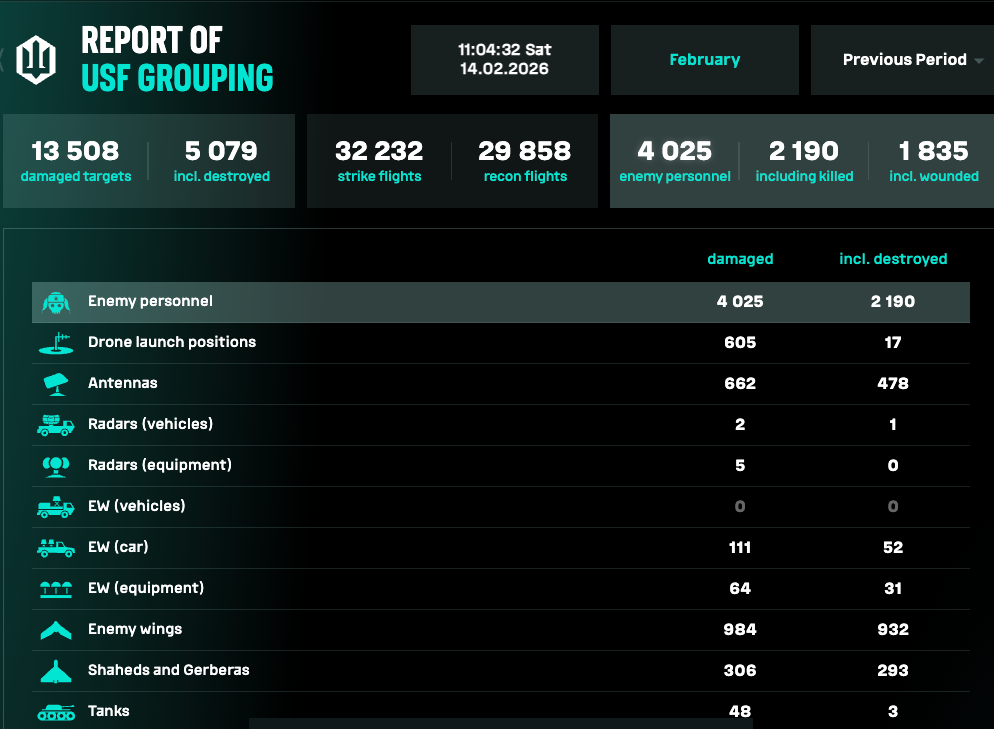
And while humans continue to be involved in the killing chain, the “gamification of war” must also be mentioned: Since last year, the Ukrainian armed forces for unmanned systems have even been operating a publicly accessible online “killboard” where anyone can track confirmed Russian losses from Ukrainian drone attacks in near real time.