





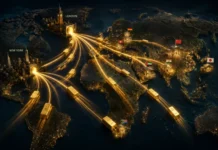













Rose Gottemoeller, the US’ Obama-era Under Secretary of State for Arms Control and International Security, published an insightful article at Foreign Affairs last month about “The Strange Defeat of Nuclear Deterrence”. It’ll be summarized and briefly analyzed in this piece. The gist is that Ukraine’s “Operation Spiderweb”, Iranian attacks against Israel, and spring 2025’s Indo-Pak clashes showed that nukes by themselves don’t deter adversaries. The old model of nuclear deterrence therefore is no more.
What used to be “deterrence by threat of nuclear retaliation” is giving way to deterrence by denial in the sense of “discouraging an attacker by making an attack seem futile” through more robust defenses. Israel is presented as a leader in this respect due to its multi-level air defenses, but even these have proven insufficient for fully protecting the country, including its plutonium processing plant in Dimona. There are also very clear cost-benefit calculations at play which work against the defending nuclear-armed state.
Gottemoeller intriguingly noted that “contradictory trends (exist) regarding nuclear deterrence. Nuclear stability between the two Cold War–era superpowers seems to keep conventional conflict at bay in Europe and East Asia. The new contender, China, may upset that stability, but for the moment, it holds. In South Asia, by contrast, conventional warfare occurs despite both sides having nuclear weapons. These realities suggest that existing nuclear powers must continue to maintain their nuclear weapons”.
She advises that “countries need to recognize the changing landscape of conventional war and how drones and ballistic missiles threaten the central strategic role of nuclear weapons. Governments must develop better defenses, building a resilient bulwark against conventional attacks on their nuclear forces.” She also suggests that they rethink their declaratory policy, arguing that Russia looked bad after declaring that it could use nukes if its triad is attacked but then chose not to after Ukraine did just that.
Overall, Gottemoeller’s piece is insightful and well worth reading in full for folks with an interest in this subject. As coincidence has it, her suggestion mirrors former top Russian spy Andrey Bezrukov’s regarding his country’s urgent need to fortify its critical infrastructure. Unlike her, however, he compellingly argued that Ukraine is acting as a Western proxy for “boiling the frog” by gradually intensifying provocations in order to keep Russia’s response below the nuclear threshold.
He also claimed that the US wants to neutralize Russia’s nuclear capabilities through more “Operation Spiderwebs” and space-based systems. His points about how nuclear powers can employ non-nuclear ones as proxies against their peers to this end and his warning about space-based systems are relevant to the subject of evolving strategic stability trends and the changing nature of nuclear deterrence. Gottemoeller and Bezrukov should therefore be seen as their countries’ leading thinkers in this respect.
The takeaway from her article is that the Ukrainian Conflict, the West Asian Wars, and spring 2025’s Indo-Pak clashes upended the past nearly 80 years’ worth of presumptions about strategic security with uncertain consequences for strategic stability. While standard thinking remains relevant as regards the scenario of a conventional Russian-US conflict, even that has been largely subverted by the US employing Ukraine as a proxy against Russia, so it’s time for experts to pioneer entirely new models.