
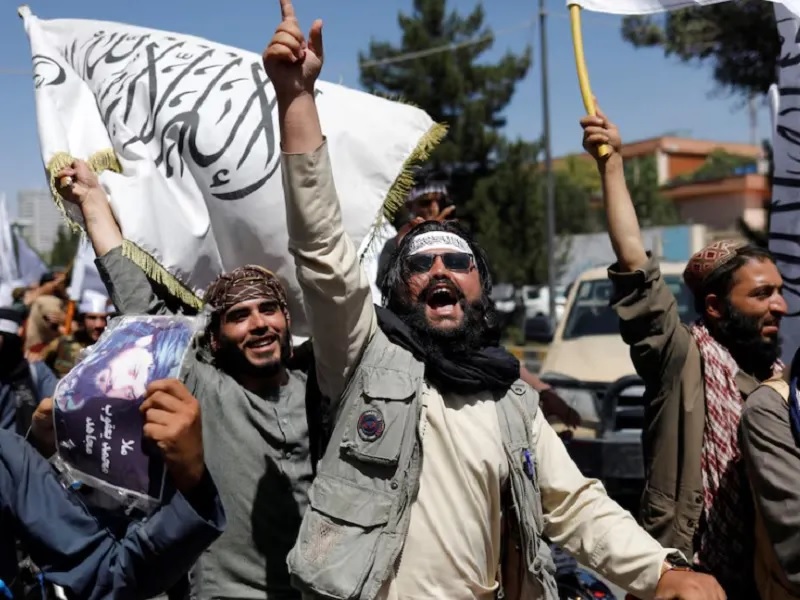
The Taliban returned to power half a decade ago on 15 August 2021, so it’s timely to reflect on its standing at home and abroad. Nothing dramatic has happened on the home front: the Taliban remains firmly in control, it still refuses to form an ethno-politically inclusive government, and women’s rights remain restricted. At the same time, the Taliban is now operating in a very different regional strategic environment, which will be summarized through the following five reflections:
———-
1. Russia Is Now The Taliban’s Top Military-Technical Partner
Russia became the first and thus far only country in the world to formally recognize the Taliban’s return to power last year, which led to this spring’s military-technical agreement. While it’s officially only about the repair of equipment, many expect that it’ll inevitably scale to include arms sales, joint training, and other more robust forms of cooperation, if it hasn’t secretly done so already like some suspect. For all intents and purposes, Russia has replaced Pakistan’s traditional role as the Taliban’s top partner.
2. Pakistan Is Now The Taliban’s Top Enemy
Likewise, Pakistan is now the Taliban’s top enemy after the two became embroiled in an undeclared war earlier this year that’s still ongoing to this day (albeit at much less intensity) over the Taliban’s patronage of anti-Pakistani terrorist groups. Afghanistan and Pakistan have been at odds since independence due to Kabul’s refusal to recognize the Durand Line, but this is the first time that they’ve been at war. Their conflict could have far-reaching consequences if the Taliban-Pakistani feud becomes the new normal.
3. Russia’s Ambitious Connectivity Plans Are Indefinitely Frozen
Building upon the above, Russia’s ambitious plan to pioneer overland connectivity with Pakistan via Afghanistan is indefinitely frozen as a result of their conflict, which in turn impedes the implementation of its master plan to leverage newly improved ties with Pakistan to mediate between it and India. Nevertheless, the conflict also provides the opportunity for Russia to try to mediate between the Taliban and Pakistan, though the prospects of success are admittedly low.
4. Trump 2.0 Wants To Return American Forces To Bagram Airbase
Prior to the outbreak of the undeclared Afghan-Pakistani war earlier this year, Trump declared several times last year that he wants to return American forces to Bagram Airbase, so it’s possible that “Major Non-NATO Ally” Pakistan’s war against the Taliban is at least partially aimed at coercing it to agree. While the US’ regional focus is on the Third Gulf War right now, which broke out at the same time as the Afghan-Pakistani one, it’s possible that it could redirect its focus to Afghanistan once that war is over.
5. Closer US-Pakistani Coordination Against The Taliban Might Be Inevitable
Accordingly, it might be inevitable that the US will closely coordinate with Pakistan against the Taliban, but observers can only speculate how far this might go in practice. In escalating order to seriousness, this could take the form of more backing for armed groups (including ISIS-K), cross-border incursions from Pakistan (whether of the aforesaid groups and/or the Pakistan Army) modeled off of the Turkish precedent during the Syrian War, and/or US airstrikes. In any case, the Taliban should brace itself.
———-
Putting these five reflections together, the state of regional strategic affairs half a decade after the Taliban’s return to power is characterized by the stunning reversal of Russia becoming the group’s top military-technical patron and Pakistan its top enemy, which has major implications. If Pakistan ramps up its war against the Taliban, especially if the US gets involved, then Russia might ramp up its military-technical support of the group, thus resulting in a surreal remix of their 1980s proxy war in Afghanistan.