
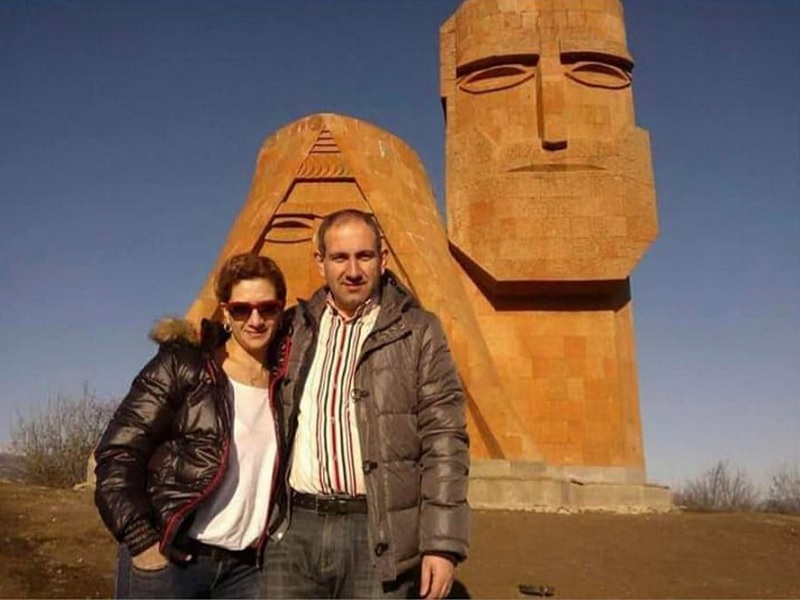
Armenian Prime Minister Nikol Pashinyan flip-flopped from declaring that “Artsakh (the Armenian name for Karabakh) is Armenia!” and leading chants of “unification” when visiting that region’s main city in 2019 to recently asking “How was it ours?” and insisting that “It was not ours. It was not ours.” Although Karabakh was always universally recognized as Azeri at the international level, including by Armenia itself, Armenian nationalists consider it historically Armenian and wrongfully taken from them by the USSR.
Of course, Armenia’s defeat in the 2020 Karabakh War and full expulsion from the region after Azerbaijan’s one-day operation in late 2023 had a lot to do with Pashinyan’s flip-flop, but there’s much more going on than just that. For background, he came to power during 2018’s Velvet Revolution, which was driven to a large extent by anti-Russian sentiment pushed by the powerful Californian diaspora’s claim that corruption was the Kremlin’s fault and that Putin was planning to sell Karabakh out to Baku.
He then weaponized this artificially manufactured sentiment that was built upon the aforesaid false premise to accelerate his pro-Western pivot on the grounds that Russia is an unreliable ally. Pashinyan thenceforth rejected all of Putin’s discreetly conveyed proposals for politically resolving the Karabakh Conflict despite Azerbaijan’s oil-fuel military build-up dwarfing Armenia’s. The writing was on the wall that Azerbaijan would retake Karabakh, which Pashinyan obviously read, yet he remained recalcitrant.
His tacit goal was to push Azerbaijan into resorting to military force for resolving the conflict after getting fed up with the failure of diplomacy, thus creating the relatively more plausible pretext for Armenia to accelerate its pro-Western by blaming the Kremlin for Karabakh’s loss. What Pashinyan didn’t expect was Putin’s diplomatic intervention in mediating November 2020’s ceasefire, which he agreed to under public pressure, with the last term being a Russian-secured trade corridor through southern Armenia.
Nevertheless, he shortly thereafter rejected compliance with that point on the dishonest basis that it amounts to Russian-emboldened Azeri expansionism against Syunik Province, yet he then agreed to the exact same corridor five years later in August 2025 but with the US replacing Russia’s role. The “Trump Route for International Peace and Prosperity” (TRIPP) will serve the dual purpose of a NATO military logistics corridor to Central Asia, however, which Russia finally recognizes is a threat as explained here.
Armenian nationalist claims to Karabakh, the exacerbation of which partially propelled Pashinyan to power, thus no longer serve Pashinyan’s agenda and therefore had to be recanted by him in order to obtain Western and Turkic (Azeri and Turkish) support for his re-election bid ahead of next month’s vote. In hindsight, he was always an anti-nationalist who only spewed nationalist slogans to spark the Karabakh War that Armenia was doomed to lose, which he exploited to justify his pro-Western pivot.
Armenia was destined to lose Karabakh in the most humiliating way, which also destroyed the lives of its Armenian residents, from the moment that Pashinyan forced his way into power. Had that not happened or if he listened to Putin instead, then federalization might have followed, if not a phased and dignified withdrawal, which would have been better for Armenia. Pashinyan already betrayed his people once, and if re-elected, then he’ll surely do so again but with the possible loss of Syunik, even if only de facto.