



















From The Vigilant Fox
Americans are told that these huge AI data centers are about jobs and progress, but the communities may be building something they can never escape.
America is being dotted with huge AI data centers, and hardly anyone is asking the obvious question:
What are they actually used for?
Shannon Joy and Kristen Meghan say the public is being fed a lie.
They are not simply data centers.
They are the control network for the “digital slave state”.
And now the only member of Congress who stood in his way is being attacked.
When suddenly tens of millions of dollars flow into rural Kentucky to destroy a congressman, the question is not whether this is a normal primary election.
The question is: Who was he standing in the way of?
The stakes are high. Shannon Joy and Kristen Meghan didn’t travel to Kentucky because this is just another election campaign. They went because, in their view, Thomas Massie has become one of the last people in Congress willing to say no, while Washington expects voters to keep quiet and accept whatever comes next.
Kristen attributed her support to the liberation movement, Ron Paul, and the constitutional principles that had originally drawn her into politics. She saw Massie as a continuation of that struggle, someone willing to uphold his oath even if it meant “slanderous smear campaigns.”
Shannon pointed to the aspect that makes the election campaign seem so wrong: money. What tipped the scales for her was seeing foreign interests, super PACs, and outside forces pumping millions into Kentucky to remove “one of the most conservative and America-First-oriented constitutional members” of Congress.
It is no longer a local conflict.
Kristen brought the topic back to data centers, one of the main reasons why this fight extends far beyond Kentucky. She said Massie helped to stop “this blanket immunity” from the impact on people and the environment in the communities.
What does this mean? Massie has blocked the kind of legal shield that would allow powerful industries to harm people and then evade the consequences.
That’s why the attacks on his “no” votes are significant. Kristen said people forget that a “no” vote isn’t always obstruction. Sometimes it’s the only thing standing between public opinion and something much worse.
As she put it: “Sometimes saying no leads to a better result, and almost always that is exactly what Thomas Massie does.”
The cities fighting against these data centers are not confused.
They know exactly what is being forced upon them.
Shannon said Americans “hate data centers” because they see no real benefit for the people who have to live near them. Their land is taken away. Their water is diverted. Their electricity is rerouted. The community bears the risk, while the companies receive the protection.
That’s why the fight for immunity is so important. Shannon warned that if Massie is removed from office and these projects are granted legal immunity, the communities will have almost no recourse once the damage is done.
Kristen then explained why the health concerns were not speculation. As a senior occupational hygienist and environmental expert with 24 years of experience, she said one of the biggest dangers that is ignored is something called “tonal noise.”
Most people think noise is simply something you hear. Tonal noise is different. It is “noise you feel and that has biological effects,” and she warned that it can affect pregnant women, farm animals, horses, people with neurological conditions, and families living near these sites around the clock.
Exposure is the aspect that should alarm people. Occupational safety standards are generally based on an “8-hour exposure.” However, data centers can bring industrial noise and other hazards into communities “around the clock,” with no respite for residents.
Kristen’s warning broke through the industry’s propaganda: “The lack of standards does not mean there is no risk.”
Just because the regulations aren’t up to date doesn’t mean the danger is imaginary. That’s why Kristen said people need to “put pressure on the health authorities, because their job is to protect the health of the community.”
Those who warned about corporate immunity during the Corona pandemic should immediately recognize this approach.
Kristen said Massie helped prevent “glyphosate immunity” and “AI data center immunity” – the very kind of legal shield that allows powerful industries to do harm while ordinary families have no real legal recourse.
That is precisely what makes the silence of the MAHA leadership so difficult to ignore.
Shannon said Massie was one of the few who actually took a stand during the lockdowns, forcing a vote in 2020 and taking the criticism before health freedom became politically popular.
As Shannon put it: “He was the original MAHA.”
Kristen said she was grateful for some of the changes MAHA had brought about, but the movement still lacked a broader perspective. Food colorings were important, but no one was seriously discussing the health effects of hyperscale data centers, diesel generators, constant exposure, and how these hazards accumulate.
Their biggest concern was “synergetic toxicity”.
Kristen warned that Wi-Fi, 5G, solar parks, power lines, and hyperscale data centers can all affect overlapping systems in the body, especially when multiple projects are located near the same communities.
Then came the diesel problem.
Some of these facilities may require “100 to 200 huge diesel generators”, which, according to Kristen, can release carcinogenic volatile organic compounds and other dangerous byproducts into the environment.
The problem of sound frequencies is potentially even harder to circumvent. Kristen said that these can travel much farther than people realize – potentially “10 to 12 miles” depending on location, terrain, and conditions.
If someone claims there is an easy way to make these projects safe, Kristen said, “they are lying to you.”
Americans are being told to conserve energy, accept shortages and lower their expectations, while huge AI data centers consume incredible amounts of electricity, water, diesel, land and infrastructure.
This contradiction should make people angry.
When families are asked not to water their lawns or to avoid overusing air conditioning, communities should ask why hyperscale data centers are being prioritized over the people who already live there.
The local battle begins with the details that most officials would rather skip: “noise pollution”, decommissioning agreements, permits for diesel generators, and non-disclosure agreements that can silence farmers if something goes wrong.
And the argument about jobs collapses as soon as you look more closely.
The communities have to put up with land grabbing, power shortages, noise, diesel and health concerns, while the promised economic boom is unlikely to create many jobs.
The few workers on site generally have protective measures in their offices, while the surrounding community is excluded. “Their offices are padded,” Kristen said, “but the families outside the gates remain exposed to the dangers.”
That’s why this election campaign keeps revolving around Massie.
The forces attacking him know exactly what he prevented.
“He said no to lockdowns in 2020,” Shannon said. “He said no to endless wars in Iran. He said no to immunity for chemical and pharmaceutical companies and AI. He stood up and said no to data centers and the immunity for them.”
Therefore, Shannon described it as “not just a Kentucky issue”.
If Massie loses, the message to every other member of Congress is clear: Stand in the way of the machine, and the machine will target you.
His constitutional test should be the absolute minimum: “Is it constitutional, can we afford it, and will this be handled better at the state or federal level?”
But it is precisely this standard that is the reason the machine wants to get rid of it.
Shannon said that the people trying to remove Massie wanted to take out one of the few Republicans willing to block “the billionaire class, the Epstein class, the deep state, Big Pharma, Big Tech, Big Chemical, the Uniparty” when it came down to it.
Kristen said losing him would be “absolutely detrimental to health freedom and to individual freedom overall.”
Data centers. Immunity shields. Freedom of health. Local control. Constitutional representation.
These are no longer separate battles.
They will become a single battle over whether ordinary Americans will still have a say before the control network for the “digital slave state” is built around them in the name of progress.
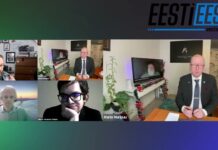
We would like to thank Shannon Joy and Kristen Meghan for being our guests today – and most importantly, we would like to thank you for watching and fulfilling your duty to inform yourselves, while so many others choose not to.
Watch the full interview below: